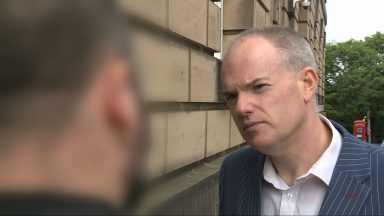
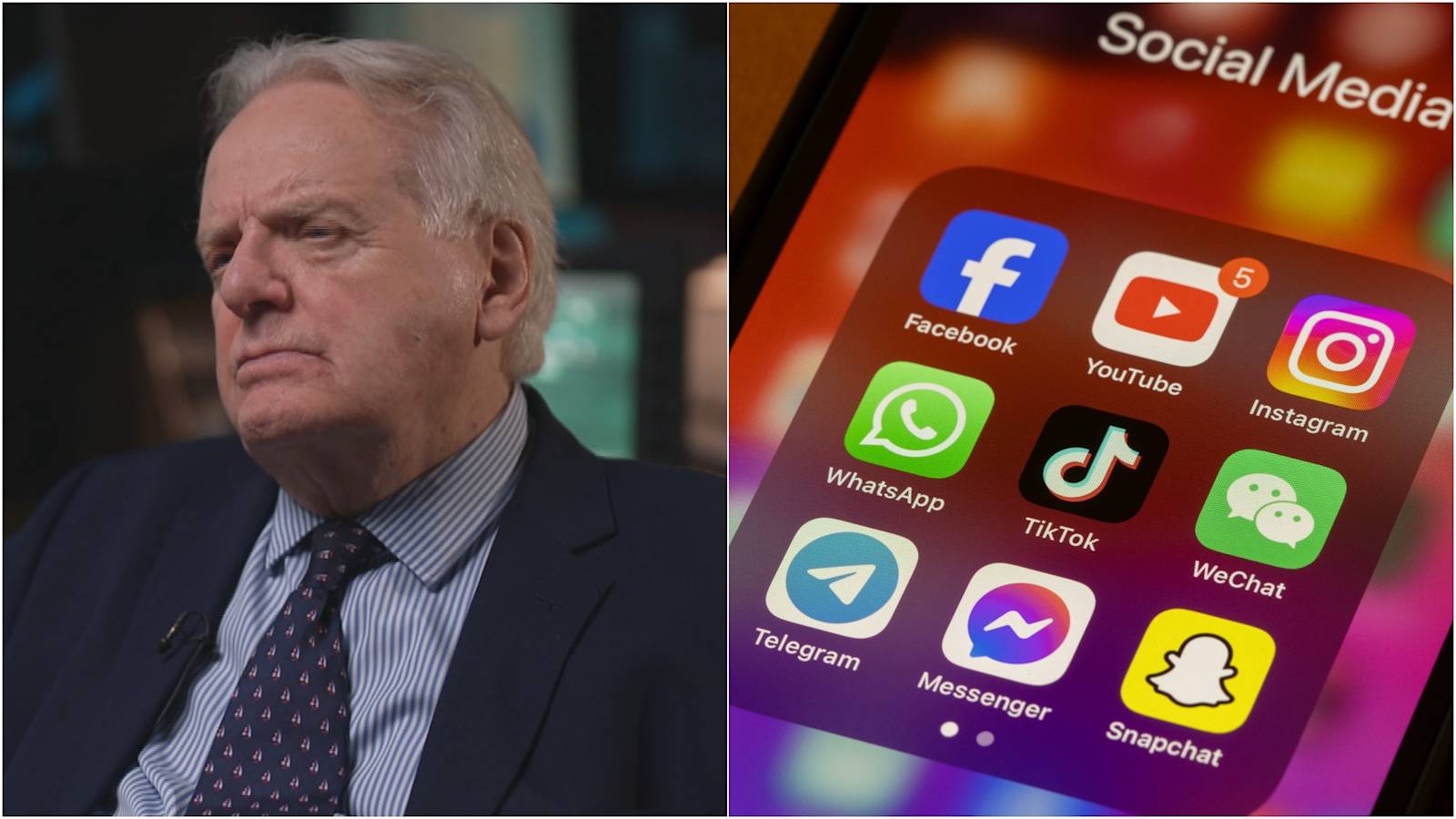
Michael Grade has said under-16s should be banned from accessing social media, arguing that the harms to children are now so serious that “dramatic action” is justified.
The former chair of Ofcom, who has also run the BBC, ITV and Channel 4, says his view is personal rather than regulatory policy.
But after years overseeing the implementation of the Online Safety Act, he believes there is “nothing to lose” from introducing a time-limited ban, reviewed regularly by Parliament.
Grade compares social media companies to tobacco firms: hugely profitable businesses built on products that can cause harm.
“Self-regulation has failed because they don’t know the meaning of the word,” he told ITV News.
The major tech companies, he argues, have enjoyed a “wild west” for too long, pursuing “clicks and advertising revenue” while allowing a “toxic corner” of the internet to flourish.
The central problem, Grade says, is that children are no longer in control of what they see online.
Algorithms decide what is pushed at them. The Molly Russell case, he said, exposed the “unscrupulous” and “addictive” nature of parts of social media.
Grade is not a natural interventionist. He served as chair of Ofcom from 2022 to 2026, but is a lifelong free-marketeer and advocate of light-touch regulation.
Michael Grade says under-16s should be banned from accessing social media
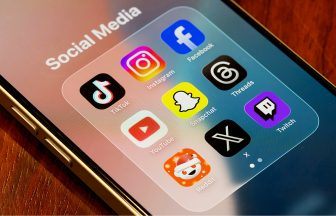
He said he came to support a ban only after concluding that the major tech companies – like Meta (which owns Instagram and Facebook), Google (which owns YouTube), TikTok, Snap and X – were resistant to change.
“I think it will call the tech companies to account,” he said. “It’ll affect their revenues – and there’s nothing worse for these companies than hurting their revenue.”
All of the major tech companies insist they take the protection of children seriously and are committing energy and resources to reducing harmful content on their platforms.
At the same time, Grade strongly defends Ofcom’s record, despite criticism that the regulator has yet to fine a single major social media platform under the Online Safety Act, which became law in 2023.
Last week, a report by Ofcom found that 73% of children aged 11 to 17 are still exposed to harmful content online.

Ofcom said that while Meta, Snap and Roblox had agreed to make changes, TikTok and YouTube had failed to set out meaningful steps to protect children and judged their feeds “still not safe enough”.
Critics argue that more than two years after the Act was introduced, investigations and warnings are no substitute for enforcement.
Caroline Dinenage MP, chair of the Culture, Media and Sport Committee, said: “Ofcom has the teeth, but they don’t appear to have the stomach. They are too cautious.”
Grade rejects that criticism. “Ofcom is not a star chamber,” he said.
Regulators, he argues, cannot simply issue huge fines because of headlines or political pressure.
The Online Safety Act requires consultation, evidence gathering and due process.
Every major decision has to be capable of surviving judicial review against some of the richest companies in the world.
He insists fines against major platforms are coming, but says the process is necessarily painstaking because tech companies challenge every stage.
“You’ve got to compile the evidence,” he said. “You can’t just fine them on the basis of anecdotal stuff.”
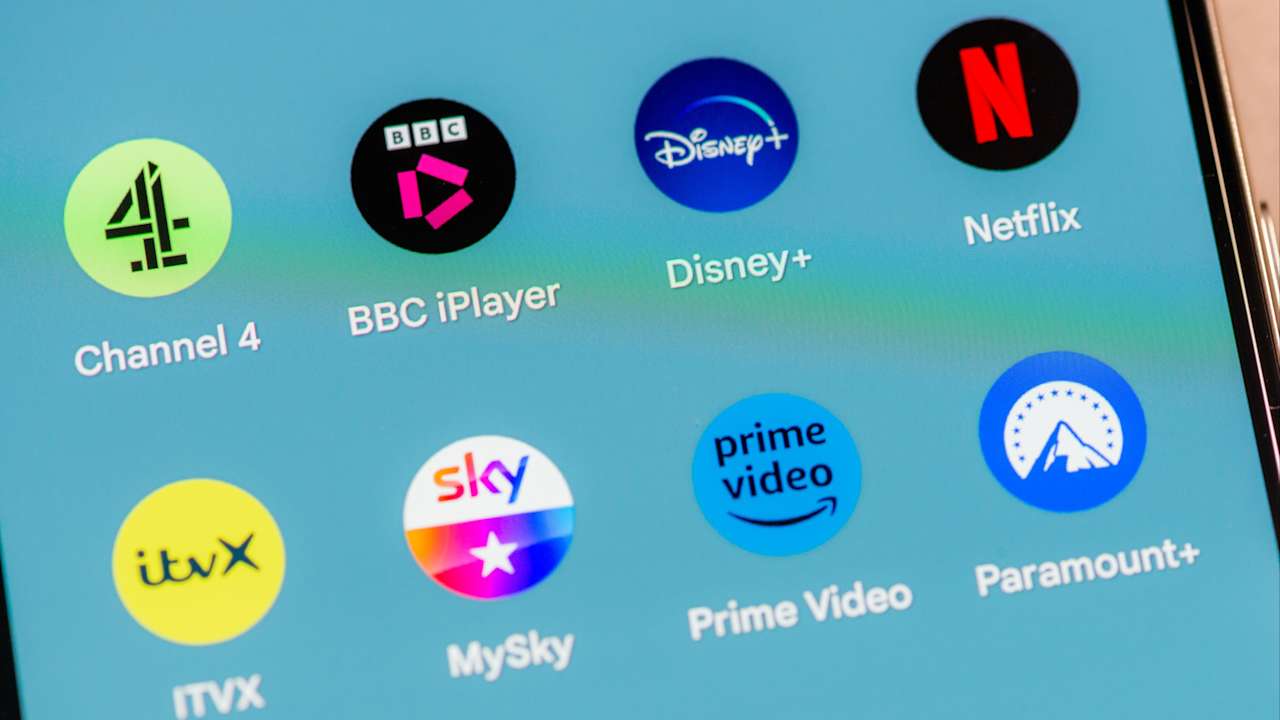
Beyond tech regulation, Grade paints a stark picture of the pressures facing Britain’s traditional broadcasters.
ITV, Channel 4 and Channel 5 face what he calls an “existential” challenge as audiences and advertising move online.
While he says the BBC’s licence fee gives it a degree of protection, commercial broadcasters are being squeezed by YouTube and US streaming platforms like Netflix.
‘It needs to come down’: Grade says the BBC licence fee is too expensive
For Grade, the roots of the crisis go back nearly two decades – to the collapse of Project Kangaroo.
Project Kangaroo was the joint streaming platform proposed by the BBC, ITV and Channel 4 in the late 2000s, years before Netflix became dominant in Britain. Competition regulators blocked it in 2009, arguing it could reduce competition in online television.
Grade believes that the decision was calamitous.
“We just handed the market to the Americans,” he said. “It was the most disgraceful, idiotic, short-sighted and ignorant regulatory decision. We’re paying the price for that now.”
He argues that Britain might now have had a streaming platform of real scale, carrying British public-service content, rather than relying on American technology giants.
That view shapes his thinking on the future of ITV and Sky.
He said consolidation in commercial broadcasting is increasingly inevitable and says he has no objection in principle to Sky buying ITV’s broadcast business if the deal proceeds.
“Scale is very, very important,” he said.
Sky is owned by the American media giant Comcast.
Grade believes the key issue for regulators would not be ownership itself, but the future of impartial television news.
Comcast’s takeover of Sky in 2018 was approved only after the company guaranteed funding for Sky News for ten years – that guarantee expires soon.
“There’s no reason why Comcast needs to do Sky News if they don’t want to,” he said, suggesting the future of Sky News and ITN would become central to any public interest test.
On the BBC, Grade remains a defender of the licence fee, though not at its current level.
“I don’t know a better way,” he said, rejecting subscription as a model that would fundamentally change the BBC’s output by forcing it to chase mass-market hits rather than distinctive public-service programming.
But he also argues the licence fee, which currently costs £180 a year, should be cut.
“We need the licence fee to come down,” Grade said, who was chair of the BBC between 2004 and 2006.
“We get stories every night, quite rightly, on [BBC] TV and on the radio about the cost of living crisis; meanwhile, in another part of the BBC, they’re asking for more money.”
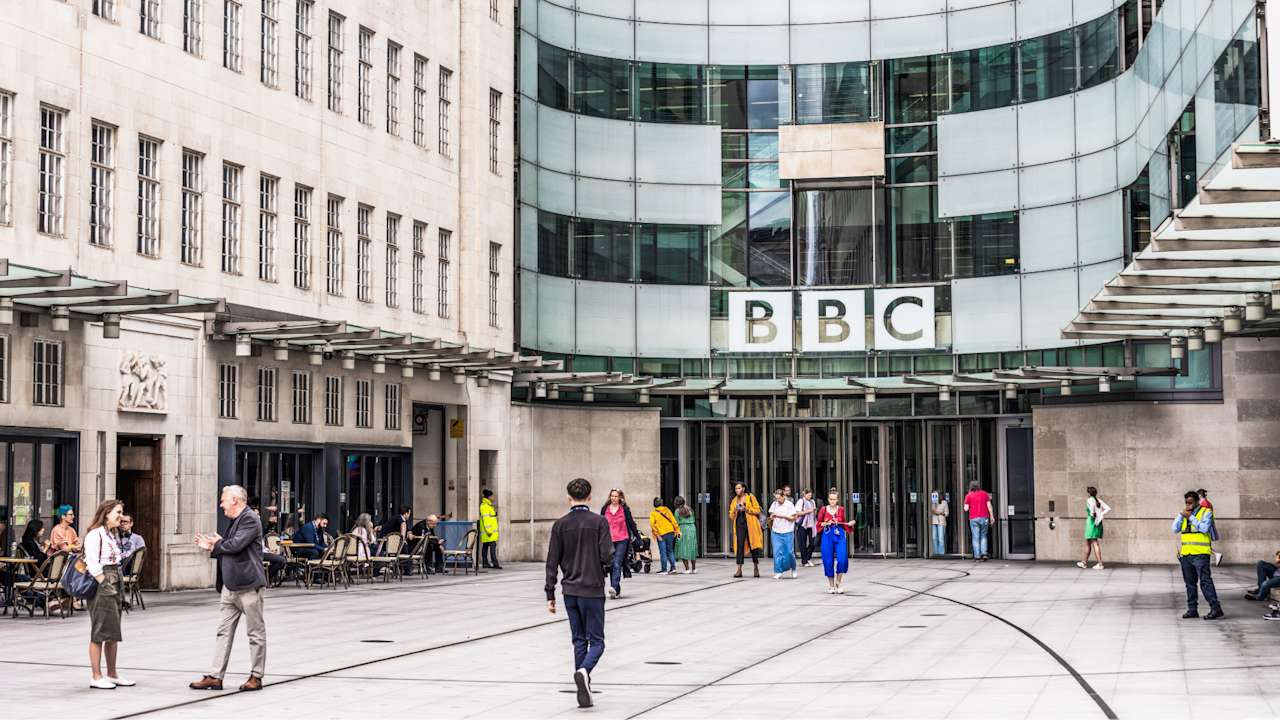
The BBC is already in the process of belt-tightening. As many as 2,000 jobs are set to be lost as part of a £600 million cost-cutting plan, many of them in the news.
But Grade rejects the idea that further savings would weaken the organisation.
“They’ve got buildings all over the UK… they’ve got palaces outside London which they don’t need. Everyone’s working from home today,” he said. “There’s a lot of cost to come out of the BBC.”
The broadcaster he worries about most, however, is Channel 4. He describes it as “the corner shop in a world of supermarkets”, lacking the scale of the BBC, Sky or the US streamers.
Can it survive? “The jury’s out,” he said. “I hope that it will.”
Grade also strongly defends GB News, rejecting criticism that it operates to a lower standard of impartiality and truth than other broadcasters.
Nigel Farage is one of GB News’ star presenters. Grade says he does not have a problem with elected politicians or leaders of political parties presenting programmes on a news channel.
“It’s a matter for Parliament,” Grade insists. “If they don’t like it, instead of complaining about it, either take action or keep quiet.”
Ofcom is currently investigating whether GB News breached broadcasting rules in an interview last year with President Trump.
In the interview, Trump’s claims that climate change was a hoax, that London had no-go areas for the police, and that parts of the capital had sharia law went unchallenged.
Grade says he has not seen the interview but understands the claims were challenged in the discussion afterwards.
“As far as I’m concerned, GB News operates under exactly the same rules as ITN, the BBC and Sky News. They have to show due impartiality at all times, which they do, irrespective of who the presenter is.”
Follow STV News on WhatsApp
Scan the QR code on your mobile device for all the latest news from around the country