Words by ITV News Producer, Kieran Carter
The EU is redesigning its money, and despite no longer being part of the trading bloc – you can still have a say in how the new notes will look.
The European Central Bank (ECB) has launched a consultation on a series of designs which could replace the notes currently available across euro-using EU countries.
The potential designs feature notable European figures, rivers, and birds – moving away from the bridges and monuments currently featured.
The consultation mirrors a similar move by the UK, which earlier this year asked the public which British wildlife they wanted to appear on Bank of England notes – replacing the historical figures who currently occupy them.
The new European notes are not due to enter circulation for several years, so those with summer holidays planned in the EU this year still have a chance to see the current architectural designs.
So why is the EU changing the design, what might the new notes look like, and how can you get involved with choosing the design?
What are the designs being proposed?
More than 1,000 designers initially submitted work, with various rounds of assessment eventually narrowing the selection down to the 10 designs currently being consulted on.
Italy had the highest amount of initial submissions, with the Czech Republic submitting the fewest.
Designers had to stick to either of the two themes, “European Culture: Shared Cultural Spaces”, or “Rivers and Birds: Resilience in diversity”.
The ECB also stipulated exactly which cultural figures, birds, and rivers should feature on each note.
For European Culture:
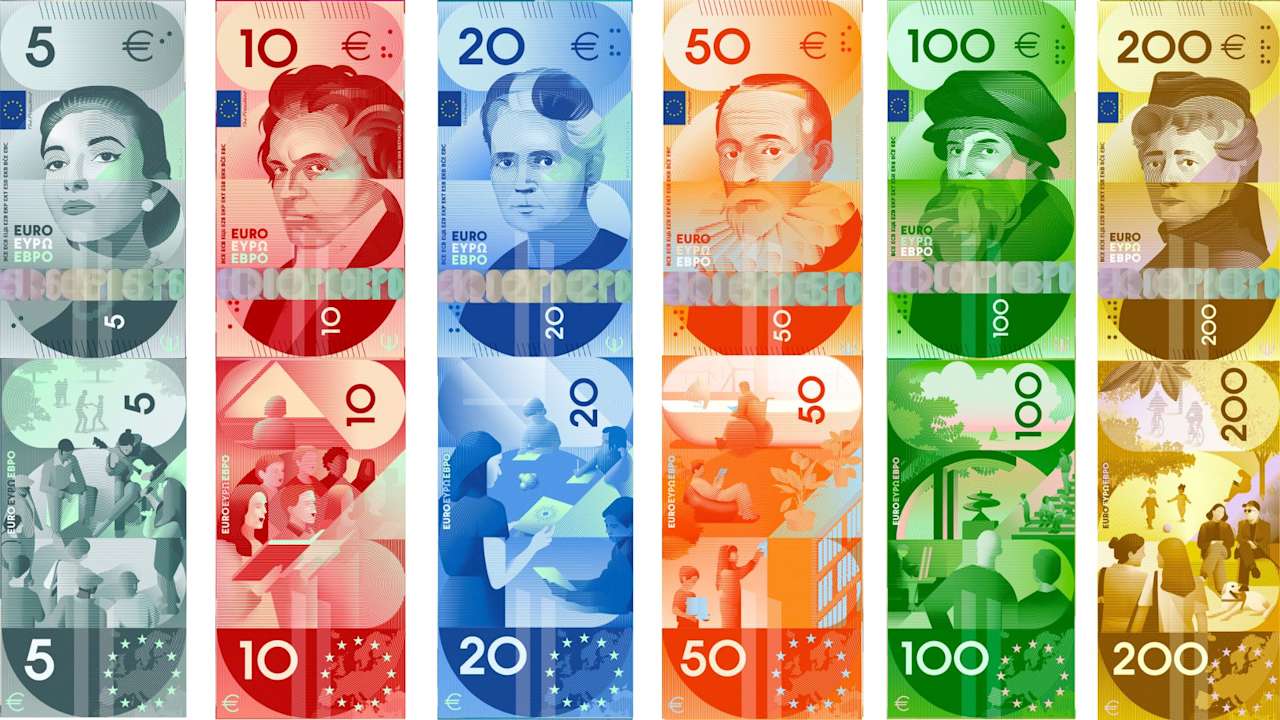
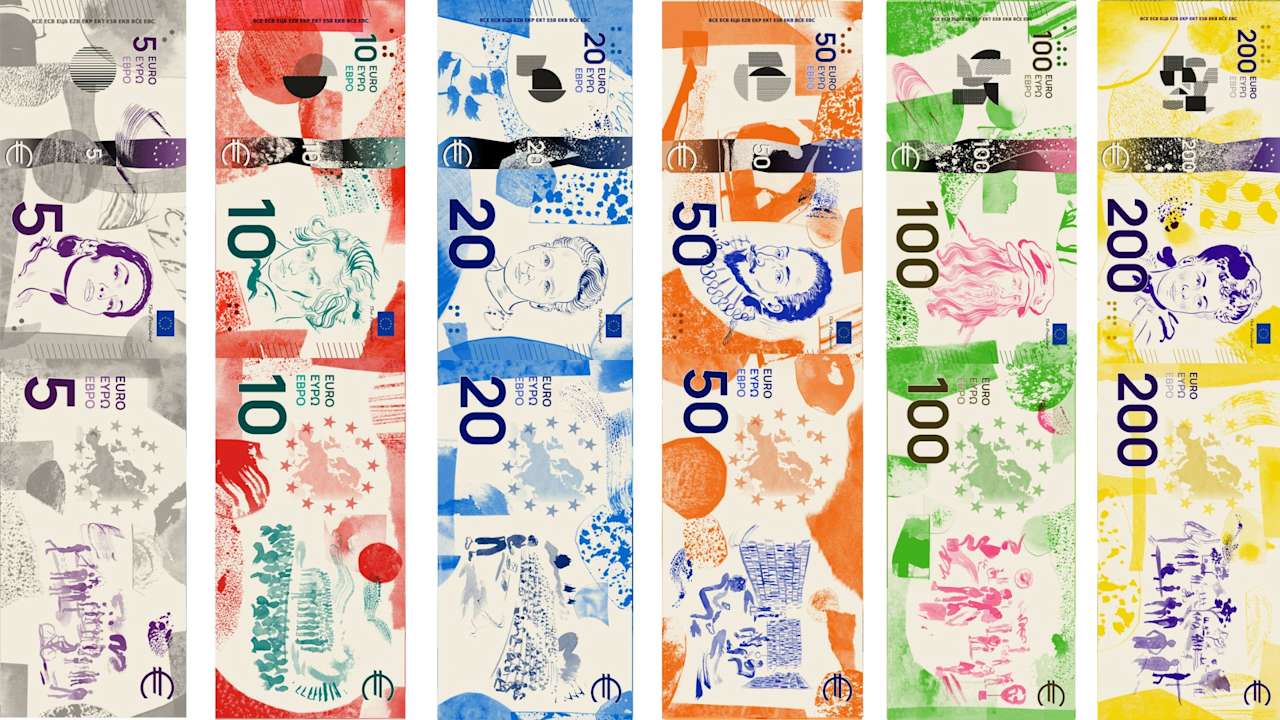
- €5 (Performing arts) – Maria Callas – Street performers (music/dance/theatre) entertaining passersby
- €10 (Music) – Ludwig van Beethoven – A song festival with a choir of children and young adults singing
- €20 (Universities and schools) – Marie Curie Skłodowska – A school or university with a female teacher with young students. There are notebooks and books on the tables
- €50 (Libraries) – Miguel de Cervantes Saavedra – A library with some adults reading paper and digital books. A little boy and girl in front of a bookcase trying to get a book
- €100 (Museums and exhibitions) – Leonardo da Vinci – Adults and children admiring some examples of street art, contemporary art, etc.
- €200 (Public squares) – Bertha von Suttner – A tree-covered square allowing people to come together, with adults and children talking, walking, playing, etc.
And for Rivers and Birds:
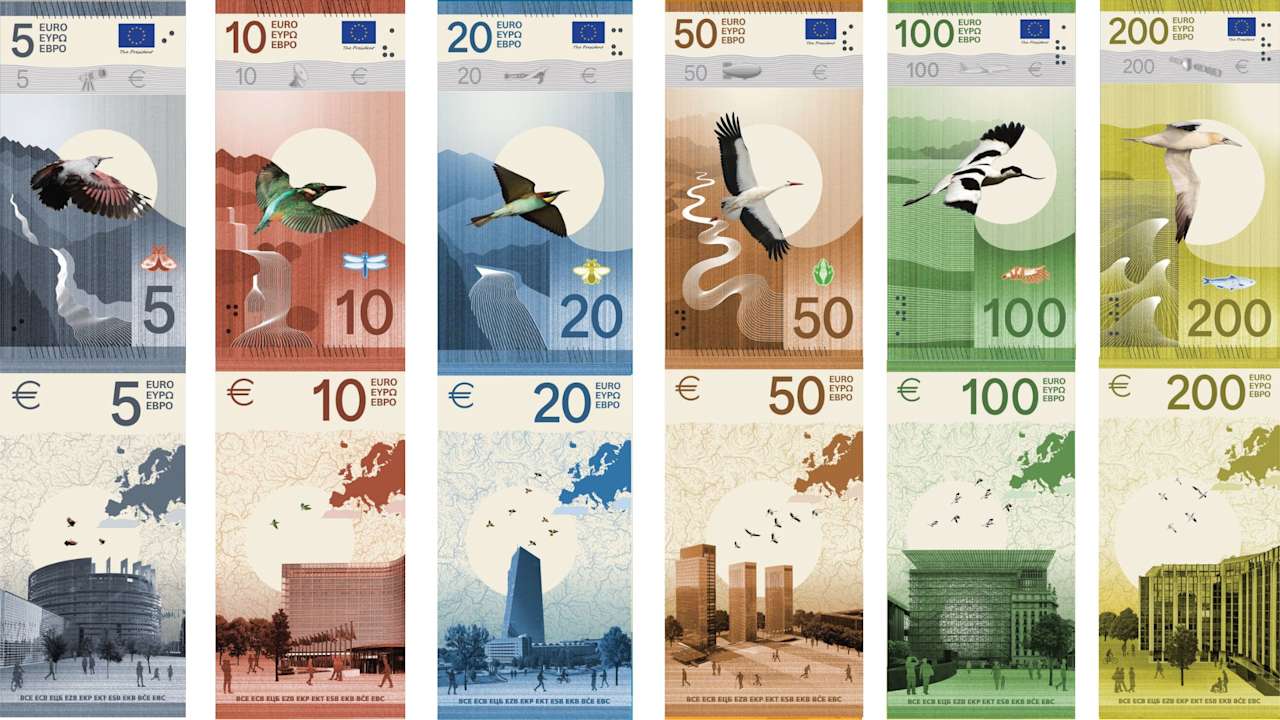
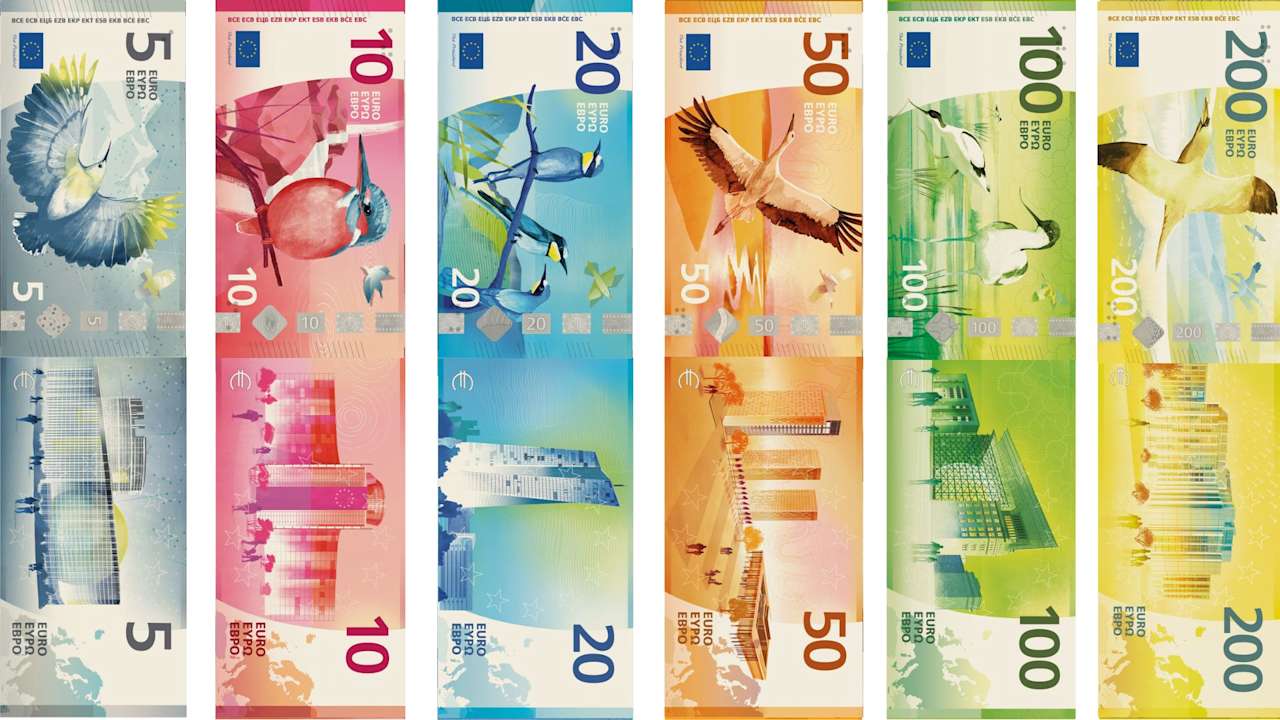
- €5 (Mountain spring) – Wallcreeper next to a mountain landscape – European Parliament
- €10 (Waterfall) – Kingfisher in a waterfall or run pool – European Commission
- €20 (Confined river valley) – Bee-eater colony in a sand wall on the side of a large, confined river valley along a riverbank – European Central Bank
- €50 (Meandering river) – White stork flying over a meandering river in an unconfined river valley – Court of Justice of the European Union
- €100 (River mouth) – Avocet sweeping over the surface of a mud flat – European Council and Council of the European Union
- €200 (Seascape) – Northern gannet flying over big ocean waves – European Court of Auditors
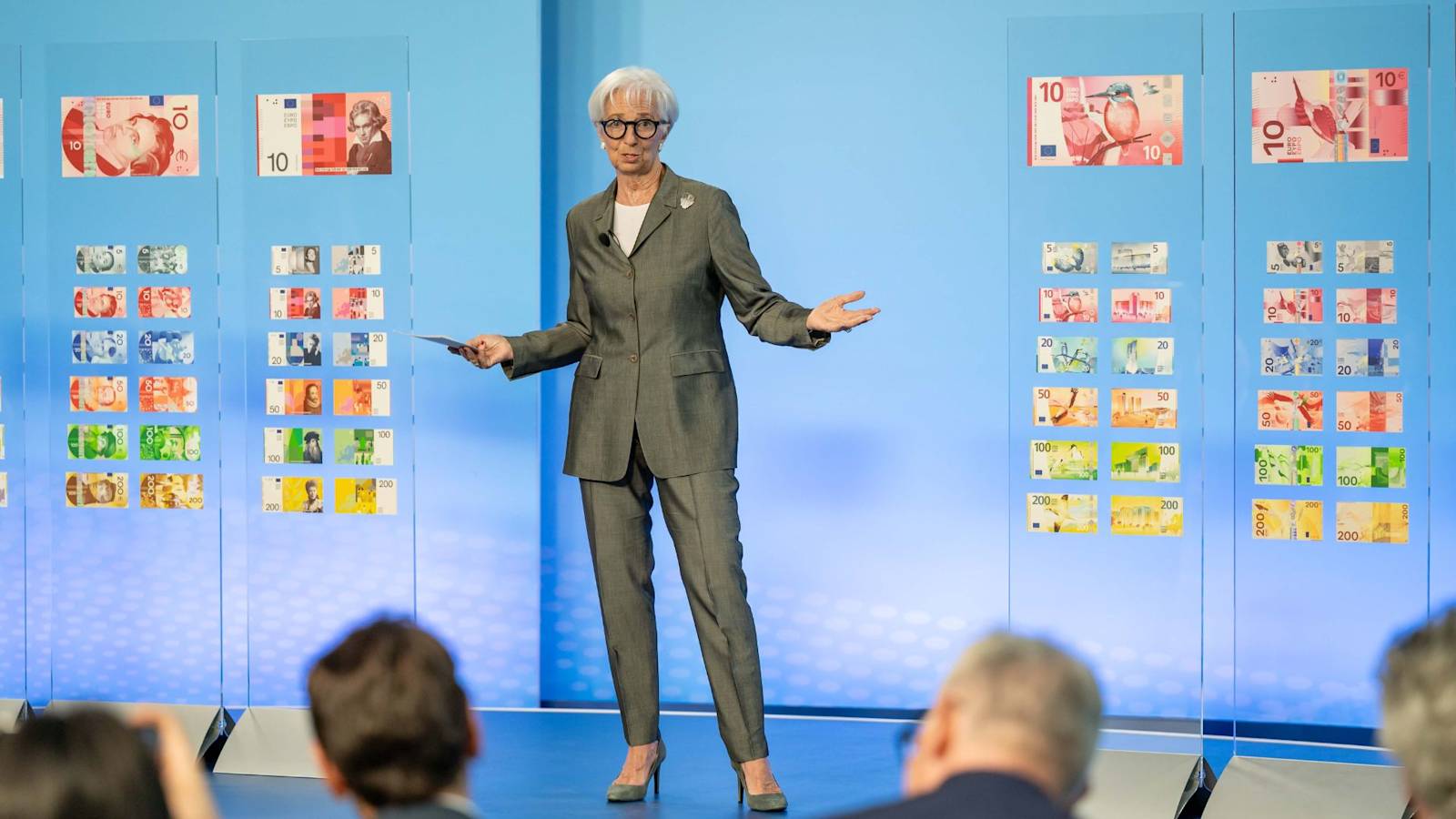
Below are the final shortlisted design sets with a short description of each from the ECB and designer.
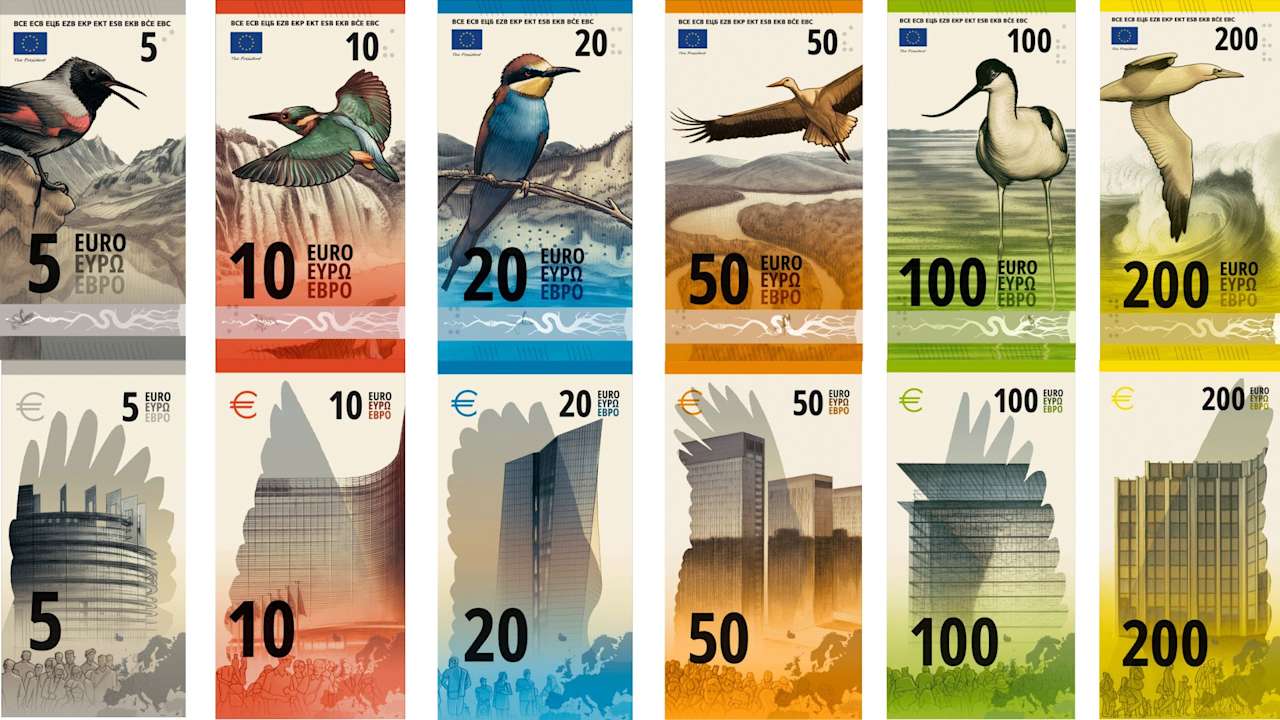
Design J – Ville Tietäväinen
“This euro banknote series tells a visual story of European rivers, from their origins in mountain springs to merging with the sea. The main characters are the European birds in their natural habitats. The higher the banknote denomination, the closer the imagery gets to the sea. The security foils each show one phase of a river with the associated bird, and work as an infographic device, introducing the narrative concept of the banknote series. Even the EU buildings on the reverse sides of the banknotes merge with the wings of the particular birds on the front sides.”
Design I – Isabelle Daëron
“From the beat of a bird’s wing to the flow of rivers, movement is at the heart of this proposal. It seeks to embody both the dynamism of the EU and the tangible and intangible flows that pass through its territory. As a true messenger, the bird – appearing alone on the front and as a group on the back – symbolises the dialogue and interdependence between our societies and nature. From a river’s source to the ocean, the bird’s flight reveals the landscape it traverses through the interweaving of two patterns – one hand-drawn in felt-tip pen and the other vector-based – embodying cohesion through diversity.”
Design H – Atelier Goppel-Toperngpong
“Water flows. It is the very foundation for life, shaping our environment and the habitats for the rich European birdlife depicted on the banknotes. Also, water can take on many characteristics, such as balance or consistency. Using these qualities as analogies for the EU institutions creates trust and understanding of their functions. A drop might seem negligible, but over centuries a stream is powerful enough to sculpt mountain ranges. One person might seem insignificant, but millions of people united by a common goal are resilient and powerful. In this light, water is a fitting analogy for the EU.”
Design G – Rubio & del Amo and Cruz más Cruz
“An engaging gaze meets the viewer from the centre of the banknote. It encapsulates a proposal, an idea and a dialogue between those who have forged our cultural identity and those of us who are making Europe a place at the forefront of thought, keeping the spirit of these figures alive in our daily lives. A dominant, consistent and recognisable colour meets a linear pattern that provides a shared texture, within a structure that holds the whole together. If we turn the banknotes horizontally, we see four vertical blocks, each inspired by a letter: ‘E’, ‘U’, ‘R’ and ‘O’.”
Design F – Jan Robert Dünnweller
“The design aims to illustrate the official motto of the EU – ‘United in diversity’. Europe is united by a rich shared cultural history and heritage, represented by the portraits of iconic European figures. It is united by shared values and a sense of belonging, strengthened by the diversity of cultural identities. This diversity is visualised in a collage through a multitude of forms and textures that together create a new whole, uniting these different elements. The collage forms the background for the hand-drawn portraits and depictions of shared cultural spaces as concrete manifestations of these ideas.”
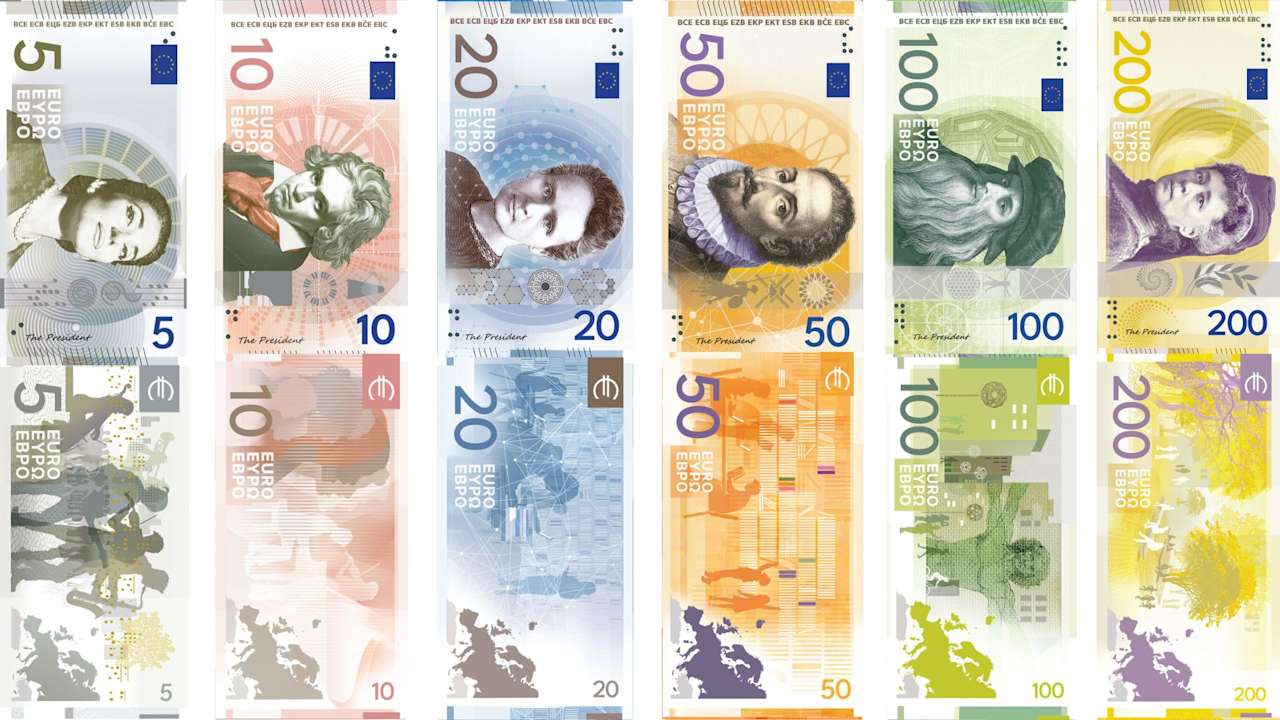
Design E – Myrsini Vardopoulou
“The communicative approach focuses on the universal value of each person’s work rather than their personality. The circle and the symbols function as a visual message denoting an intellectual space. This space offers the viewer immediate visual familiarity. Simultaneously, symbolic details provide subtle references for a deeper conceptual reading. In this way, the design communicates that, despite the diversity of the individuals, their contribution constitutes a unified source of inspiration and a means of reconnecting with familiar, yet ever-evolving cultural values.”
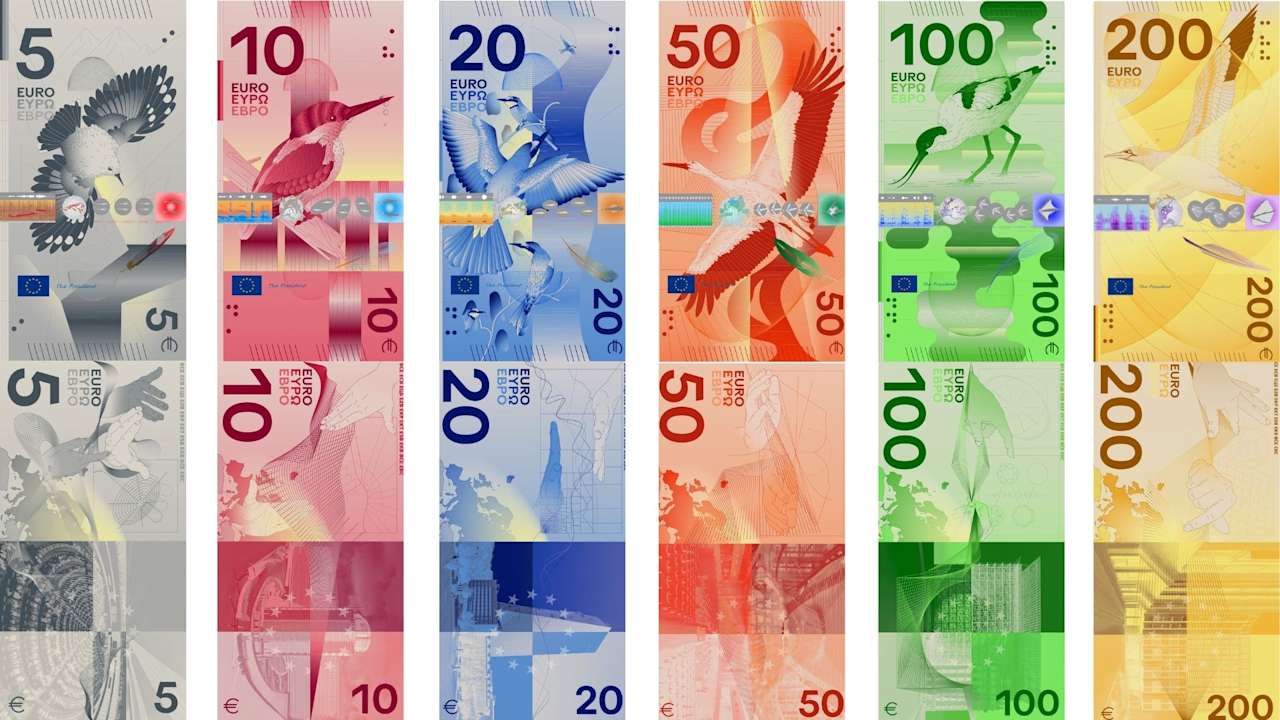
Design D – Rudy Guedj and François Girard-Meunier
“Six birds appear within abstracted landscapes, connected by the continuous journey of a river, from a mountain source to a stormy sea. Light accompanies this progression, evolving from a soft presence into a dynamic, incisive force with symbolic resonance. The scenes invite close inspection, placing the viewer in the position of a birdwatcher, gathering traces of each species. On the reverse, EU institutions are expressed through human gestures and a morphing fabric-like mesh. Hands hold, stabilise, align and debate, suggesting cooperation in action, while light radiates from each building across the EU territory.”
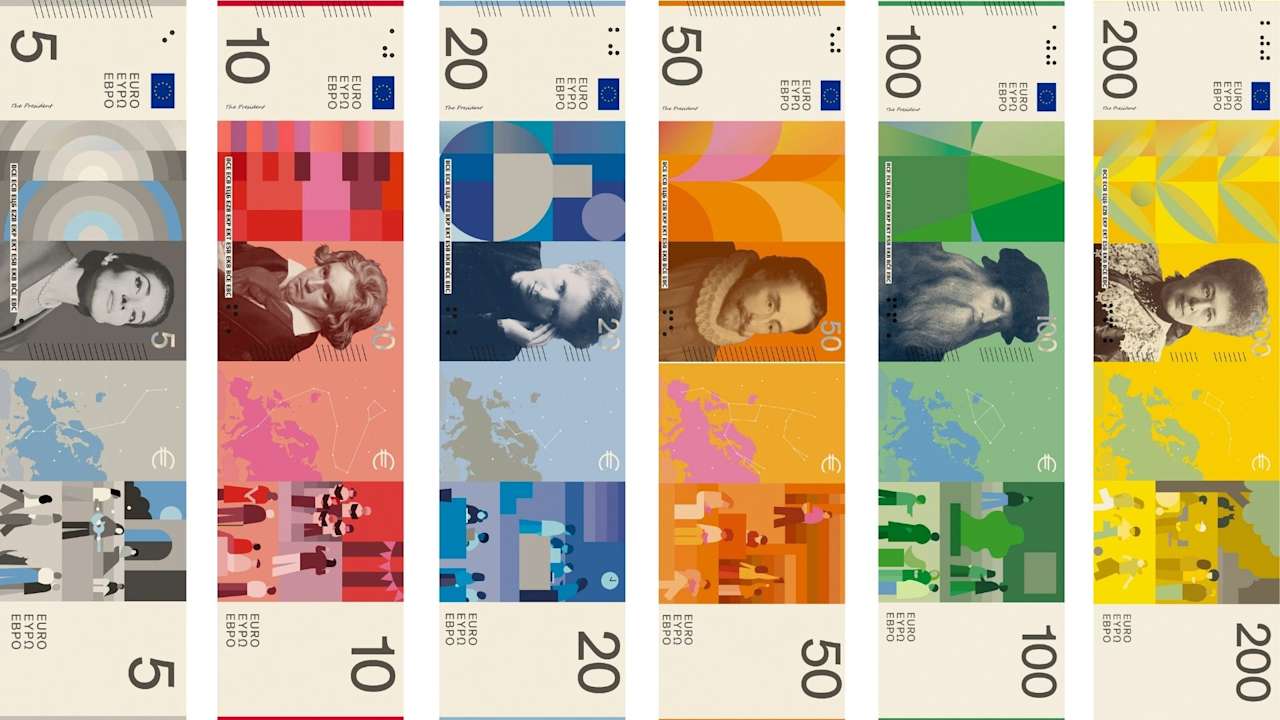
Design C – Neue Gestaltung GmbH
“The design tells a simple story: Europe is a shared cultural space. Each banknote is instantly identifiable by its dominant colour and its own central motif; each portrays a personality whose life and work connects Europeans across centuries. The reverse pairs a map of Europe, lightly overlaid with the constellations that have long guided travellers, with a present-day scene of the cultural space the note represents – performing arts, music, schools, libraries, museums and public squares. People are rendered without specific features so that citizens can recognise themselves in them.”
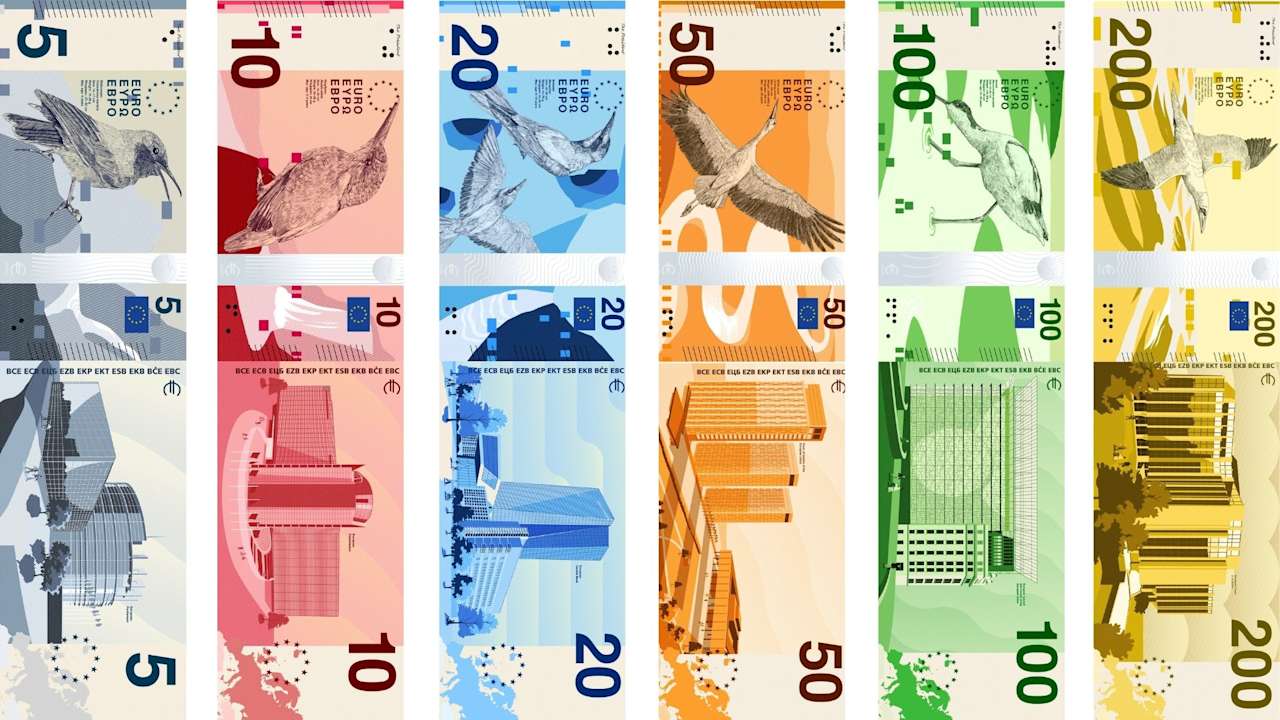
Design B – PunktFormStrich
“The ‘Rivers and birds’ banknote series communicates its concept through a direct connection between visual elements and their meaning. Each banknote presents a specific bird species in relation to its habitat, linking biodiversity with European landscapes. Horizontal bar structures translate the individual sound of each bird into a visual form, while a vertical scale indicates its flight speed, enabling an intuitive reading of the information. Concise data on the front further contextualise the species. On the reverse, EU buildings and the map of Europe establish a connection between natural environments and shared cultural identity.”
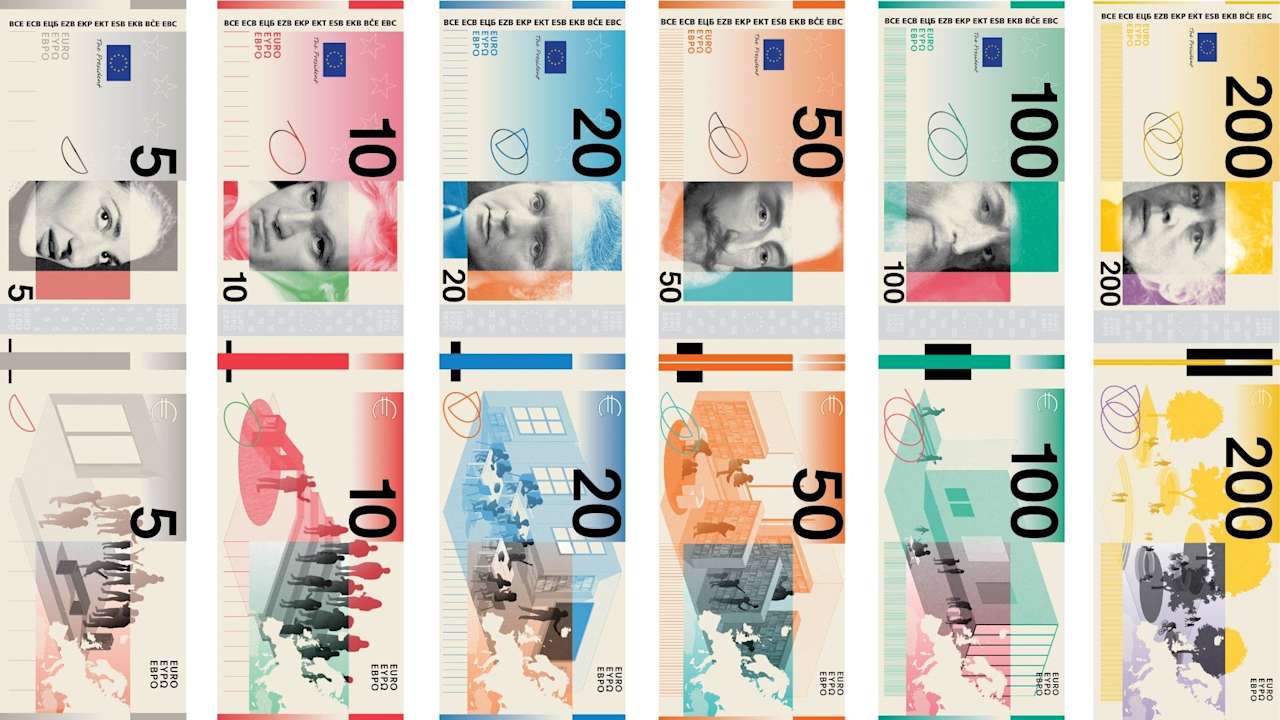
Design A – Studio Joost Grootens
“The design can be explained as a reflection on how culture is formed. The eyes represent observing, sensing and reflecting, while the mouth symbolises expression, dialogue and exchange. By focusing on these elements, the portraits move beyond individual identity towards a shared human capacity for cultural production. On the reverse, contemporary cultural spaces show people of different backgrounds and ages meeting and interacting. Together, the two sides connect individual perception and expression with collective exchange, inviting the public to see the banknotes as representations of culture as a living, shared process.”
What’s behind the new design proposals?
Christine Lagarde, President of the ECB said: “After 20 years, it’s time to review the look of our banknotes to make them more relatable to Europeans of all ages and backgrounds.”
The theme of the last set of banknotes was “ages and styles” depicting fictional bridges and architectural monuments.
Two options were selected for the redesign proposals, with the first being “European Culture: Shared Cultural Spaces”, and the second “Rivers and Birds: Resilience in diversity”.
The ECB council then selected the motifs that would appear on each note in keeping with these themes; designers were then invited to submit their ideas for how each image should be depicted.
Why the change?
The European Central Bank (ECB) says the redesign is necessary to “better reflect Europe’s shared identity and values”.
In an explanation on its website, it writes: “Euro banknotes are a tangible reflection of Europe’s shared identity, diversity and values.
“More relatable motifs can further strengthen the bond between Europeans and their currency.”
The ECB also says the update will allow them to improve the anti-counterfeiting measures incorporated into banknotes, as well as improve the environmental impact by refining the notes’ production methods.
The current designs
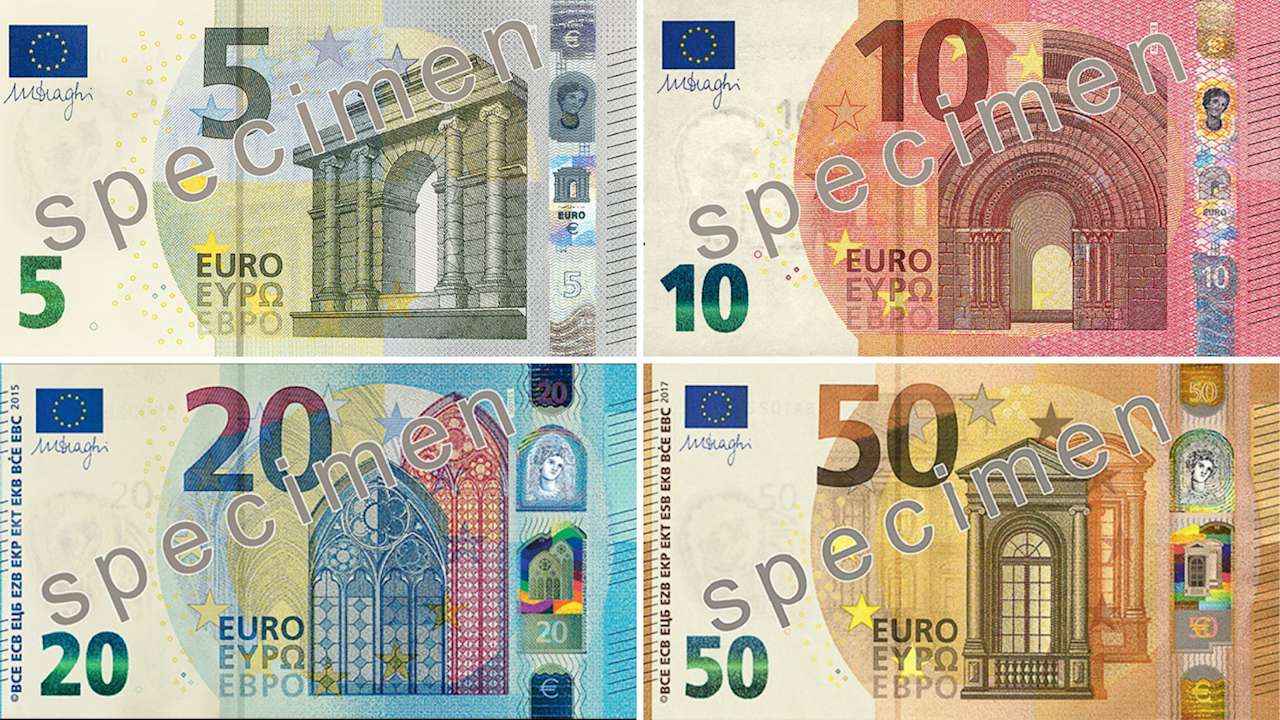
The designs currently in circulation were introduced as updated versions of the original euro notes between 2013 and 2019.
They are known as the Europa series, because two of the security features contain a portrait of Princess Europa.
This figure from Greek mythology provides a visible link to the continent of Europe and also adds a human touch to the banknotes. One side features an illustration of a different bridge, and the other an arch, door, or window.
The ECB says this design choice reflects the “European spirit of openness and cooperation”, with the reverse bridges representing “communication between the people of Europe and between Europe and the rest of the world”.
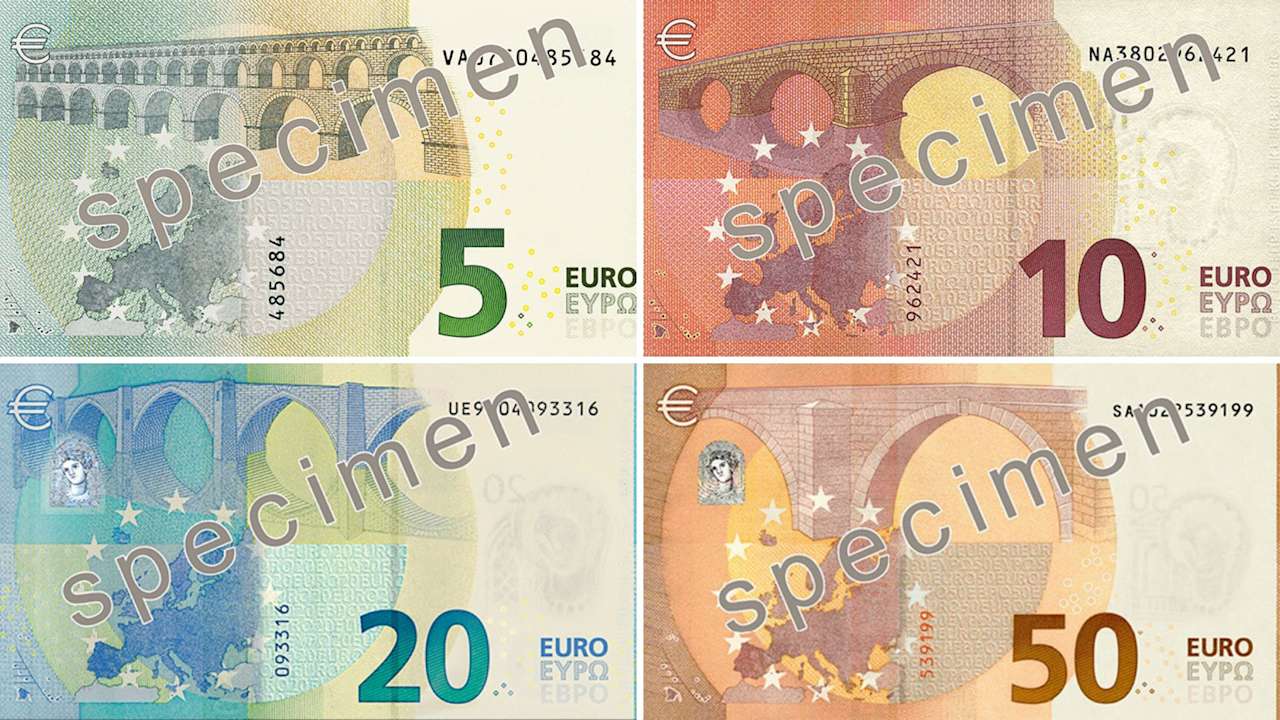
The designs are based on architectural styles throughout various periods of Europe’s history, but do not show actual existing monuments or bridges.
- €5: Classical
- €10: Romanesque
- €20: Gothic
- €50: Renaissance
- €100: Baroque and rococo
- €200: 19th century iron and glass architecture
- €500: Modern
Though the designs avoided showing actual monuments to remain neutral, between 2011 and 2013, a public arts project in the Dutch city of Spijkenisse, saw real bridges built across canals mirroring the banknotes’ designs.
The concrete bridges were designed by Robin Stam and completed in colours to match their corresponding notes.
How can you get involved in choosing the new designs?
After selecting the winning design sets from those submitted to the public callout, the ECB has invited the public to submit their thoughts on the different sets.
Using the link below, you can select from a series of options how much you like each set of designs.
You can also select up to three reasons from a set list of why you feel the way you do about each set.
Follow this link to have your say about the euro’s future design, with the final selection being made around the end of the year.
Follow STV News on WhatsApp
Scan the QR code on your mobile device for all the latest news from around the country