A Harvard astronomer known for controversial theories about alien visits has been appointed by the White House to lead a team of scientists to study the national security risks posed by UFOs.
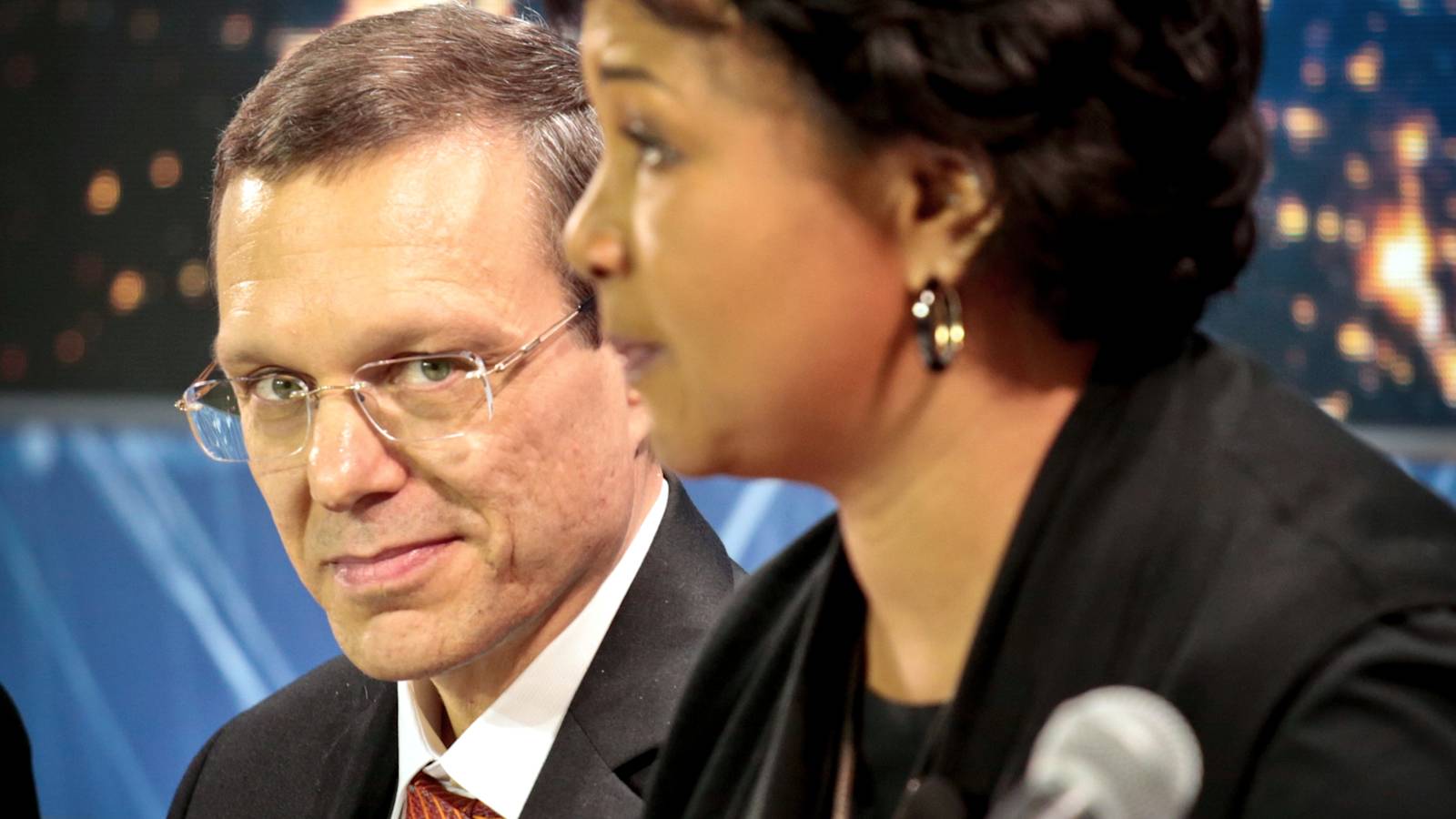
Avi Loeb, a cosmologist who studied black holes and served as the head of Harvard’s astronomy department until 2020, was chosen to lead a new scientific advisory council tasked with investigating the origins of mysterious orbs and other objects reported by military personnel in recent years.
It is part of President Donald Trump’s push to provide more transparency on questions on UFOs and alien life.
So far, the Pentagon has released three batches of files ranging from decades-old FBI reports to more recent military videos showing orbs darting or soaring through the sky.
Loeb’s team will report to a new White House panel focused on UFOs, now often referred to as unidentified anomalous phenomena, or UAP.
“It’s like a detective story,” Loeb said in an interview. “It’s a lot of fun, as long as you don’t pay too much attention to the critics.”
For the last decade, Loeb has been scanning the skies and seas for evidence of intelligent alien life.
He started in 2017, as scientists puzzled over an interstellar object soaring by Earth. While others proposed it was a comet or ice chunk, Loeb said it could be a thin “light sail” detached from an alien spacecraft.
His theories have won praise in UFO circles but often put him in conflict with academic peers.
Other astronomers have accused him of making claims with little evidence. Some have criticised his habit of skipping the peer review process and bringing claims directly to the public.
Steve Desch, an Arizona State University astrophysicist who has challenged some of Loeb’s theories, said Loeb uses flawed methods to reach wild conclusions about alien life, while shunning a more established branch of science searching for life beyond Earth.
Loeb’s role on the White House panel casts doubt on the entire endeavour, Desch said.
“I don’t know what’s going to come of this, but we’re not going to get any closer to answering these questions with him in charge,” Desch said.
Sean Kirkpatrick, a physicist who previously investigated UAP at the Pentagon’s All-domain Anomaly Resolution Office, said Loeb is “not viewed favourably” in the scientific community and lacks national security experience.
He said the makeup of Loeb’s team suggests the White House is more interested in fringe theories than hard science.
The White House did not respond to a request for comment about the criticism.
Loeb, meanwhile, said he aims to follow the science without distraction.
“Let’s keep our eyes on the orbs,” he said, “not the social media.”
Follow STV News on WhatsApp
Scan the QR code on your mobile device for all the latest news from around the country