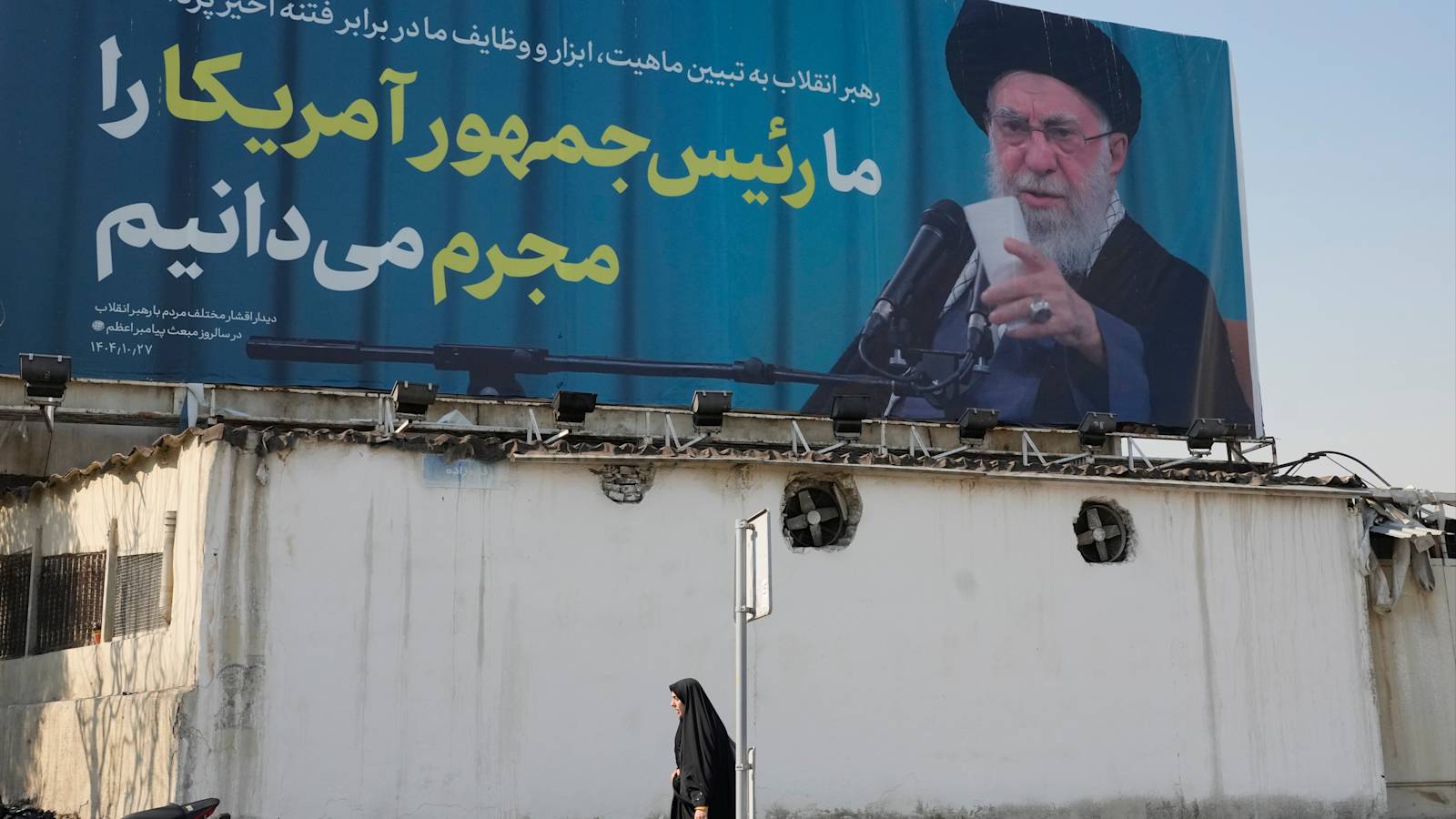
For the Iranian regime, this is meant to be a survivable moment.
Article 111 of its constitution was written in anticipation of the unthinkable: the sudden loss of the Supreme Leader, the single figure around whom the political and religious architecture of the Islamic Republic ultimately rests. The provision is explicit in its intent to prevent paralysis. “Whenever the Leader becomes incapable of fulfilling his constitutional duties,” it states, “a council consisting of the President, the Head of the Judiciary, and one of the jurisprudents of the Guardian Council… shall temporarily assume all the duties of the Leader.”
Problem is, what the clerics and scholars who drafted the constitution did not meaningfully contemplate was that the Leader might not fall alone, but alongside the very officials designated to organise his replacement.
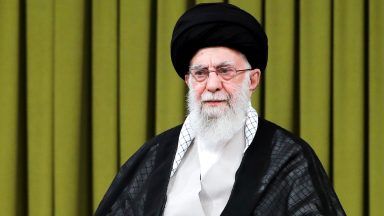

That possibility no longer feels theoretical. “The strategic objectives should now be clear to you… This isn’t about any one person. We have been looking at figures central to the regime’s governance,” a senior Israeli official with direct knowledge of the intelligence discussions told ITV News, speaking on condition of anonymity, confirming that its operation in Iran is aimed not just at military targets – or even one man, but the entire mechanism behind him.
Iran’s Supreme Leader, Ayatollah Ali Khamenei ruled since 1989 and retained final authority over war, peace, and national security.
The Iranian President, Masoud Pezeshkian — one of the three men designated under Article 111 to assume the Leader’s powers if he were removed — is also, according to Iranian state television, “safe and sound, and has no problems.” But continuity, suddenly, is something to be asserted, not assumed.
The Islamic Republic was engineered to survive assassination. Its founders had built succession into its foundations. What they did not anticipate was an adversary seeking to disrupt succession itself. And that’s what’s happening right now.
The hope, among Israeli and American policymakers, is that such disruption will create the conditions for internal collapse — that the removal not only of the Leader but of those positioned to replace him might produce not continuity, but rupture – an uprising.
Many of America’s allies in the region have feared the risks of that strategy – their resistance made clear in conversations with ITV News over the last month. Some have balanced quiet hostility towards Iran with caution about the consequences of its collapse. They feared escalation more than they desired resolution.
Oman, an intermediary between Tehran and Washington, expressed alarm this morning. “I am dismayed,” its foreign minister said of the US and Israeli operation. “I urge the United States not to get sucked in further.”
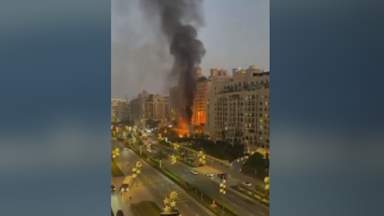
But the events that followed – Iran’s response – might have reshaped the calculations of some Middle Eastern countries. Attacking US bases in the region is one thing, but explosions in residential areas are quite different. Saudi officials have condemned Iran’s actions on its territory today as “unprovoked” and a violation of their sovereignty.
Senior officials in several Gulf countries told ITV News of their growing sense of shared exposure — that Iran’s willingness to strike beyond its borders might alter their perception of the US and Israeli operation. “We are well past the form of de-escalation we had wanted” said one.
One result has been an acceleration of coordination between states whose relations have, at times, been strained. Saudi and Emirati officials are now consulting closely, their strategic outlook converging around a common question: how to avoid escalation and how to shape what comes after it.
The coming days will test the contingency Article 111 was written to contain. It won’t just be events in Tehran, but the responses in Riyadh, Abu Dhabi and Doha that will be consequential.
Have you heard our podcast Talking Politics? Tom and Robert dig into the biggest issues dominating the political agenda in every episode…
Follow STV News on WhatsApp
Scan the QR code on your mobile device for all the latest news from around the country