
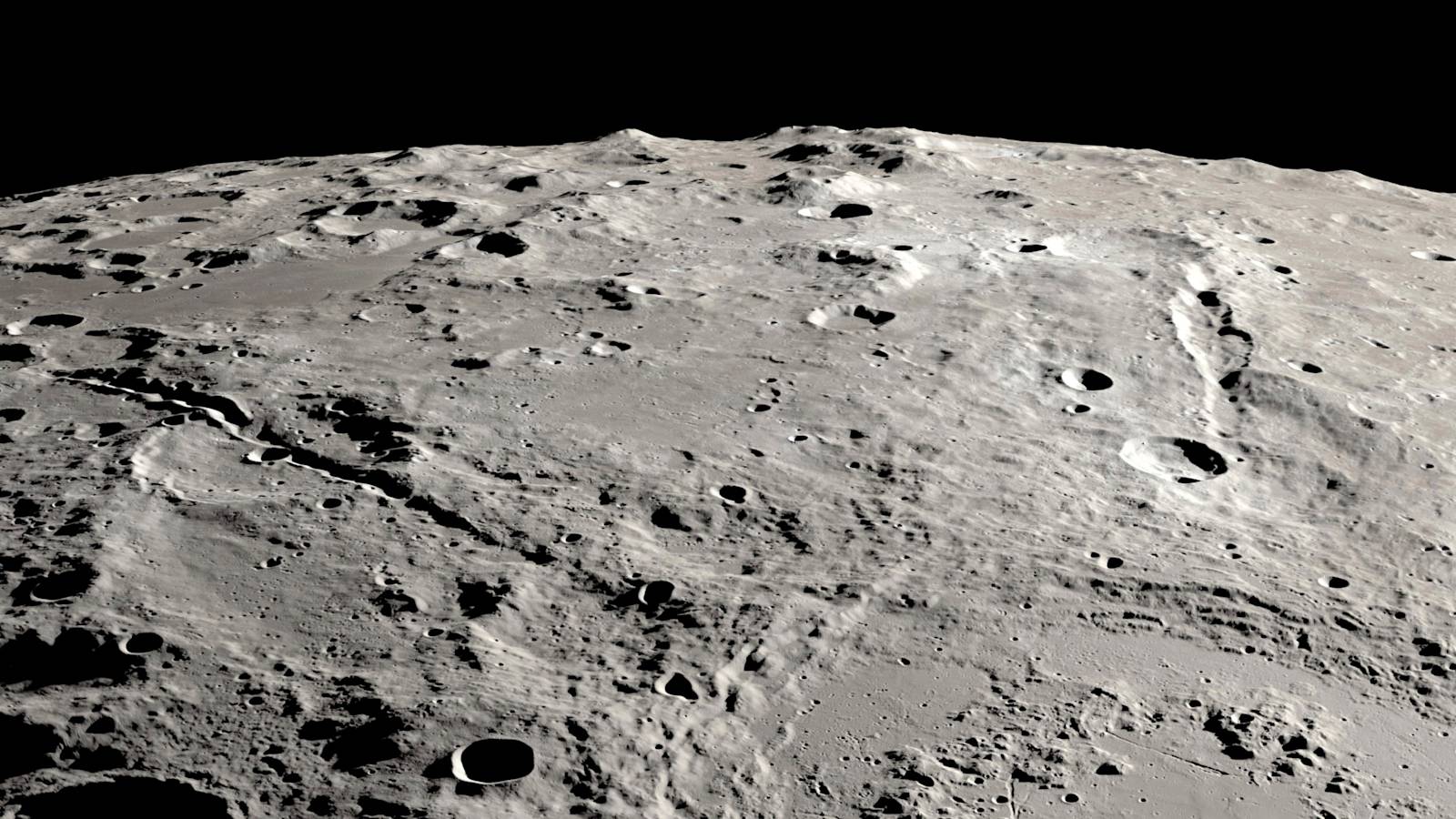
A four-tonne SpaceX rocket traveling at seven times the speed of sound unintentionally collided with the moon on Wednesday morning, scientists have confirmed.
As predicted, the impact occurred at 7:35am BST on Wednesday, Carl Schmidt, planetary scientist at Boston University’s Center for Space Physics, told ITV News.
He said plumes of gas “a few tens of kilometres in size” and lasting between five and ten minutes after impact, were observed by the Very Large Telescope in Chile, which is operated by the European Southern Observatory.
Although this shows evidence of the accidental collision, it could be several days before high-resolution images can be obtained from lunar satellites.
But how did this unplanned collision happen, and what concerns do experts have about the impact?
ITV News explains.
Why did the rocket crash into the moon?
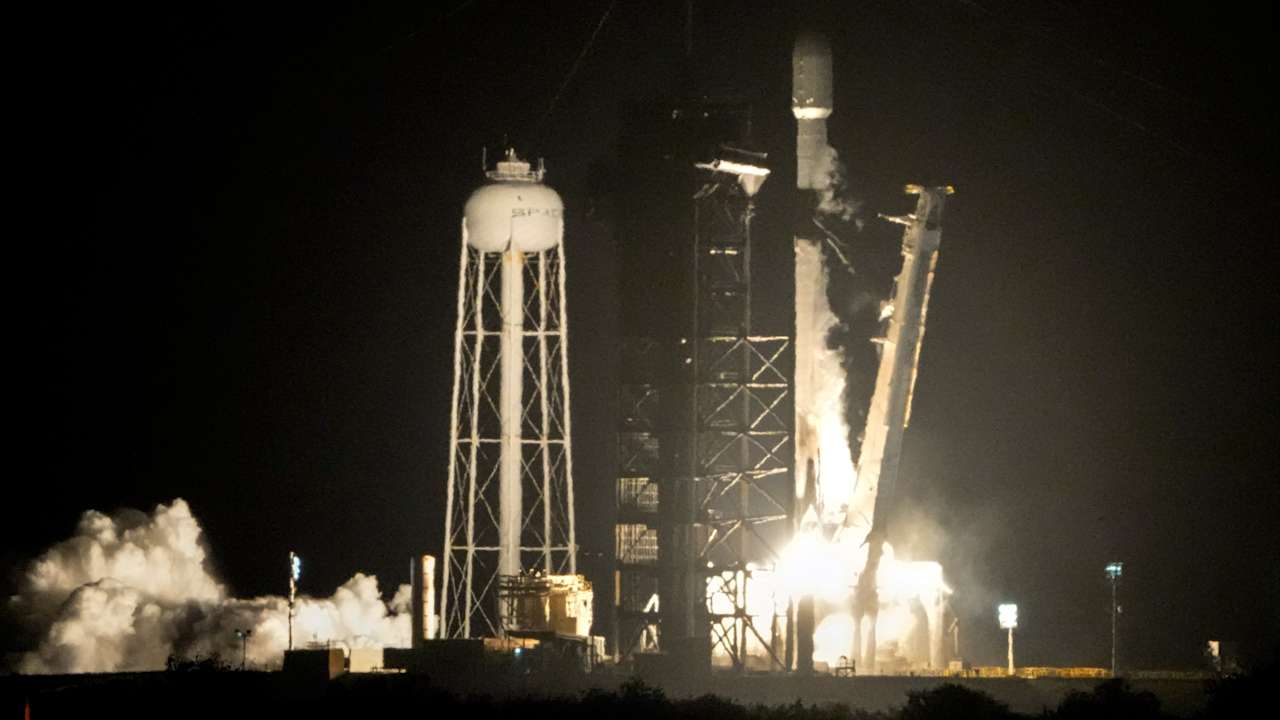
The Falcon 9 rocket lifted off from Florida in January last year, carrying two commercial lunar landers.
One of them, Firefly Aerospace’s Blue Ghost, became the first private spacecraft to pull off a fully successful lunar touchdown. The other, Japan-based ispace’s lander, wrecked.
Falcon 9 consisted of two stages. The first, a reusable booster used for lift-off, returned to earth for future missions.
The second part served as the workhorse to propel the robotic landers on their path to the moon. After its mission was complete, this stage remained in space and was left to orbit the earth.
“Essentially a mixture of solar activity and gravity forces have put it on a path toward the moon,” Julianna Scheiman, SpaceX director of Nasa science and Dragon programs, said on Monday.
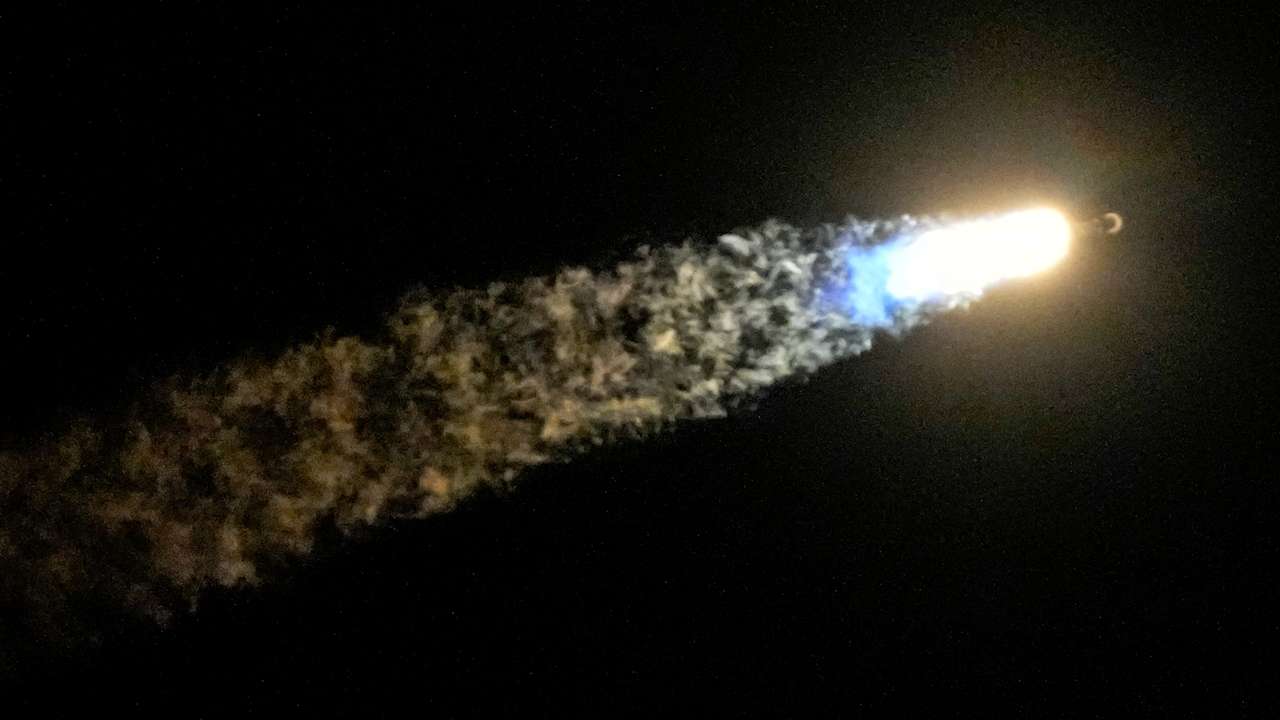
Without fuel, the rocket could not be controlled, nor its course be altered.
Independent astronomers were the first to identify the trajectory using publicly available data, before Nasa later confirmed that the stage had an 100% chance of hitting the moon.
Has anything like this happened before?
The moon is struck by meteoroids everyday, since it has no atmosphere to slow the movements of objects coming towards it.
However, despite tens of thousands of pieces of space junk orbiting the Earth, incidences of man-made objects crashing into the moon are relatively rare.
During the 20th century space race, both US and Soviet spacecraft crashed into the moon. However, many of these incidents were intentional tests or deliberate mission endings.
In 2022, a discarded Chinese rocket stage collided with the moon following a lunar test mission in 2014.
There have also been recent incidents of rockets aiming to land on the moon, but crashing to its surface instead.
Did the crash pose any danger to Earth?
No. Nasa said that the impact posed no danger to Earth.
What about the impact on the moon?
The rocket was expected to hit the surface of the moon at 5,400mph, likely leaving behind a crater with a diameter of approximately 65 to 90 feet (20 to 30 meters) on the moon’s surface, according to a preprint study authored by a group of scientists, including researchers at Nasa.
Scientists are still analysing and mapping data about the collision.
How could an incident like this affect the future of space travel?
The US space agency is planning to create a more sustained human presence on the lunar surface through the Artemis programme.
But if there are plans for missions to create industry, settlement or further research on the Moon, greater regulation is needed to prevent a repeat of the crash, Professor Hugh Lewis, a space safety expert at the University of Birmingham, said.
“It speaks to an issue that is already there and is going to be getting worse in the future,” he said.
“If the Moon becomes a true destination for us, with settlements, potentially industry, then that’s going to require orbital infrastructure, lots of missions from Earth to the moon.
“We could see these kinds of events happening again in the future, then they would potentially be posing risks to human life, to infrastructure that’s there, to science.
“If we’re increasing the population of spacecraft between the Earth and the Moon, then you end up with a chance of collision as well, in orbit.”
More events like this could also jeopardise the ability to land on moon’s surface or potentially industrialise, Professor Lewis said.
“SpaceX have been doing a tremendous job of aiming to behave responsibly in Earth orbit, they are responding to regulators,” he said.
“But the real question is whether regulation needs to tighten, if we need new standards and guidelines to help us with missions that go to the moon.
“I know that the Inter-Agency Space Debris Co-ordination Committee are starting to look at this as a problem, and some guidelines about what to do with spacecraft after it has finished its mission so that it doesn’t pose a risk either to the surface or a collision risk around the moon.”
What can scientists learn from this?
Scientists can use this rare occurrence of an artificial object hitting the moon to learn more about Earth’s natural satellite – as well as prepare for how to shield astronauts and any future infrastructure sent there.
Prof Lewis said that the consequences of the crash represent an exciting research opportunity.
“That’s a surface that has been pristine for a very, very long time so there’s a lot that could learn by looking at the surface,” he said.
“The impact will throw up a lot of material and so you could use this as an experiment to gain some understanding of learning materials in that particular location.”
Nasa have also said that scientists are “planning to collect lunar data from the event” in order to “refine techniques for tracking objects in space”.
There is currently no formalised tracking of debris that exists beyond our planet. Rather, surveys searching for potentially hazardous asteroids identify pieces of space junk that can then be tracked.
Since it’s difficult to track and spot objects that slam into the moon, a known event like the upper stage collision helps scientists gain insights into properties of the lunar surface, Dr Paul Wiegert, a professor of astronomy and physics at the Western University in London, noted.
The UK Space Agency is a member of the Inter-Agency Space Debris Coordination Committee (IADC), which said: “Space debris is a growing challenge, which is why the National Space Operations Centre tracks around 30,000 threats, risks and hazards in orbit every year.
“We’re also taking action to clean up space now, spending over £85 million on our ability to track potential threats in orbit, and developing the cutting-edge tech which will allow us to service satellites while in space.”
Follow STV News on WhatsApp
Scan the QR code on your mobile device for all the latest news from around the country