The US has launched a series of fresh strikes against Iran after three merchant ships were struck in the waters off Oman.
The renewed attacks from both sides threaten the interim deal reached last month, with the US and Iran both saying the strikes violate that initial agreement.
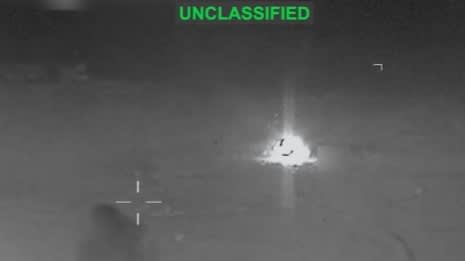
The US Central Command said American forces had hit more than 80 targets with precision munitions “as an immediate response to Iran’s latest attacks on commercial vessels transiting the Strait of Hormuz”.
These included Iranian air defence systems, command and control networks, coastal radar sites, anti-ship missile capabilities, and more than 60 Islamic Revolutionary Guard Corps small boats in and near the strait, it said.
It said the strikes were launched “to impose heavy costs for targeting and attacking commercial shipping crewed by innocent civilians in an international waterway”.
Three commercial vessels, which were Marshall Islands-flagged, Saudi Arabia-flagged and Liberian-flagged, were attacked by Iran, the US Central Command statement said.
“Iran’s demonstrated aggression was unwarranted, dangerous, and a clear violation of the ceasefire,” it said.
Iran retaliated with strikes targeting Bahrain, home to the US Navy’s 5th Fleet, and Kuwait, home to US Army forces, on Wednesday.
The Islamic Revolutionary Guard Corps said the US had “openly violated the ceasefire and violated the Islamabad understanding” with its strikes, acknowledging the attacks.
Iran’s Parliament Speaker Mohammad Bagher Qalibaf declared that the “era of bullying and extortion is over” as he shared a list of perceived US violations of the interim deal.
“It leads nowhere. We don’t fold,” he wrote on X.
The new assaults from Iran on the fuel-shipping waterway were the most in a single day since late April, according to the UN International Maritime Organisation.
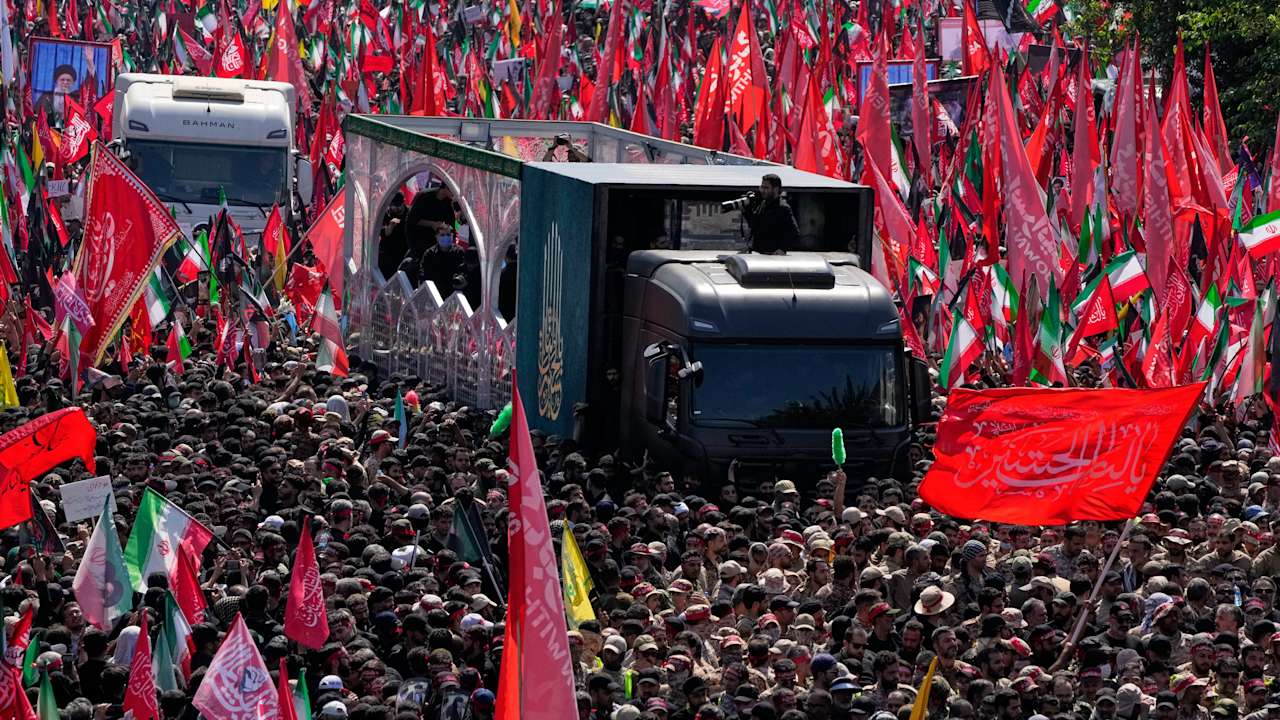
They came during the funeral for Supreme Leader Ayatollah Ali Khamenei, who was killed February 28 in the war’s first moments, which had been thought to be a period of lower tensions.
They threatened to choke off the flow of traffic in the strait just as countries hoped to restore normal shipping practices and ease the global economic strain of the war.
Hours later, the US revoked the 60-day license issued last month by the Treasury Department that waived sanctions on Iranian oil as part of the interim deal.
A US official said the license was revoked because Iran’s actions in the strait were unacceptable and needed to be met with consequences.
The Iranian mission to the United Nations did not immediately respond to a request for comment.
One tanker was traveling off the coast of Oman when it was hit and caught fire, the United Kingdom Maritime Trade Operations (UKMTO) Centre said.
Iranian state television said the liquefied natural gas tanker came under attack after ignoring warnings but did not directly claim the assault.
The other two ships sustained some damage, but no one was injured, and both continued on their way, UKMTO said.
Tehran, which has repeatedly declared that only its approved route through the strait is safe, is suspected of attacking other ships that have used another route close to the Omani shore.
Location details provided by the UK agency showed that all three attacks occurred off the coast of Oman or the neighboring United Arab Emirates, making it likely that the ships were using the route near Oman.
The US is eager to press ahead with negotiations with Iran aimed at fully reopening the strait, rolling back Tehran’s disputed nuclear program and reaching a permanent end to the war launched in February.

The interim deal has been strained, with previous attacks in the strait sparking retaliatory strikes.
In peacetime, a fifth of all traded oil and natural gas passed through the channel.
Talks between Iran and the US appeared to be on hold until after the burial of Iran’s Supreme Leader Ayatollah Ali Khamenei, who was killed at the beginning of the war.
Follow STV News on WhatsApp
Scan the QR code on your mobile device for all the latest news from around the country