 Adobe Stock
The public should be “reassured” that ministers are making contingency plans for the impact of the Iran war, the Business Secretary has said following a leak suggesting the worst-case scenario could see food shortages.
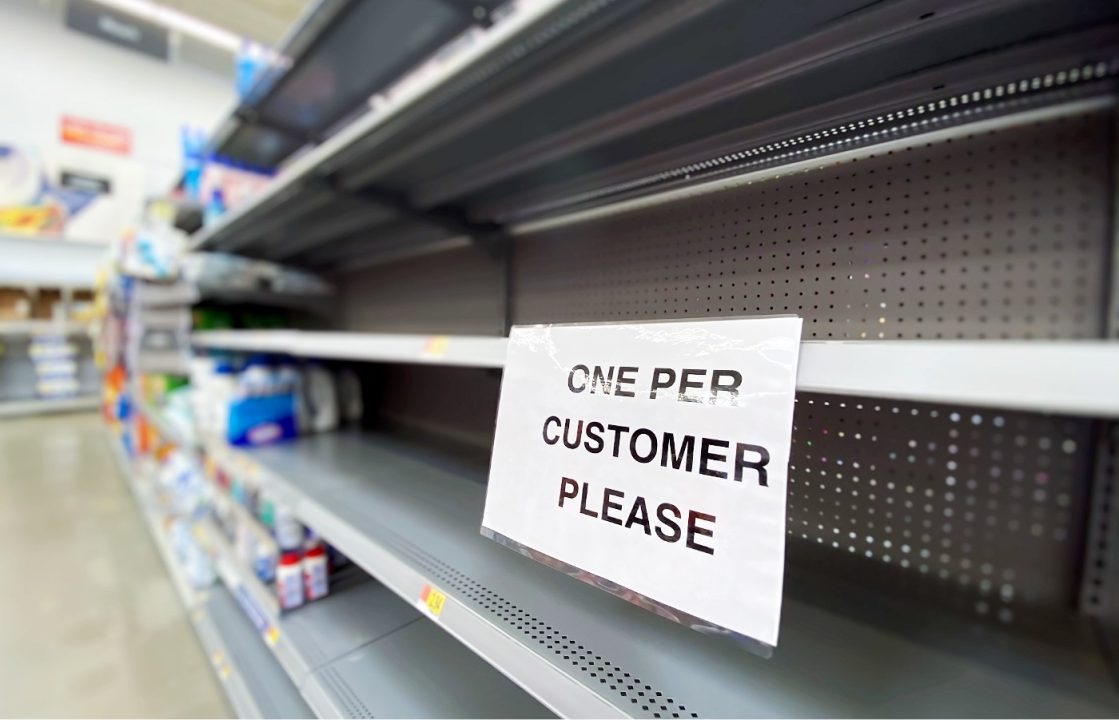
The Government is preparing for food shortages as a result of the conflict, according to the Times.
Though the war is not likely to lead to critical shortages, a reasonable worst-case scenario from leaked Government plans shared with the newspaper suggests there could be less variety on supermarket shelves should fighting continue unabated.
Carbon dioxide (CO2) supplies would also be hit should the conflict last into the summer according to the same leak, which would have an impact on the storage of packaged meats and salads, and on breweries, who use the gas to make drinks fizzy.
On Thursday, the boss of Tesco said the supermarket was in “constant contact” with the Government to support its contingency planning, but had not seen any problems with suppliers so far.
Peter Kyle told Times Radio the Government did not comment on leaks, but he added: “It is difficult for me, because, of course, these leaks are very unhelpful.
“But when people do read it, they need to be reassured that we are doing this kind of planning, and we are doing this kind of scenario planning.
“Bear in mind that back in Covid, Boris Johnson missed five Cobra meetings in the lead up to it.
“I can tell you, because I’m in these meetings, the Prime Minister has been there since the very start, and he is going through personally and driving deep dives into lots of areas of resilience throughout our economy.”
He later insisted supplies of carbon dioxide are “not a concern” for the UK.
The Business Secretary also told Sky News: “If any of these things change, I will be up front with the public about it in advance so that we can prepare.
“But right now, people should go on as they are, enjoying beer, enjoying their meats, enjoying all the salads.
“But also there are critical uses for CO2: MRI scanning, for example, water purification; it’s involved in our nuclear industry, our civil nuclear power industry, some defensive uses for it as well.
“There’s lots of needs for CO2, so these are the reasons why I took it so seriously way back to six months ago, not just in the last few weeks.”
Mr Kyle said he had mothballed a CO2-producing plant in Teesside shortly after becoming Business Secretary in order to prevent it shutting down completely.
On the outbreak of war, the Government provided funding to reactivate the Ensus bioethanol plant, which makes CO2 as a by-product, in order to shore up supplies of the gas.
Tesco chief executive Ken Murphy said the Government was “doing the right thing” in planning for the worst-case scenario.
He told reporters during a press call: “We are in constant contact with the Government for their scenario planning and we completely support their efforts.
“At this time, we haven’t seen any issues and are in very strong shape. We constantly talk to our suppliers and none of our suppliers have raised any issues.”
Separately, Health Secretary Wes Streeting told LBC he was “confident” that NHS supplies would remain resilient, but added there were plans to prioritise ambulances should diesel shortages materialise.
He added: “The likelihood of us needing to activate these worst-case scenario plans is reassuringly low.”
A Government spokesperson said: “Reasonable worst-case scenarios are a planning tool used by experts and are not a prediction of future events.”
Elsewhere, Rachel Reeves has expanded plans to cut electricity bills for thousands of UK manufacturing firms as she continues talks in Washington DC focused on the economic fallout from the Iran conflict.
In a bid to help businesses hit by rising costs, a plan announced last summer to cut electricity bills by up to 25% for more than 7,000 UK businesses will be expanded to cover 10,000 firms.
The GMB union said members in gas-intensive industries, the ceramics sector and other manufacturing companies were “sickened at the lack of support” after being “shamefully ignored by the Government in this announcement”.
Tory shadow energy secretary Claire Coutinho said “just 0.2% of businesses will benefit from this”, while “pubs, restaurants, farmers, retailers being hammered by higher taxes and energy bills under Labour won’t get any support”.
Follow STV News on WhatsApp
Scan the QR code on your mobile device for all the latest news from around the country