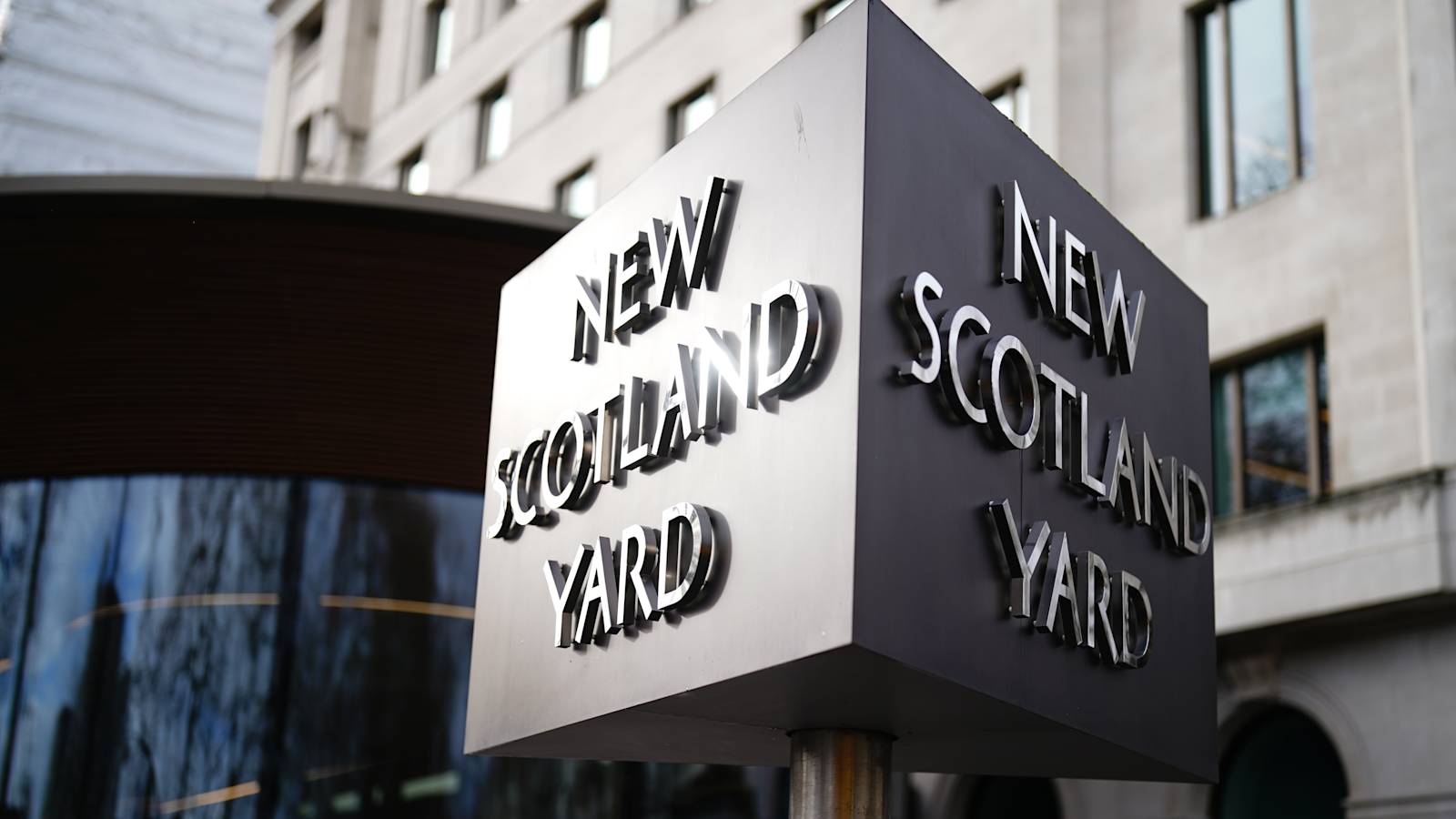
More than 130 officers and staff in Britain’s biggest police force, including two serial rapists, committed crimes or misconduct after they were not properly vetted, a review has found.
David Carrick, one of the UK’s worst sex offenders, and Cliff Mitchell, who carried out a “campaign of rape” on two victims over nine years, were among Metropolitan Police officers who were not properly checked.
Carrick, who was given 37 life sentences for his crimes, was not properly vetted in 2017, with checks failing to reveal an allegation of domestic abuse against him.
Mitchell was allowed to join the force in 2020 after a vetting panel, which partly aimed to improve diversity, overturned a decision to reject him from the police despite a previous accusation of raping a child.
The 131 cases were revealed as part of a vetting review that looked at the ten years up to the end of March 2023.
Other serious crimes committed by the officers and staff include drug use, racism, violence and affray.
The review published on Thursday found that thousands of police officers and staff were not properly checked amid pressure during a national recruitment drive from July 2019 to March 2023.
Senior officers at the Met chose not to meet national guidelines amid a scramble to find 4,557 recruits in a three-and-a-half year period.
The deviations from standard practice meant thousands of references were not checked, and shortcuts in vetting led to the recruitment and retention of some officers and staff who should not have been in the force and contributed to police-perpetrated harm and damaged public trust, it said.
The Home Secretary ordered a watchdog to inspect the force’s vetting procedures in light of the report.
His Majesty’s Inspectorate of Constabulary and Fire and Rescue Services will also examine whether other forces in England and Wales deviated from national standards.
A report on vetting in 2022 that examined eight forces raised a series of concerns including a failure to check references as well as issues with vetting.
The forces inspected at the time were Metropolitan Police, Kent Police, the Civil Nuclear Constabulary, Cumbria, South Wales, Nottinghamshire, Dorset and Devon and Cornwall.
Home Secretary Shabana Mahmood said abandoning vetting checks on officers was “a dereliction of the Met’s duty to keep London safe”.
“Londoners rightly expect officers to undergo robust checks so that the brightest and best – not criminals – are policing our streets.
“I have asked the Chief Inspector of Constabulary to carry out an inspection as I seek to restore trust in the force’s ability to protect and serve the public.”
Under the PUP, forces in England and Wales were expected to recruit 20,000 officers within three and a half years to replace those cut during austerity, and funding was ringfenced and therefore lost if targets were not met.
The report found: “The review identifies a series of decisions, some of which were taken in isolation, which all compounded together and inadvertently increased risk.”

In total, 5,073 officers and staff were not properly vetted, of whom 4,528 had no Special Branch vetting checks, 431 had no Ministry of Defence (MoD) checks, and 114 had a vetting refusal overturned by a Met internal panel.
Another 3,338 who were due for vetting renewal had only limited checks.
The Met estimates that around 1,200 people who joined the force may have had their vetting refused under normal practices, out of around 27,300 applications.
Separately, 17,355 officers and staff did not have their references properly checked, if at all, between 2018 and April 2022.
The Met has not checked each of these files, but estimates that around 250 would not have got a job if their references had been checked.
The “deviations” identified included:
- Automatically transferring officers from other forces without renewing their current vetting;
- Not checking former service personnel against MoD records between at least May 2020 and September 2021;
- No research against Special Branch or counter terrorism indices between at least May 2020 to October 2020;
- Acceptance of past clearance for former employees who had left the Met for up to a year;
- Reduced checks for officer and staff renewals, including a time when the vetting unit only looked on the police national computer instead of a full vetting review;
- In around April 2019 some new officer recruits joined the force before receiving national security clearance;
- Internal processes were sped up so that many personnel security checks on Met special constables and internal staff were removed.
The report also found that a since-abolished vetting panel, that aimed to tackle disproportionality in the workforce, overturned decisions to refuse vetting of 114 officers and staff, of whom 25 went on to commit misconduct or have been accused of a crime.
The review said senior officers faced political pressure and had to meet recruitment targets or lose funding to other forces.
Since current Met Commissioner Sir Mark Rowley took over the role in September 2022, 1,500 officers have been sacked in what has been billed as a bid to clean up the force. He was also a high-ranking Met officer between 2011 and 2018.
The report said that out of 730 vetting cases reviewed, 39 officers and staff had to be re-checked, with 23 cleared.
One officer resigned, another was sacked for a different reason, six cases are ongoing, and eight have been referred to potentially face dismissal.
The report concluded: “There were deviations from policy and practice, overconfidence in the ability to recruit at scale and lack of resources in vetting increased risk.
“It is extremely difficult to establish a causation chain between system changes and the potential harm caused to the public and other members of the Metropolitan Police Service (MPS).
“However, it is known that the scale and impact of these deviations ranged, with some tolerable and minor in nature, to those having a more substantive impact, including the recruitment and likely retention of individuals who have gone on to cause harm through criminality and misconduct – events that have undermined public confidence in the MPS.”
The Met says it has taken action to clean up the workforce and tighten vetting standards.
Assistant Commissioner Rachel Williams said: “In publishing this report today, we are being open and transparent about past vetting and recruitment practices that led, in some cases, to unsuitable people joining the Met.
“We have been honest with Londoners on many occasions about previous shortcomings in our professional standards approach. This review is part of our ongoing work to demand the highest standards across the Met so the public can have trust and confidence in our officers.”
Paula Dodds, chairwoman of the Metropolitan Police Federation, said the report “illustrates a farcical situation” in which hitting a numerical target of recruits “has taken precedence over normal checks and balances”.
“The good, brave and hard-working colleagues we represent are the first to say that the small minority of officers who are not fit to serve should not be in the police service.
Follow STV News on WhatsApp
Scan the QR code on your mobile device for all the latest news from around the country