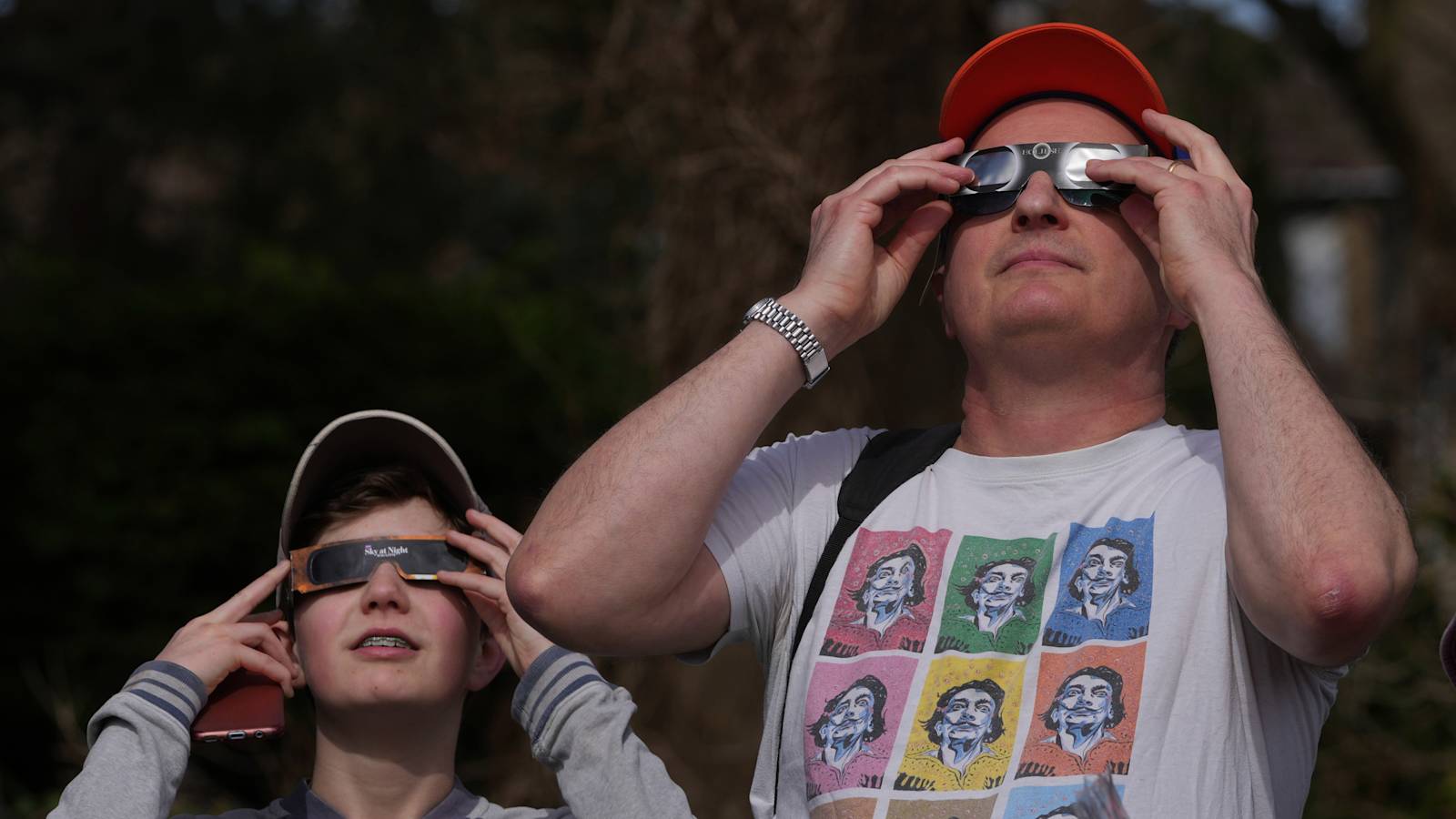
Major retailers have sold out of special viewing glasses, with customers travelling for miles to get their hands on a pair ahead of the most significant solar eclipse since 1999 this evening.
The Royal Greenwich Observatory said it had sold approximately 15,000 pairs of eclipse glasses – a sellout – in the last month, while some convenience stores have had to turn customers away.
“Today I already sold 6,000 pairs. At 2.30am we had a delivery from Spain and by 9.30am we sold out everything,” said Ali Raza, owner of the AM2PM store in Whitechapel, east London.
The Moon will pass between the Sun and the Earth from 6pm on August 12, briefly aligning the three celestial bodies.
According to Nasa, people in parts of Greenland, Iceland, Spain, Russia and Portugal will experience a total solar eclipse.
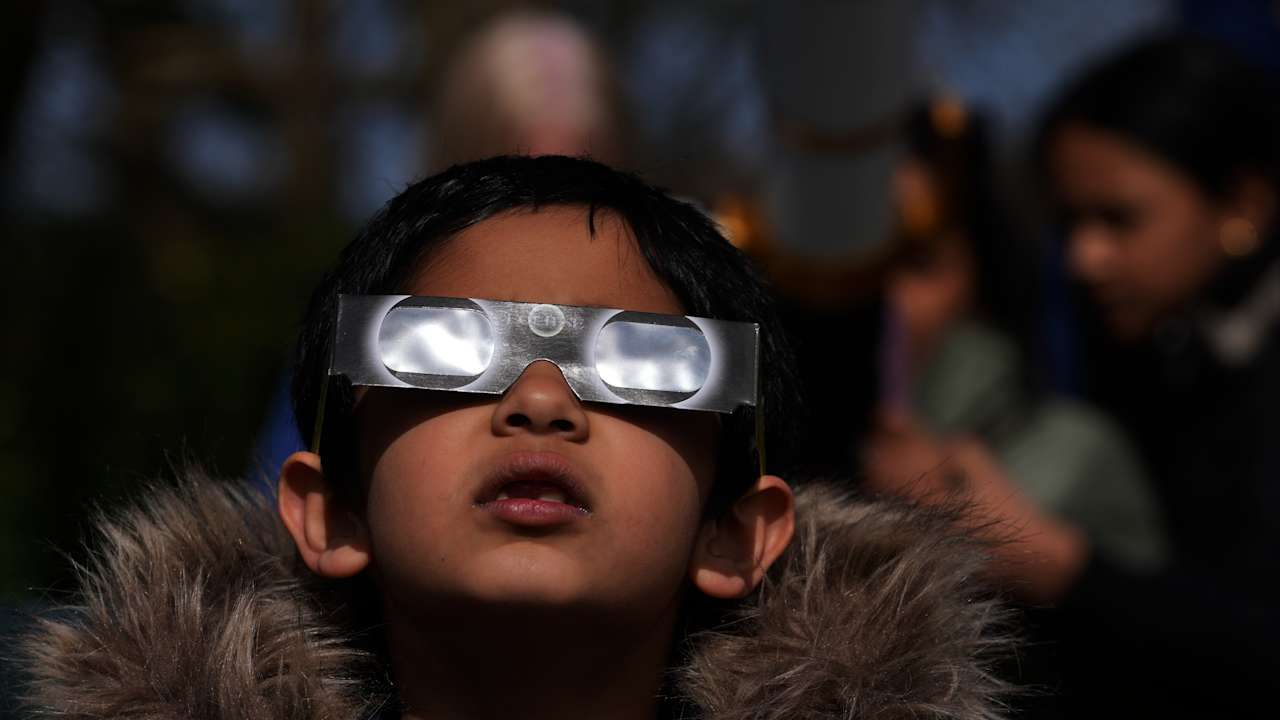
In the UK, there will be a partial eclipse, with up to 96% of the Sun obscured by the Moon in some areas – the most it has been blocked since the total eclipse in 1999.
While the event is exciting, experts have stressed the importance of viewing the eclipse safely to avoid damaging your eyesight.
Solar eclipses should not be observed without adequate eye protection, as exposure to the Sun’s radiation can cause retina damage.
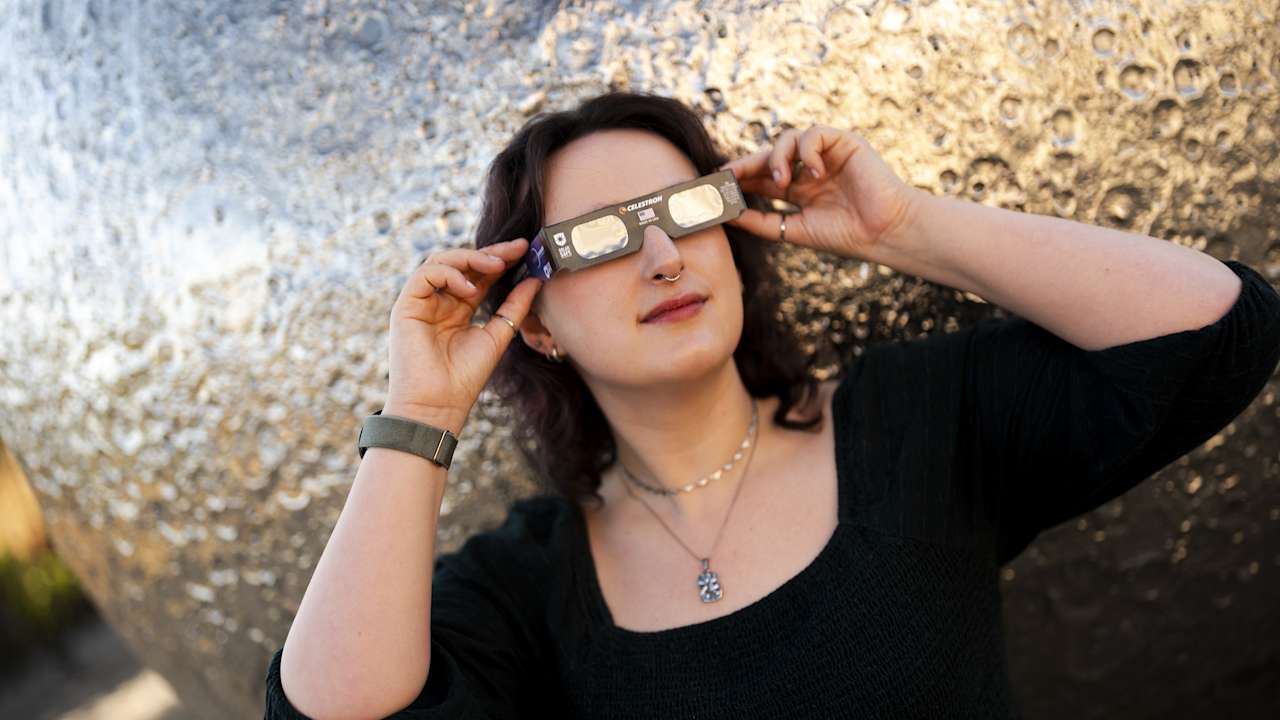
The safest way to view the phenomenon is with certified eclipse glasses fitted with industry safety standard filters.
However, with many retailers selling out, the UK Health Security Agency has urged people to be wary of products claiming to offer protection without meeting the necessary safety requirements. It also advises against using glasses with scratched or damaged lenses.
If you were unable to grab a pair of eclipse glasses, do not worry, as there are still safe ways to enjoy the event.
David Jones, a consultant ophthalmologist at Royal Cornwall Hospitals Trust, has shared a range of simple DIY viewing methods on social media, showing how people can watch the eclipse safely without looking directly at the Sun or needing specialist equipment.
David Jones, a consultant ophthalmologist, shares his DIY tips on safely viewing the eclipse without looking directly at the Sun. Credit: Royal Cornwall Hospitals Trust
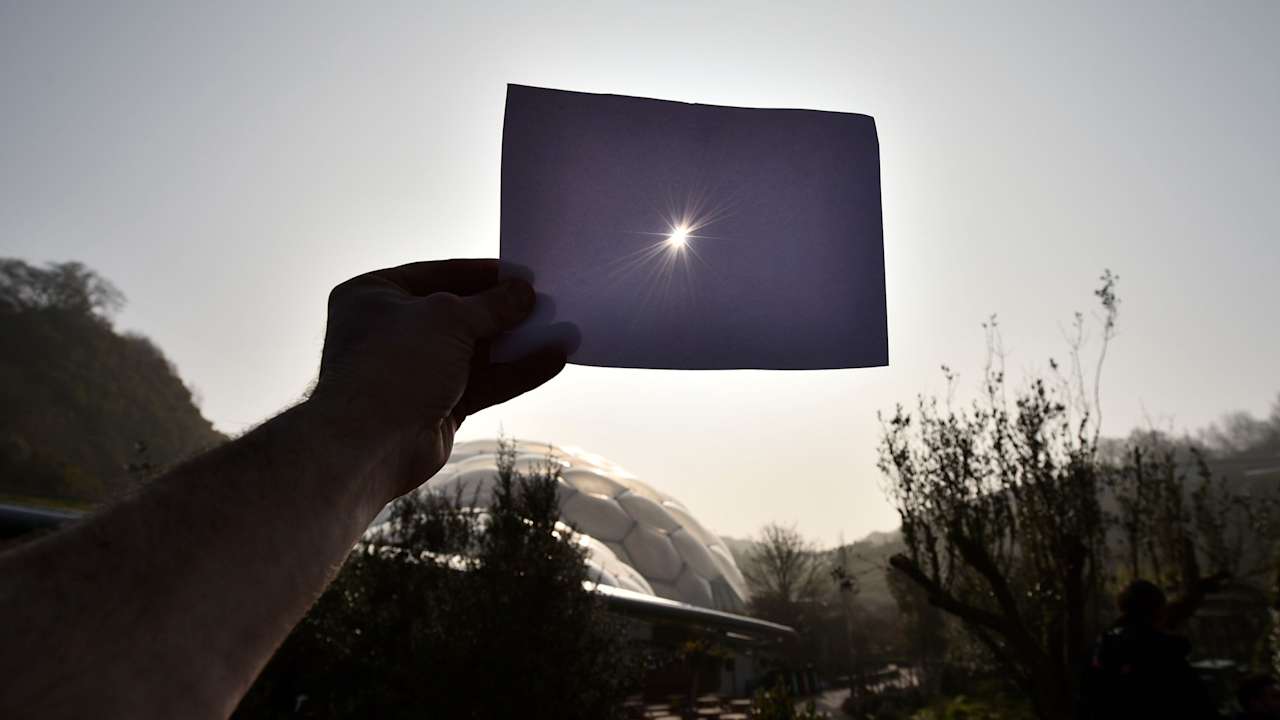
Pinhole viewer
One option is making a pinhole viewer using two sheets of card and a pen or pencil. This lets you safely project an image of the Sun, according to the UKHSA.
To do this, take the pen and make a hole in the middle of a sheet of coloured card.
Stand with your back to the Sun and hold the card up, with a white piece of card behind it. Sunlight should pass through the hole onto the second sheet, and you can watch the eclipse appear as a projected image.
Colander method
Looking away to protect your eyes, hold a colander up towards the Sun so that it projects beams of light onto a surface, such as a white piece of paper.
Mr Jones said this method is his favourite, as you can make 100 pictures of the Sun all at once.
Use a dark box
For this, you will need a cardboard box, such as a cereal box, some white paper, a piece of foil, scissors, a pen and a glue stick or tape.
Take the cardboard box and stick a section of white paper to one side.
On the opposite side, poke two holes – one for viewing and the other a pinhole.
Cover the pinhole with a piece of aluminium foil. Then stand with your back to the Sun and look into the viewing hole. You should see a picture of the Sun on the white piece of paper within the box.
Mr Jones said due to the darkness from the box you will get a “really good picture of the eclipse”.
Watch a livestream of the eclipse
The Royal Observatory Greenwich and the Astronomical Society of Edinburgh will be livestreaming free, live feeds of the eclipse.
A livestream will be available to watch online on the ITV News YouTube channel from 6pm to 8pm and from 6.20pm on ITV X.
Astronomical society events
Local astronomical societies across the UK are hosting public events for people to watch the eclipse using special glasses and solar telescopes.
These include the South London Astronomical Society, Reading Astronomical Society and the Astronomical Society of Edinburgh.
What happens if I look at the eclipse without eye protection?
The UK Health Security Agency (UKHSA) warns of the risk of retina damage if viewers look into the Sun without adequate protection.
An eclipse makes the Sun appear dimmer, meaning you may be tempted to catch a glimpse with the naked eye.
However, this can override the body’s natural reflex to look away, allowing intense sunlight to enter and damage the retina.
Crucially, the retina has no pain receptors, so you will not feel the damage as it happens.
Data from the Royal College of Ophthalmologists shows there were around 70 cases of vision problems following the 1999 solar eclipse, with around 40% viewing it for less than a minute.
Do sunglasses work just as well?
The UKHSA says sunglasses or 3D glasses will not adequately protect your eyes and should not be used as a replacement for eclipse glasses or handheld solar viewers.
Although they reduce glare, they do not stop harmful solar radiation from hitting the eyes.
The solar eclipse can be spotted across the UK from 6pm until 8pm on Wednesday, and is set to peak between 7.05pm and 7.16pm, depending on location.
The next time the Moon obscures as much of the Sun will be in 2081, and the next total solar eclipse in the UK will be in 2090.
Whatever you do on Wednesday, don’t look directly at the Sun.
Follow STV News on WhatsApp
Scan the QR code on your mobile device for all the latest news from around the country