
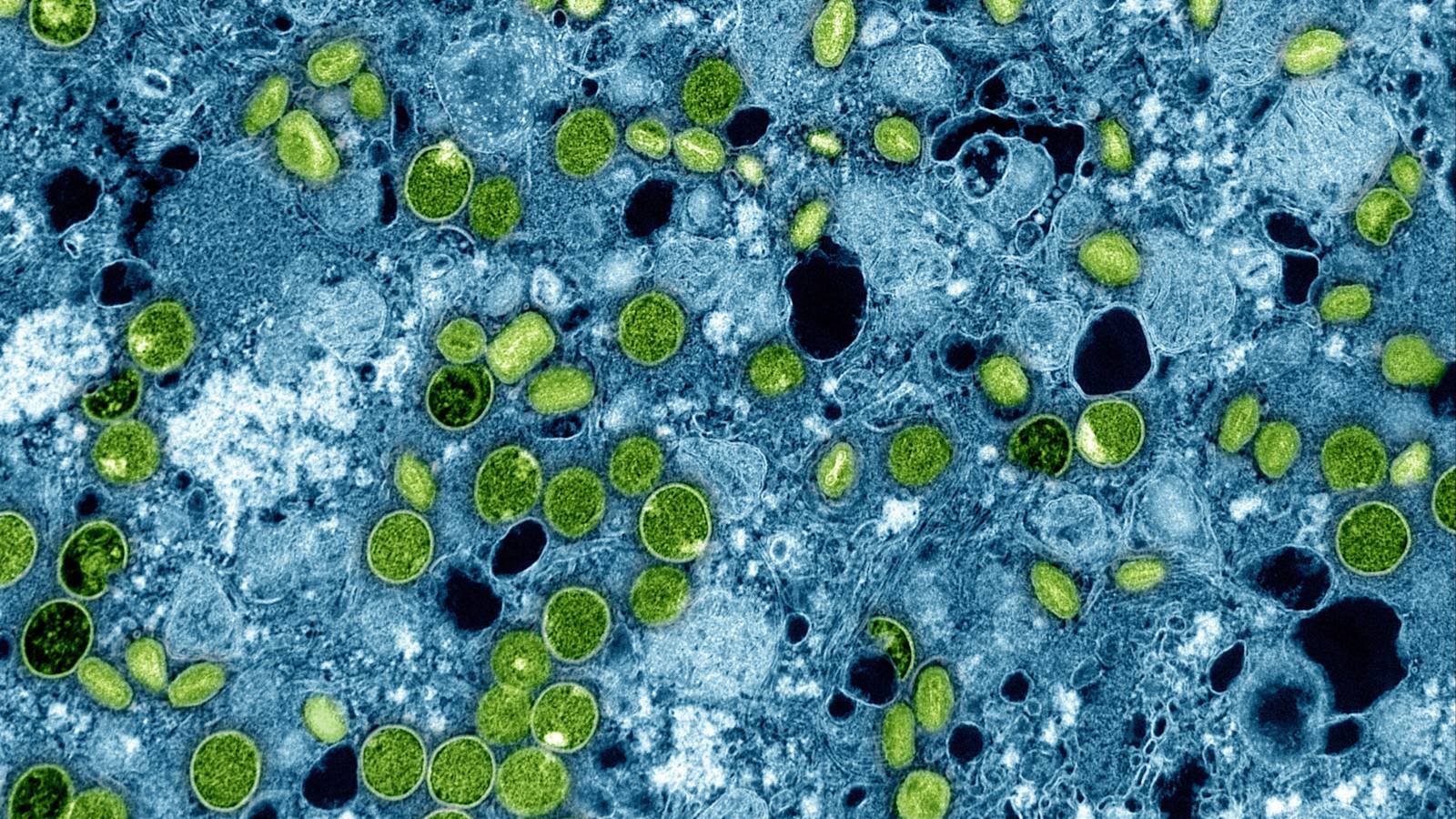
Scientists in England have found a new strain of mpox.
The new strain was found in a person who had recently travelled to Asia, the UK Health Security Agency (UKHSA) said.
Officials said they identified a “new recombinant mpox virus”, which means it has genetic material from different viral strains.
The UKHSA said that genomic sequencing showed that the mpox genome contained elements of clade Ib and IIb mpox.
Dr Katy Sinka, head of sexually transmitted infections at UKHSA, said: “Our genomic testing has enabled us to detect this new mpox strain.
“It’s normal for viruses to evolve, and further analysis will help us understand more about how mpox is changing.
“Although mpox infection is mild for many, it can be severe.
“Getting vaccinated is a proven effective way to protect yourself against severe disease, so please make sure to get the jab if you are eligible.”
The NHS offers the mpox vaccine to those deemed a higher risk of catching the virus, such as men who have sex with other men and have multiple partners.
Commenting on the announcement, Professor Trudie Lang, from the University of Oxford, said: “It is of concern that there is an mpox case in the UK, and of further concern that it is a new recombinant mpox virus.
“This case highlights that mpox is circulating globally and is evolving, as predictable with these viruses.
“The recent experience we have had, and still persists in Africa, when clade Ib emerged, showed that this virus can cause severe disease, and so measures to reduce transmission and prevent spread are vital.”
She added: “With clade Ib we observed changes in transmission, seeing person-to-person close contact as well as sexual transmission, changing from previous strains being limited mainly to animal-to-human and within households, and the previous European outbreak where the transmission was limited to close sexual transmission.
“So, if further cases of this strain appear in the UK, and anywhere in the world, it will be important to understand the route of transmission, the presentation and severity of disease, so we can assess whether this strain is more or less dangerous than previous ones and response accordingly with a connected global effort.”
Dr Boghuma Titanji, assistant professor of medicine at Emory University in Georgia in the US, said: “The identification of a recombinant mpox strain containing elements of both Clade I and Clade II is precisely what experts in the field feared would happen if the virus continued to spread globally without a decisive response to stop it.
“The key concern now is whether events like this will alter the virus’s transmissibility or virulence.”
UKHSA said it will “continue to assess the significance of the strain”.
Symptoms of mpox include skin rash with blisters, spots or ulcers that can appear anywhere on the body, as well as fever, headache, backache and muscle aches.
A rash usually appears one to five days after a fever, headache and other symptoms.
Mpox spreads between people through direct contact with rashes, skin lesions or scabs caused by the virus, including during sexual contact, kissing, cuddling or other skin-to-skin contact.
There is also a risk from contact with bodily fluids such as saliva or snot; contact with bedding or towels or clothing; and a possibility of spread through close and prolonged face-to-face contact such as talking, breathing, coughing, or sneezing.
Follow STV News on WhatsApp
Scan the QR code on your mobile device for all the latest news from around the country