
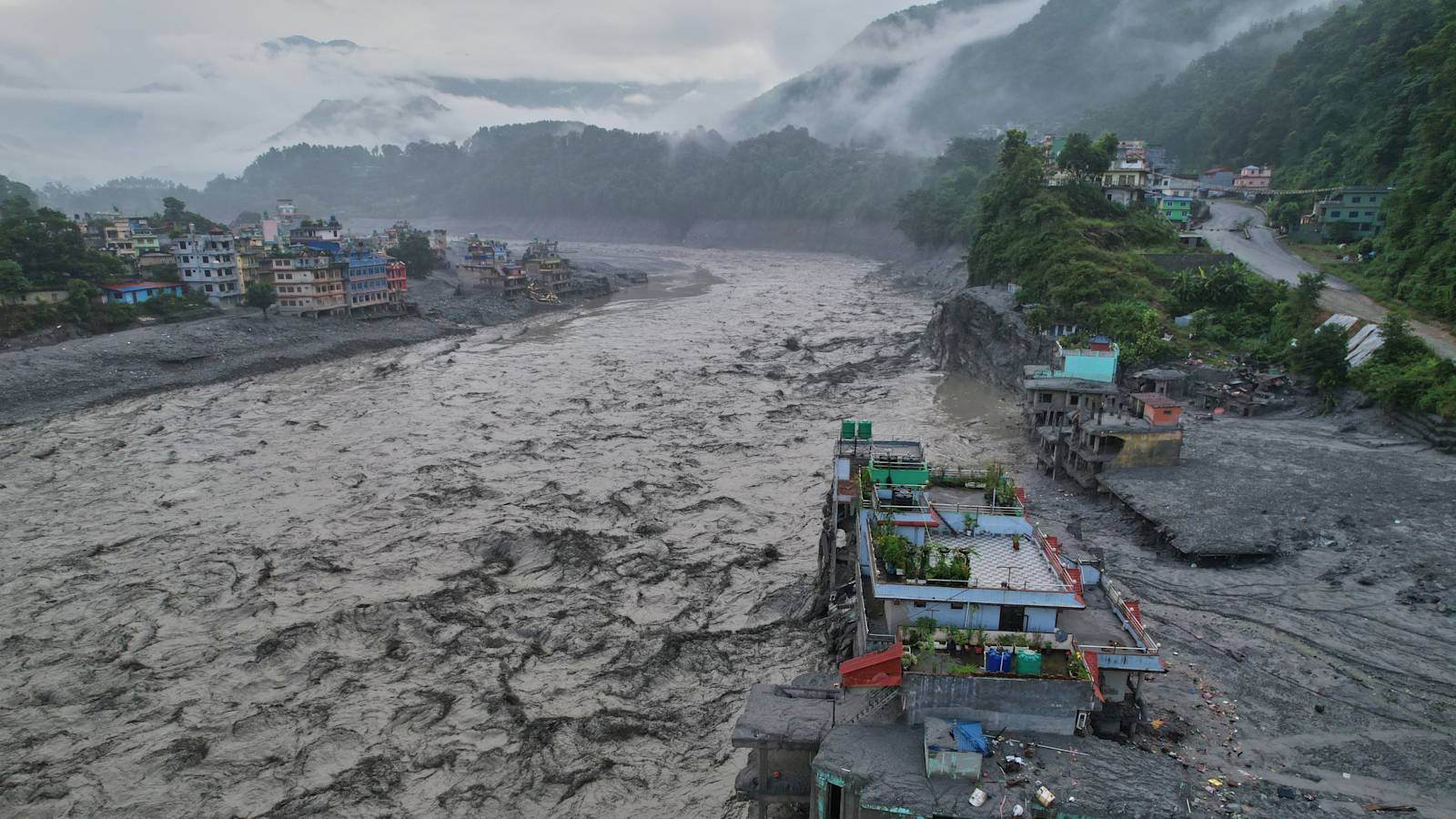
A desperate search for survivors goes on as Nepal’s rainy season threatens further flooding – more from ITV News Reporter Chloe Keedy and News Correspondent Neil Connery
The death toll in the catastrophic flooding in Nepal and Tibet has climbed past 900 with more than 4,700 missing.
Nepal’s disaster agency said Monday that 903 deaths had been counted there, with 4,247 people, including 592 foreigners, missing. As of Sunday, Chinese authorities reported 16 deaths and 546 missing.
Wednesday’s flash floods started after a glacial collapse high in the Himalayan region. The rocks and melted water then swelled the rivers in the valleys below, causing a torrent of water that swept buildings, bridges and earth downstream in Tibet and Nepal.
Authorities in Nepal have warned of possible fresh flooding and urged residents to remain on high alert after water levels of a river running along the Tibetan border rose again on Sunday.
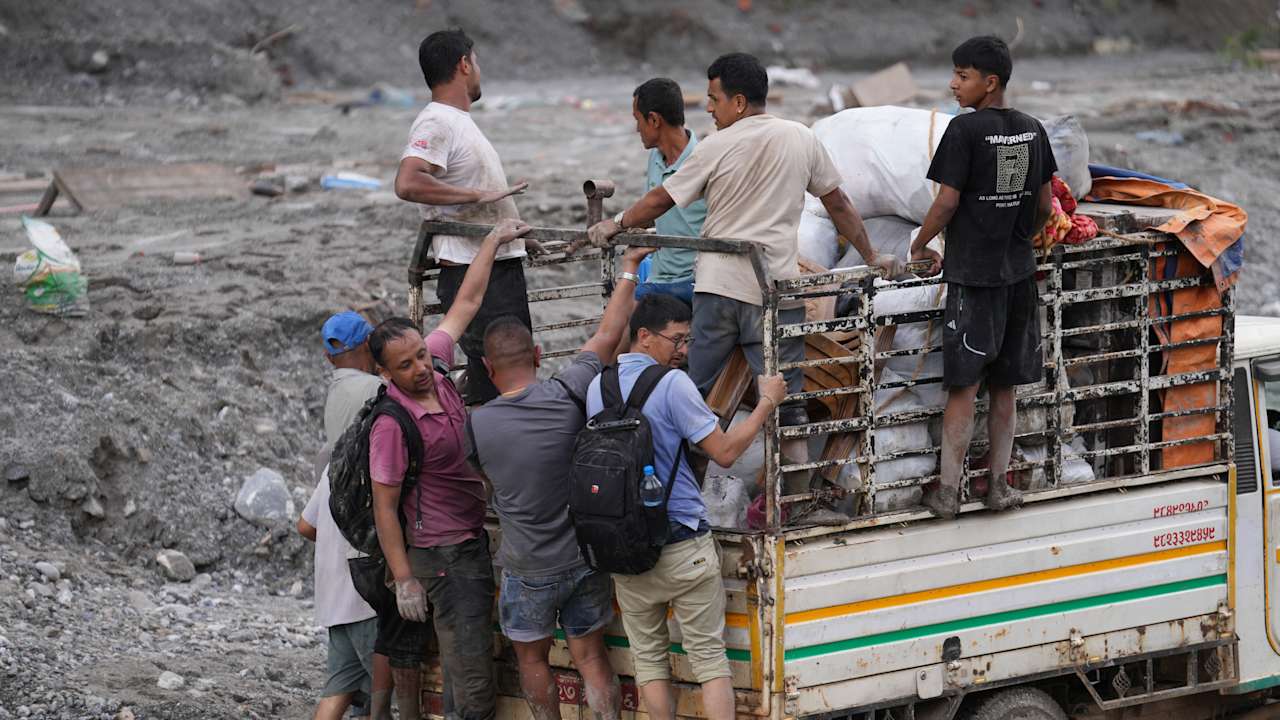
Flood warning notices were sent to people’s phones as rescue crews worked to clear a major highway connecting Kathmandu to one of the areas worst hit by Wednesday’s catastrophic floods.
The latest warnings came after Chinese authorities informed their Nepalese counterparts of increased water flow upstream, according to Dharam Raj Uprety, chief executive of Nepal’s National Disaster Risk Reduction and Management Authority.
The Chinese state news agency Xinhua, citing the country’s water resources ministry, said a new lake formed after Wednesday’s floods high in the mountains had largely drained.
But Xinhua said the ministry warned that a crater located 3.5 miles upstream, which held an estimated 1.4 million cubic meters of water, still posed some risk and required close monitoring.
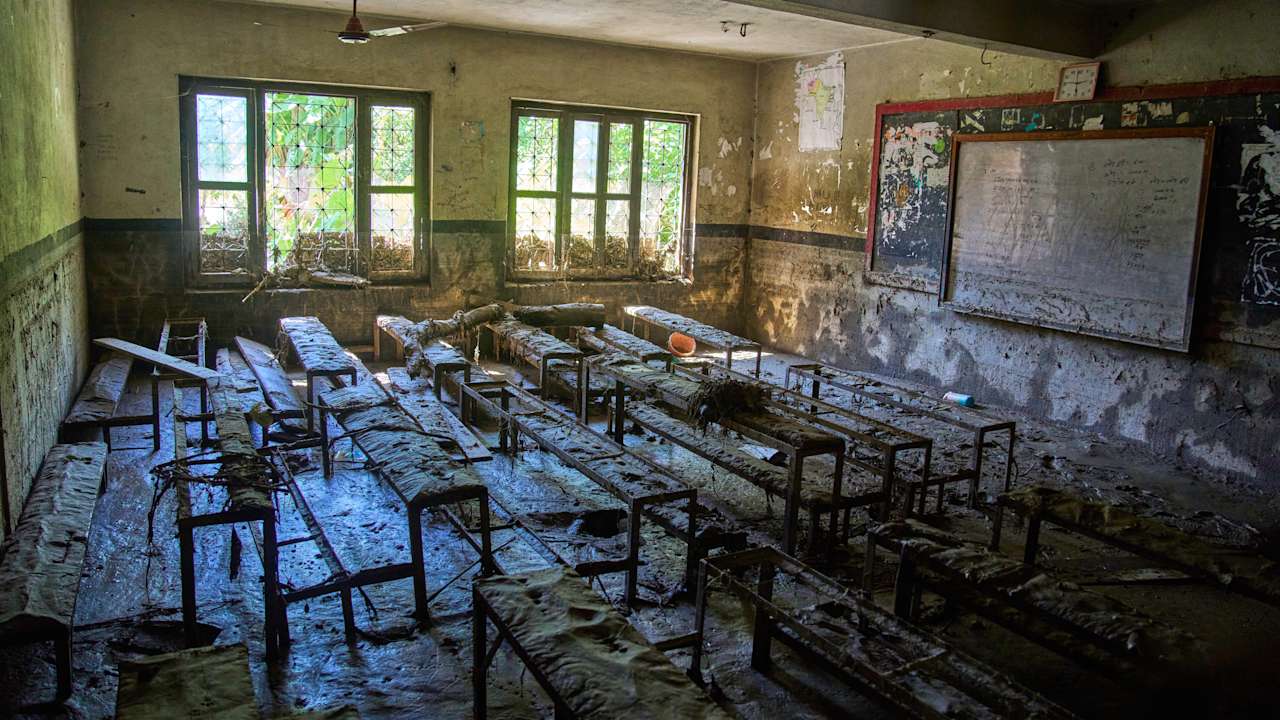
Some people are returning to what remained of their homes
In Dhading, one of the worst-hit regions in Nepal, some residents began returning to ruined homes to see what can be salvaged.
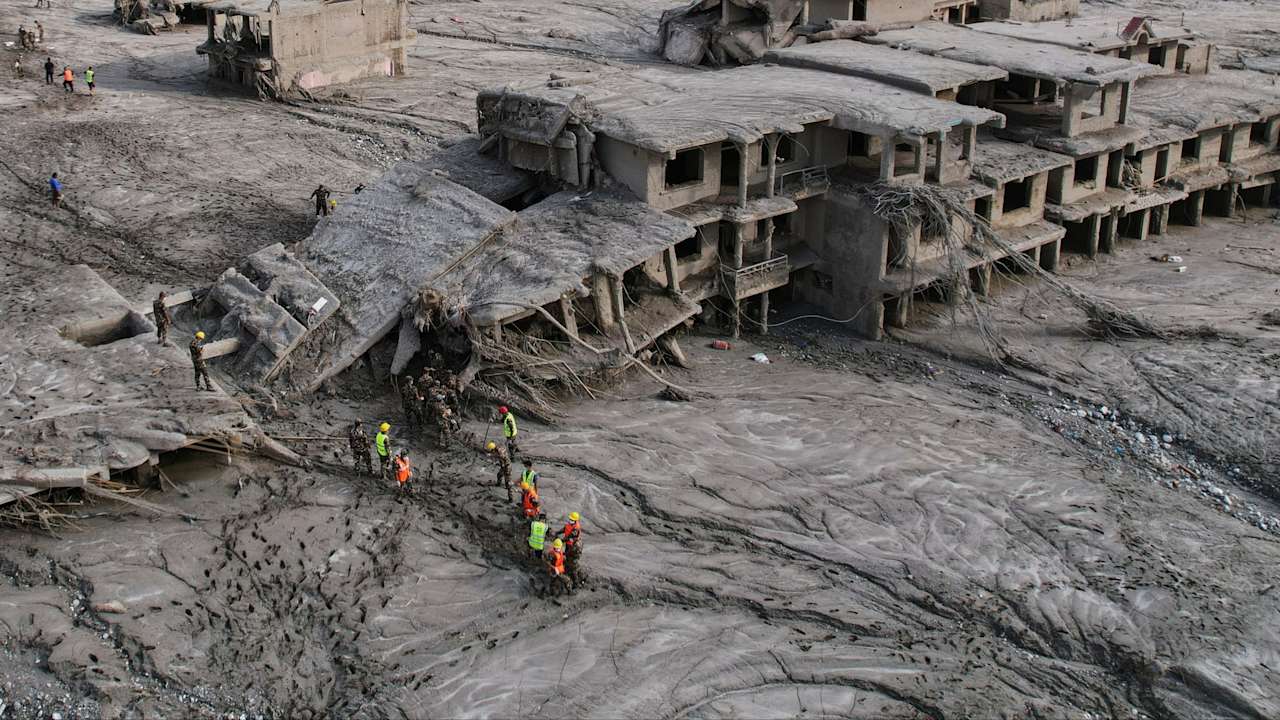
Residents sat in homes with walls washed away by the floods, shoveling sludge-like mud and rubble off balconies or window frames. Others scanned the ground for items they could pick out of the mud and rinse off.
“Everything is finished. Nothing is left. Not even our home,” Sharmila Tamang, a Dhading resident who was trying to salvage items from her home said.
At a key power plant that was severely damaged by the floods, workers started inspecting the facilities on Sunday to survey the destruction.
In the town of Galchhi, a group of residents sought higher ground on a nearby bridge and watched as the river roared by.
Some pointed to enormous rocks washed downriver during the earlier floods, while others standing on a suspension bridge were warned off with whistles.
Along the river, homes, vehicles and farm tractors could be seen jutting from the thick gray-brown sediment that enveloped entire villages in some areas.
Parts of rice terraces along the riverside had dropped into the river after landslides hit them.
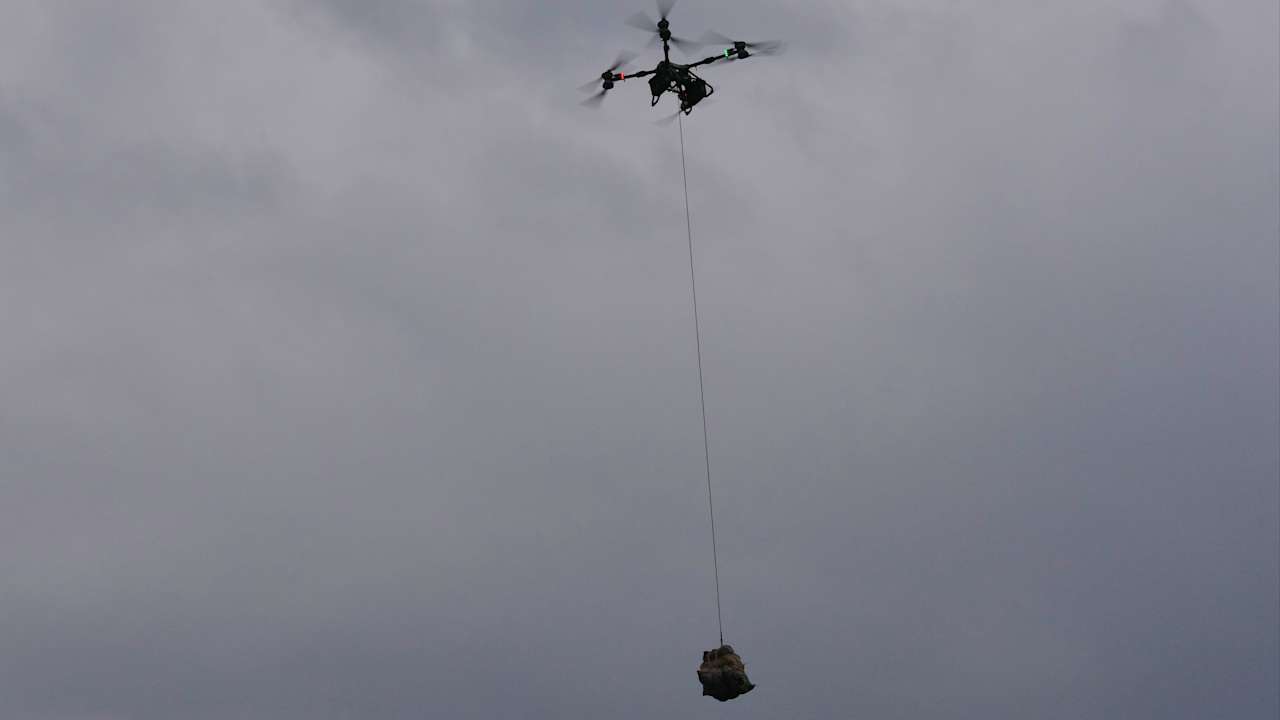
Homes and businesses left intact after the flooding were still without electricity on Sunday, as twisted power line poles and wires lay tangled in the mud.
Residents of flood-hit villages said they were struggling to make sense of near-constant alarms they’ve received since the initial floods.
“Sometimes they say a flood is coming, then we have to run again to higher ground, even at night. There is also rain,” said Govind Shreshta.
“It’s really difficult for me. I have a 72-year-old father and 70-year-old mom. I must carry them and I am exhausted. It’s going on like this for those who are still alive.”
Large concrete and smaller suspension bridges were destroyed, leaving communities on the other side of the river with less easy access.
“Those who are there are now stuck there. Those who are here are stuck here. It’s going to be very difficult,” said Sattan Singh Tamang, 47, who was working near a bridge when Wednesday’s floods came.
Minister says Nepalis have become victims of climate change
Wednesday’s flash floods started after a glacial collapse high in the Himalayan region.
Scientists who studied satellite images said bedrock underneath a glacier high in the Himalayan region had collapsed, taking part of the glacier with it. The rockfall was so extreme that it registered as a magnitude 5.2 earthquake.
The rocks and melted water then swelled the rivers in the valleys below, causing a torrent of water that swept buildings, bridges and earth downstream in Tibet and Nepal.
Nepal’s foreign minister called for a global response to climate change, saying Nepal was bearing a disproportionate share of its impact.
“Despite having only 0.1% contribution to the global emissions, people of Nepal have become major victims of climate change,” Shisir Khanal said Saturday.
Scientists have said it is too early to draw a direct connection between global warming and Wednesday’s catastrophe.
However, they said that as Earth’s temperature rises because of human activities such as burning oil, gas and coal, the chances of such disasters increase, especially in the Himalayan mountains, which are warming considerably faster than many other parts of the world.
Follow STV News on WhatsApp
Scan the QR code on your mobile device for all the latest news from around the country