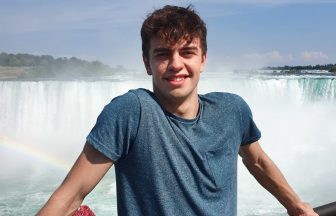
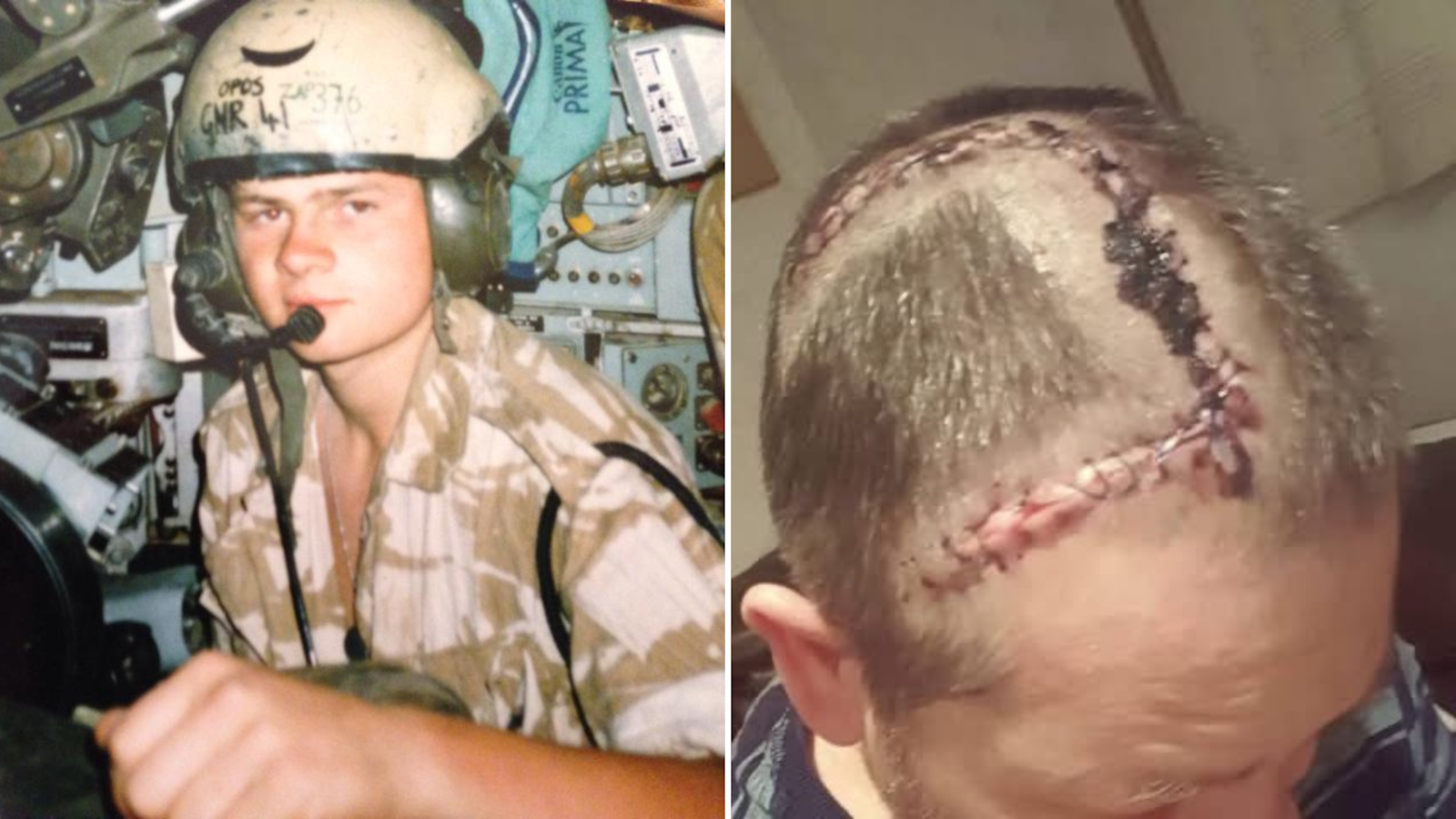
After leaving the military, Glen and Richard were both diagnosed with AVMs; abnormal tangles of blood vessels in their brains. ITV News’ Science Correspondent Martin Stew reports.
Words by ITV Senior News Editor, Paul Tyson
“Like a hand grenade in your head with the pin taken out.”
Earlier this year, ITV News told the story of veteran Steven Cunningham who was diagnosed with an Arterio-Venous Malformation (AVM) in his brain following years of exposure to blast waves from the guns he fired.
AVM is a rare and dangerous condition, a vascular mutation that causes high pressure blood to flow from arteries directly into veins, which normally operate at much lower pressure.
The risk of rupture and a disabling or fatal brain bleed is high.
Immediately after our report, a number of veterans contacted us to say they had also suffered an AVM. Among them was Royal Marines veteran Glen.
He happened to switch on the television just as our report began. “The hairs on the back of my neck went up because I could just relate so well to it,” he said.
“I had friends ring me up and say ‘are you watching this? This is you Glen.’ Up until then I thought I was a unique case, a one-off.”
Curious about how many more veterans were affected and whether blast exposure was to blame, Glen posted his story on Facebook.
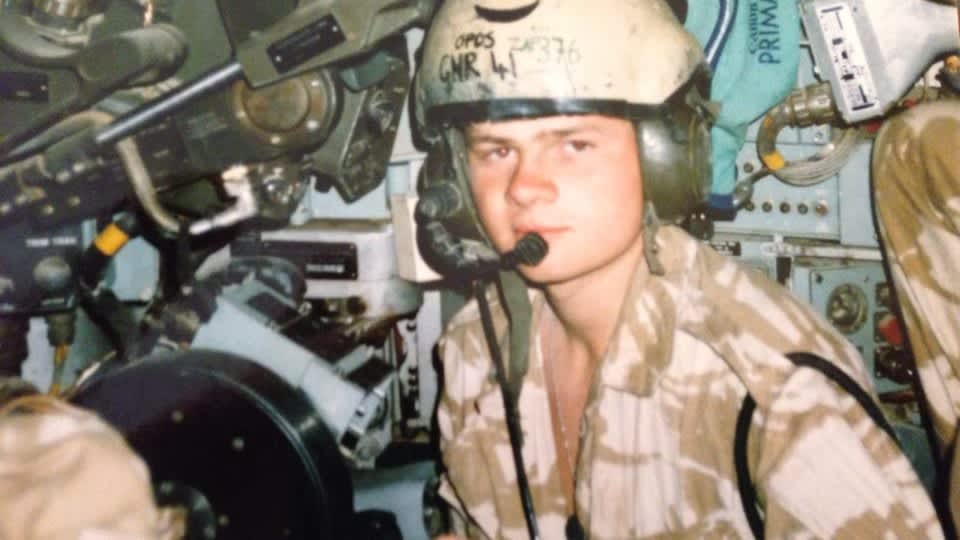
Among those who saw it was Richard Wagner, who had served with the 5th Royal Inniskilling Dragoon Guards.
“I was absolutely shocked,” he said.
“I was shocked firstly that there are more people out there and secondly by the connection between our military careers – we both joined at the same time, we’ve left at the same time and our careers after the forces have mirrored each other.”
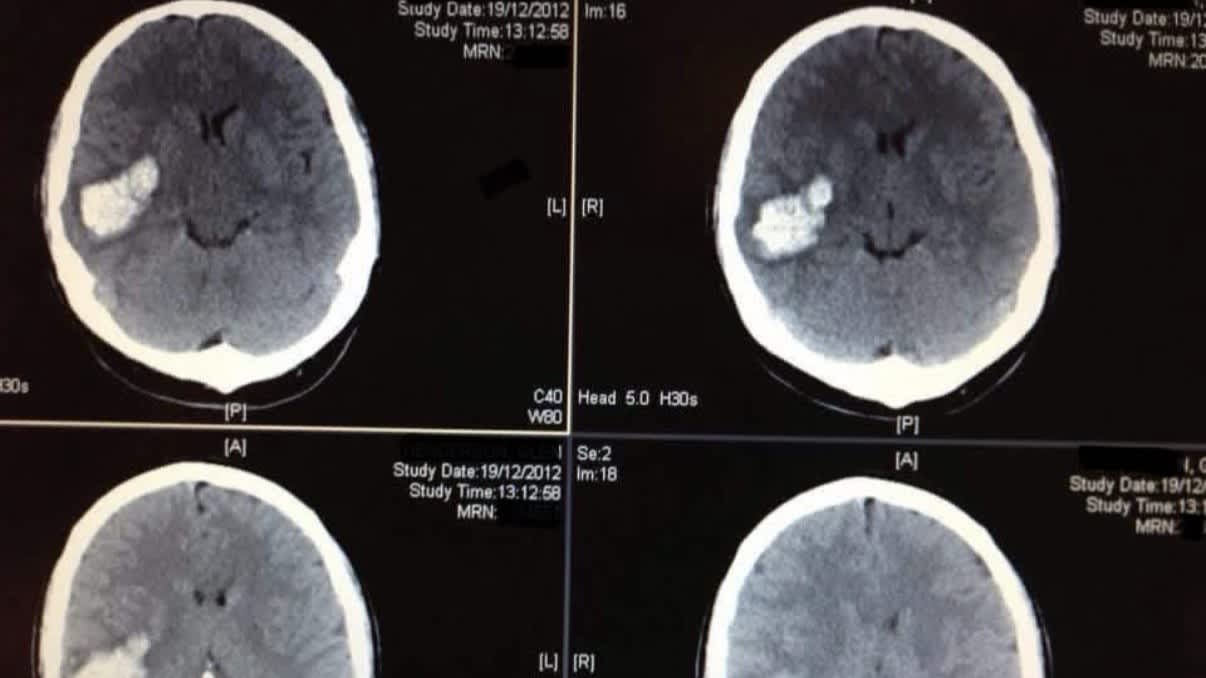
Richard was told he needed surgery, and only had a 50/50 chance of survival.
“To be sat down and told you’ve got an AVM… it’s a hand grenade in your head with the pin taken out and it could go off at any time” he said.
“I spent the next four days sorting out my financial affairs and my will, my daughter, preparing for my death.”
Studies have shown that blast waves from explosions, including from soldiers’ own weapons, can cause long term damage to blood vessels in the brain.
Could this damage lead to mutations and cause AVMs?
Dr James Stone from the University of Virginia has studied the effects of blast on the brain and contributed to the recent NATO report that set exposure guidelines for the first time.
He is calling for more research to be done.
“We know from some of the work that has been done so far that blast can damage some of the blood vessels in the brain and so there is certainly biological plausibility and it is absolutely a question that is worth looking into further,” he said.
ITV News has verified details of seven veterans who served from 1990 onwards and have been diagnosed with AVM. Another four have a similar condition called Cavernoma.
We asked experts at Select Statistical Services to look at our figures.
Most striking was the association with blast exposure. Of our seven AVM cases, six were occupationally or operationally exposed to blast during their service.
Only 15% of the British Armed Forces are so exposed. The chances of finding seven people in a random sample across the armed forces with all but one being blast-exposed is less than 0.01%.
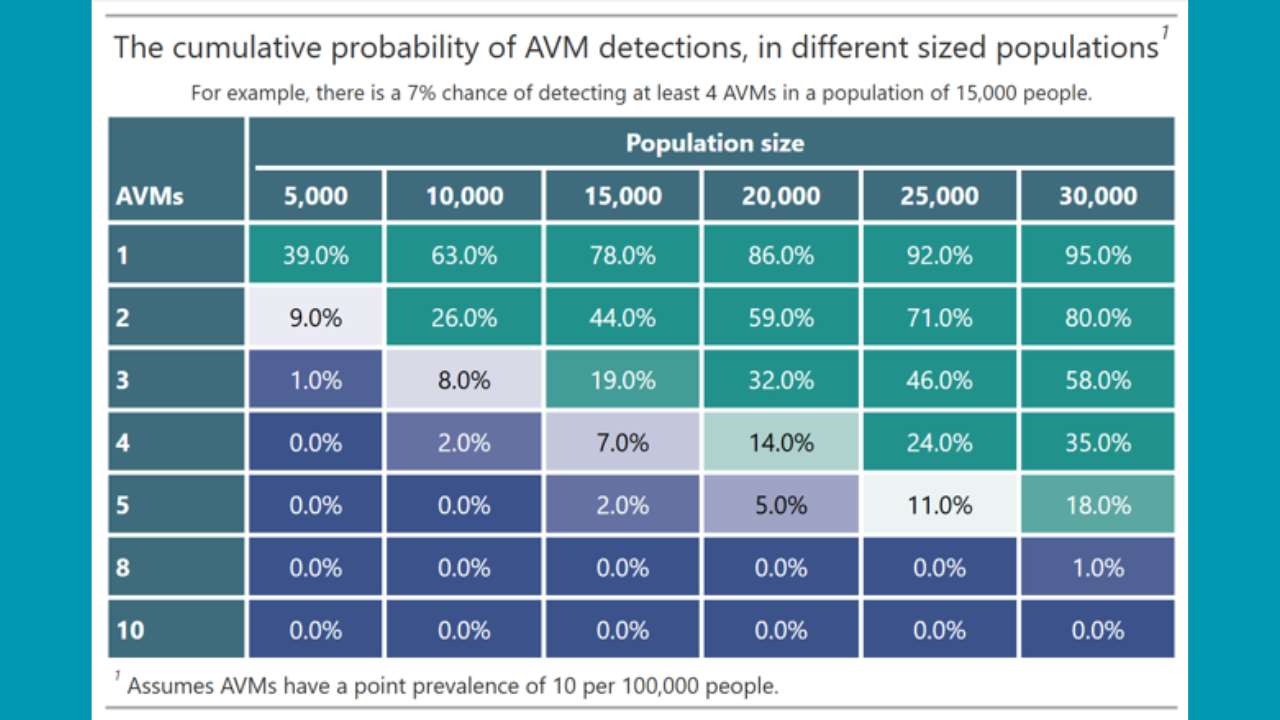
The population figures also pose serious questions. In the relevant armed forces and veteran population, seven cases of AVM would fall within what we might expect.
Narrowed down to Glen’s unit, the Royal Marines, a serving and veteran population estimated to be 16,000 people based on official figures, the chance of having two AVM cases is 47.5%.
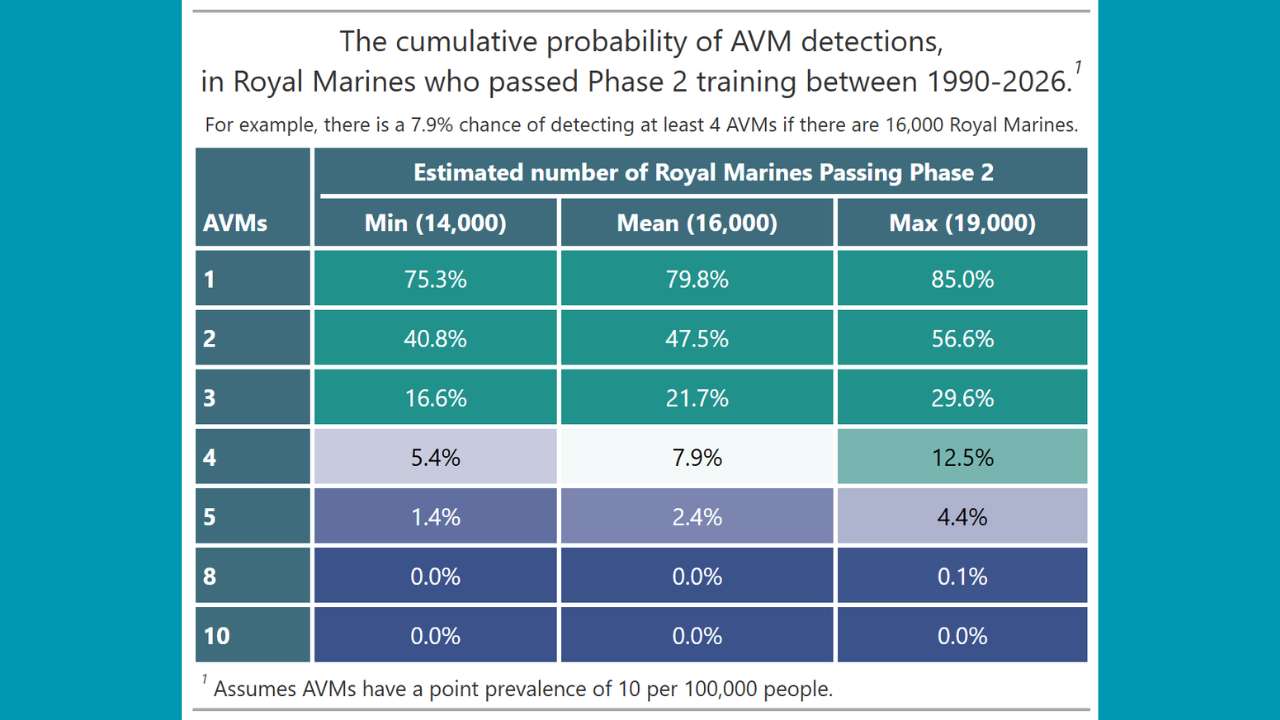
Given how rare the condition is, affecting 1 in 10,000 of the population, just two more cases among serving or former Royal Marines would have a statistical likelihood of just 7.9%.
It seems unlikely that ITV News are in touch with every person who has served in the Royal Marines since 1990 and suffered an AVM.
Meeting in a cafe in London, Glen and Richard believe this is a bigger problem in the veteran community than is currently known.
Glen said: “My post out originally only went to a couple of veteran’s groups on Facebook – if the message went out even broader I’m convinced that there’d be a lot more.”
Richard added: “The data is there, the evidence is there, they just need someone to put it together. I guess in this day and age we’re in the sphere of who is to blame.
“The risk factors of claims and I think that will probably stop things moving faster than they could.”
ITV News’ findings on AVM are not isolated – they fit within a growing body of research showing links to blast exposure and brain bleeds.
In April, researchers in America scanned the brains of 564 US special forces operators.
They found an unusually high number of intercranial aneurisms, weak spots on the artery wall that can cause the blood vessel to bulge and eventually rupture.
The aneurysms were found to be more likely in soldiers with higher blast exposure scores.
Another large US study from three years ago showed veterans with a diagnosis of Traumatic Brain Injury (TBI) had an increased risk of stroke.
In the UK, veteran status is poorly recorded across the NHS and there is no equivalent to the US Veterans Administration to analyse healthcare data and follow up on trends.
Subscribe for free to our weekly newsletter for exclusive and original coverage from ITV News. Direct to your inbox every Friday morning.
The largest UK study into brain malformations did not record whether any of their case studies were veterans, let alone any details of potential blast exposure.
Unless potentially relevant data is recorded researchers have no chance of answering the pressing questions around blast and the poor long term health outcomes of military veterans.
A Ministry of Defence spokesman said: “The health and wellbeing of our armed forces and veterans is a Defence priority.
“We have invested £3.5 million in a world-first mobile brain lab which will deploy this year to test the effects of blast exposure in relation to brain health in military personnel.
“We are also taking decisive action to address veterans’ concerns about fragmented support services through the new £50 million Valour programme.”
Follow STV News on WhatsApp
Scan the QR code on your mobile device for all the latest news from around the country