
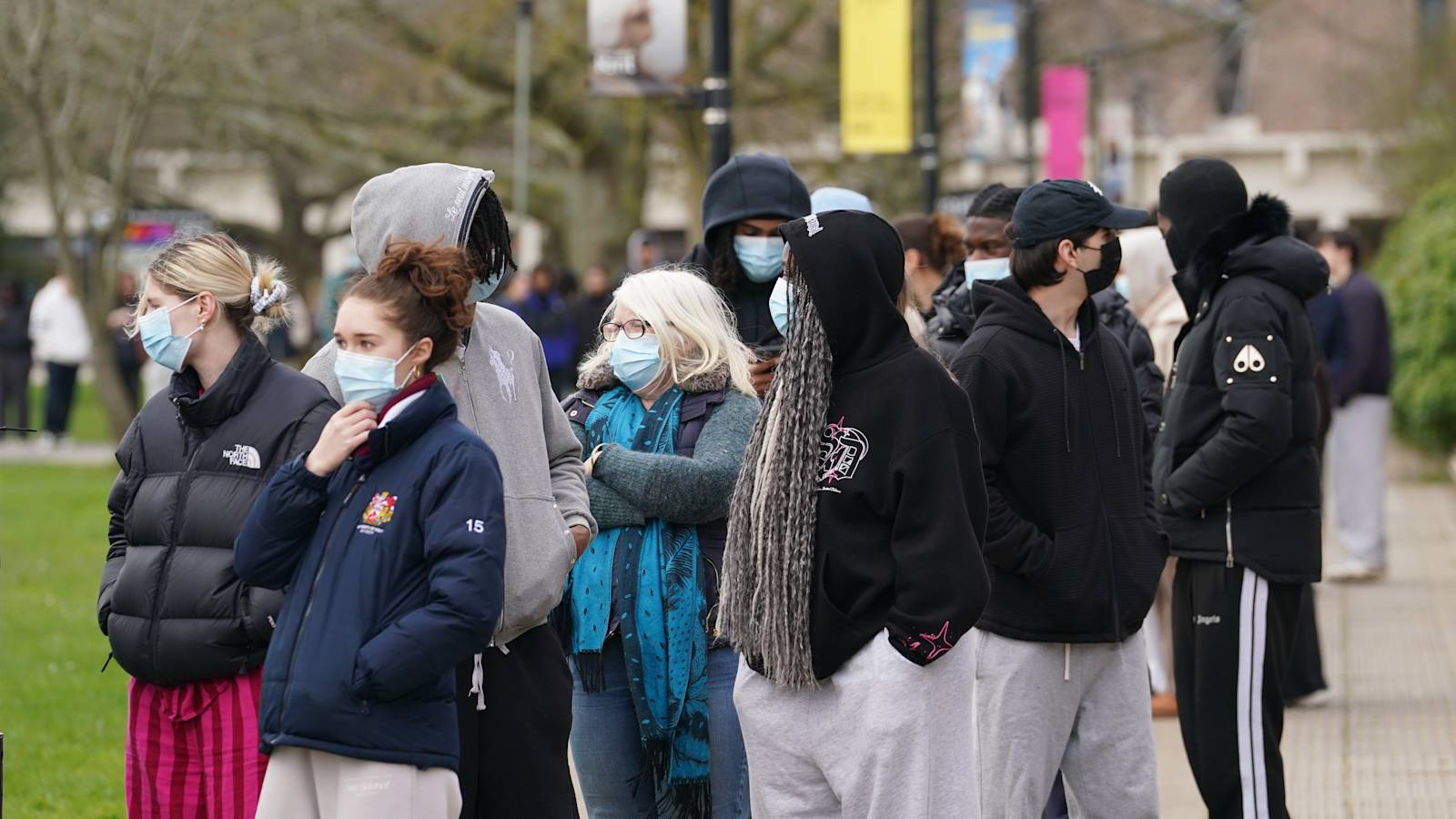
Two students from Kent have died, while several more are in hospital, after an outbreak of meningitis in the Canterbury area.
The UK Health Security Agency (UKHSA) has said the outbreak is likely to be meningococcal, caused by the bacterium Neisseria meningitidis.
Some students at the University of Kent have been given antibiotics while others are in hospital. The specific strain of meningitis has not yet been identified.
Meningococcal disease is serious and can progress rapidly, but it is still rare, and outbreaks have become much rarer with improved vaccination programmes and public awareness.
What you need to know about meningitis — including symptoms, risks and how to protect yourself.
What is meningitis and who can it affect?
Meningitis is inflammation of the membranes that surround the brain and spinal cord. It can be caused by viruses or bacteria, but the most serious cases are often caused by the bacterium Neisseria meningitidis.
Anyone can get meningitis, but it is most commonly caught by babies, young children, teenagers and young adults.
This is due in part to people in this age group carrying the bacteria in the nose or throat without symptoms.
The bacteria that cause meningococcal meningitis are often carried harmlessly in the nose and throat; around 10% of the general population carries them without ever becoming ill. In adolescents and young adults, carriage can be higher, with large UK studies showing rates between 7% and 18%.
Transmission requires close, prolonged contact such as coughing, sneezing or kissing, and even among carriers only a very small proportion ever develops invasive disease.
Outbreaks usually happen when a particular meningococcal strain enters a community where people are mixing closely, such as a university, which creates an environment where the bacteria can spread more easily.
What are the symptoms of meningitis?
Symptoms of meningitis can look similar to common illnesses like a cold or flu, however, someone with meningitis will usually become seriously ill in a matter of hours.
Symptoms can include fever, seizures, vomiting, headache, a stiff neck, or a rash that does not fade when a glass is pressed against it.
Some people may also become drowsy, unresponsive or sensitive to bright lights.
Symptoms can appear in any order and may not always be present at once.
The UK Health Security Agency advises calling 999 immediately or going to your nearest A&E if you think you or someone in your care could have meningitis or septicaemia, as people can become unwell very quickly.
You can call NHS 111 if you’re unsure whether it’s serious.

What causes meningitis and how does it spread?
In most cases, meningitis is caused by a viral or bacterial infection. Viral meningitis is more common and typically less serious, often getting better within seven to ten days.
Meanwhile, bacterial meningitis is rare but can be life-threatening.
Dr Zina Alfahl, School of Medicine, University of Galway, says outbreaks are usually driven by a combination of factors, “the characteristics of the strain itself, the level of immunity in the population, and environmental factors like crowded living or social settings where people mix intensively”.
Usually, the meningitis is spread by people who are not ill themselves, but rather carry the viruses or bacteria in their nose or throat.
In some cases, it can be spread by someone with meningitis.
The UKHSA says that “very occasionally” meningococcal bacteria can cause serious illness, including inflammation of the lining of the brain and blood poisoning, which can rapidly lead to sepsis.
What can people do to protect themselves from meningitis?
Dr Alfahl says that the most “important thing is recognising symptoms early and seeking medical help quickly”.
Early symptoms can look like flu but people should seek urgent medical advice if symptoms worsen or if there are warning signs such as neck stiffness, confusion, sensitivity to light, or a rash that doesn’t fade when pressed.
Is there a vaccine for meningitis, and how do I know if I’ve had one?
Several vaccines protect against different meningococcal groups, including MenB and MenACWY. Other routine childhood vaccines, such as the 6-in-1 vaccine and MMR, protect against infections that can also cause meningitis.
The pneumococcal vaccine is offered to babies in two doses or a single dose to adults aged 65 or over.
Teenagers, sixth formers and freshers attending university for the first time can have the MenACWY vaccine, which can help protect against meningitis and sepsis.
“Vaccination remains the best protection. The MenACWY and MenB vaccines used in the UK are safe, well‑tested, and available free to eligible UK and international students,” said Dr Simon Clarke, Associate Professor of Cellular Microbiology, University of Reading.
The MenACWY vaccine can be given up to the age of 25 if it has been missed and is also available to some individuals who are at greater risk due to a medical condition, work, travel or close contact with someone who is infected.
If you are unsure if you or your child has been vaccinated, you can speak to your GP.
While the NHS offers vaccinations to those most at risk, private vaccinations are available at some travel clinics, private GP practices and pharmacies.
Dr Alfahl said the meningococcal vaccines used in the UK are “highly effective, particularly the MenACWY vaccine given to teenagers”.
“Uptake in adolescents is generally good — around 70–75% in recent school cohorts — although it hasn’t fully returned to pre-pandemic levels… However, many current university students were born before the infant MenB programme began in 2015, which means some of them may never have been routinely offered that vaccine.”
What other ways can I help protect myself from meningitis?
It is a good habit to practice handwashing hygiene, washing your hands after coughing or sneezing.
You can also avoid sharing items which come into contact with your mouth, such as food, drink and eating utensils.
Regularly cleaning surfaces can also help reduce the spread of germs.
What measures are being taken in Kent?

The UK Health Security Agency and the NHS are now arranging antibiotics for some students at the University of Kent, following the outbreak there.
Trish Mannes, UKHSA regional deputy director for the South East, said: “Students and staff will understandably be feeling worried about the risk of further cases; however, we would like to reassure them that close contacts of cases have been given antibiotics as a precautionary measure.”
How is meningitis treated?
People with suspected meningitis may have to have hospital tests to get a diagnosis and find out if their illness is a viral or bacterial infection.
Bacterial meningitis usually requires hospital treatment for at least a week, including antibiotics, fluids and oxygen.
Should students be especially careful?
Access to vaccinations has meant outbreaks are more unusual; however, meningitis can spread rapidly in places like universities and colleges.
Tom Nutt, chief executive of Meningitis Now, says: “University students and young adults are among the groups at increased risk because meningitis bacteria can spread more easily in settings where people live, study and socialise closely together.”
Trish Mannes, UKHSA regional deputy director for the South East, adds: “Students are particularly at risk of missing the early warning signs of meningitis because they can be easily confused with other illnesses such as a bad cold, flu or even a hangover.
“That’s why it’s vital that, if a friend goes to bed unwell, you check on them regularly and don’t hesitate to seek medical help by contacting their GP or calling NHS 111 if they have these symptoms or you’re concerned about them. This could save their life.”
NHS advice to students is to make sure their vaccinations are up to date before starting university or college, including the MenACWY vaccine and both doses of the MMR vaccine.
Follow STV News on WhatsApp
Scan the QR code on your mobile device for all the latest news from around the country