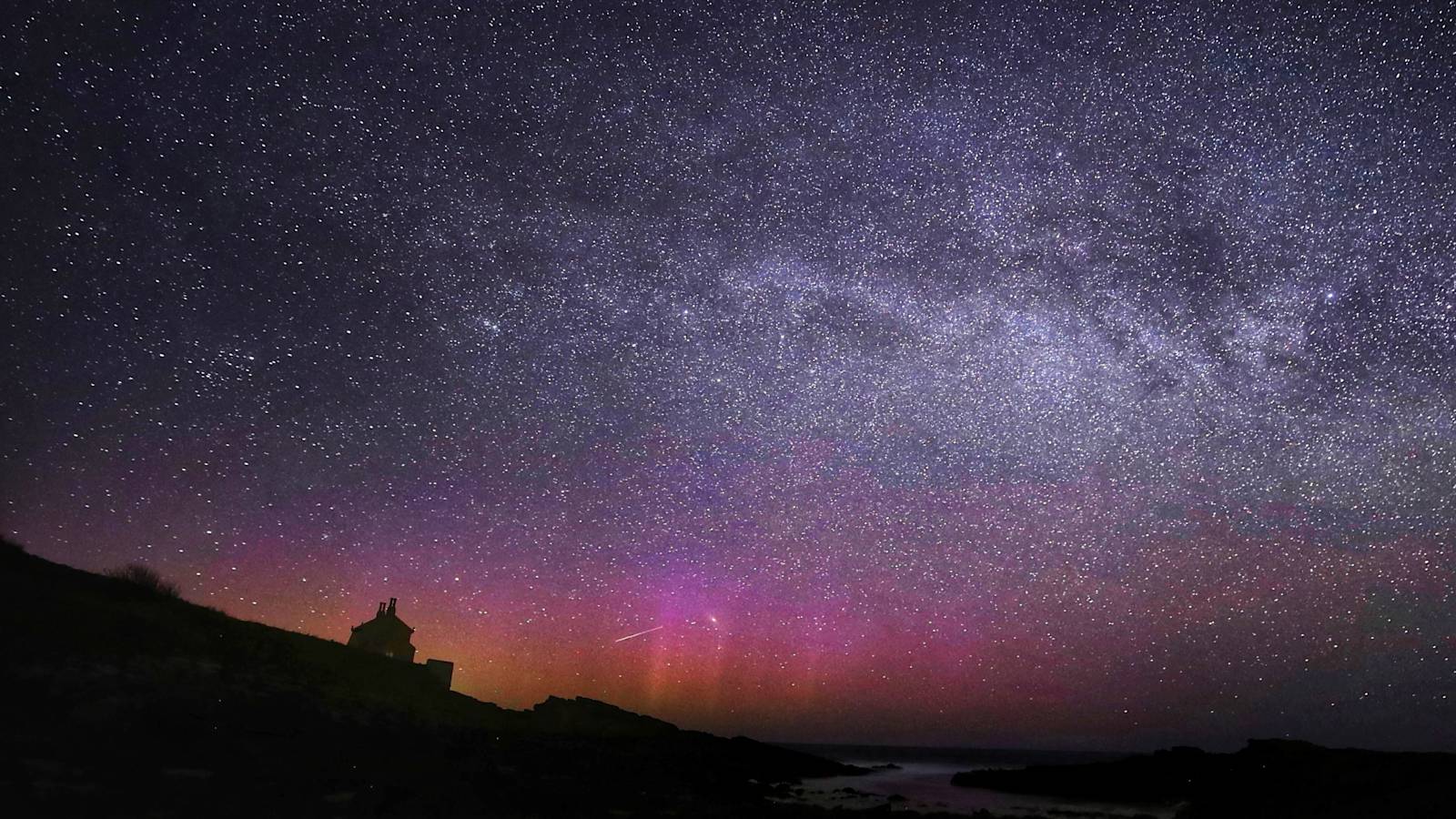
The Lyrid meteor shower is one of the oldest recorded celestial events, having first been recorded nearly 3,000 years ago, and it peaks tonight.
But what are meteor showers, and where is the best place to see them? ITV News explains everything you need to know.
What are meteor showers, and what do they actually look like?
Space is full of tiny bits of dust and rock. When Earth travels around the sun, it sometimes passes through dusty trails left behind by comets (a sort of frozen, crumbly clump of ice, dust and small bits of rock generally just a few kilometres wide).
As the Earth moves through each cloud of space dust, the dust heats and burns up in our atmosphere, creating lots of bright streaks in the sky.
The flash of them burning up is what we call a meteor or “shooting star”.
In fact, a meteor shower looks like lots of “shooting stars” in the sky over a short period of time.
The different meteor shower events occur throughout the year as Earth regularly passes through the same dust trails during its annual orbit.

Why are they called Lyrids?
Lyrids are named after the constellation Lyra, because the meteors appear to radiate from this area of the sky.
Ancient Chinese astronomers documented the shower as early as 687 BCE, noting that “stars fell like rain”.
Lyrid meteors are particularly known for their speed and brightness.
While many appear as quick flashes, some leave behind glowing trails that linger for a few seconds.
On rare occasions, the shower produces “fireballs”, which are exceptionally bright meteors that can briefly illuminate the landscape.
How often do they happen?
The Lyrid meteor shower happens once a year, but there are plenty of other meteor showers if you miss these tonight.
The Royal Observatory Greenwich lists several major showers every year:
- Quadrantids (January)
- Lyrids (April)
- Eta Aquariids (May – weaker in the UK)
- Perseids (August – one of the best)
- Orionids (October)
- Leonids (November)
- Geminids (December – often the strongest)
- Ursids (December – smaller but still visible)
Where and when is best to see them?
The Lyrid meteor shower runs from April 16 to 25 each year, but typically peaks around April 21/22 with around 10-20 meteors per hour.
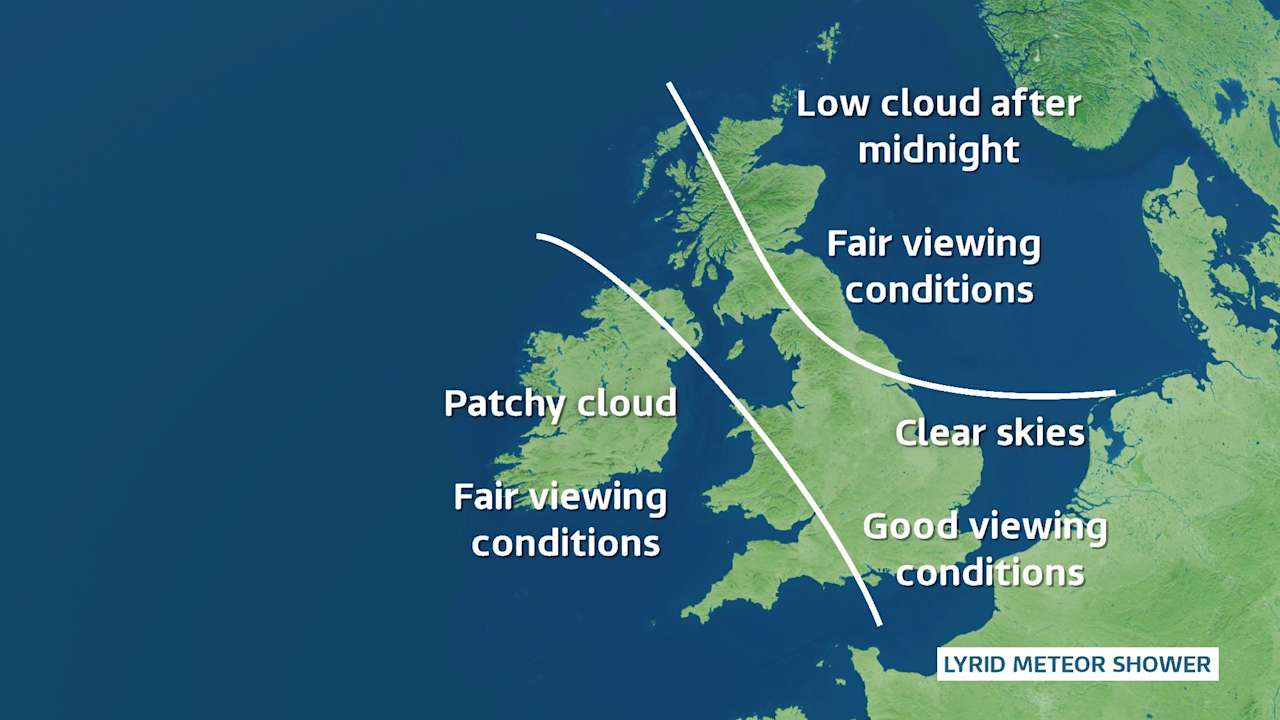
The best time to watch tends to be in the early hours of the morning, between 2am and 4am.
It’s better to be under dark, clear skies, so try to get away from city lights.
You don’t need any special equipment to watch the Lyrids, as binoculars or telescopes can limit your field of view.
For the best view, it’s worth giving your eyes around 20-30 minutes to adjust to the darkness.
The clearest skies will be away from the cloudy northeast on Tuesday. And don’t forget a warm coat – it will be cold enough for a patchy rural frost.
Follow STV News on WhatsApp
Scan the QR code on your mobile device for all the latest news from around the country