
 Adobe Stock
You wait years for an eclipse… and then two come along within weeks of each other!
Although, actually, that’s pretty normal. And this time, rather than a solar eclipse, we’ve got a lunar eclipse.
I’m sure many of you will have seen my coverage from Majorca on 12 August, where we witnessed a spectacular total solar eclipse – the first in Spain for more than 100 years.
Here in Scotland it wasn’t quite total, but it wasn’t far off, with more than 90% of the sun covered across much of the country. Although, in typical Scottish fashion, the clouds rolled in and spoiled the show for many of us!
And that was a big one – the biggest solar eclipse we’ll see from Scotland until 2090.
But now, just a couple of weeks later, everything lines up again – only this time, the order has changed.
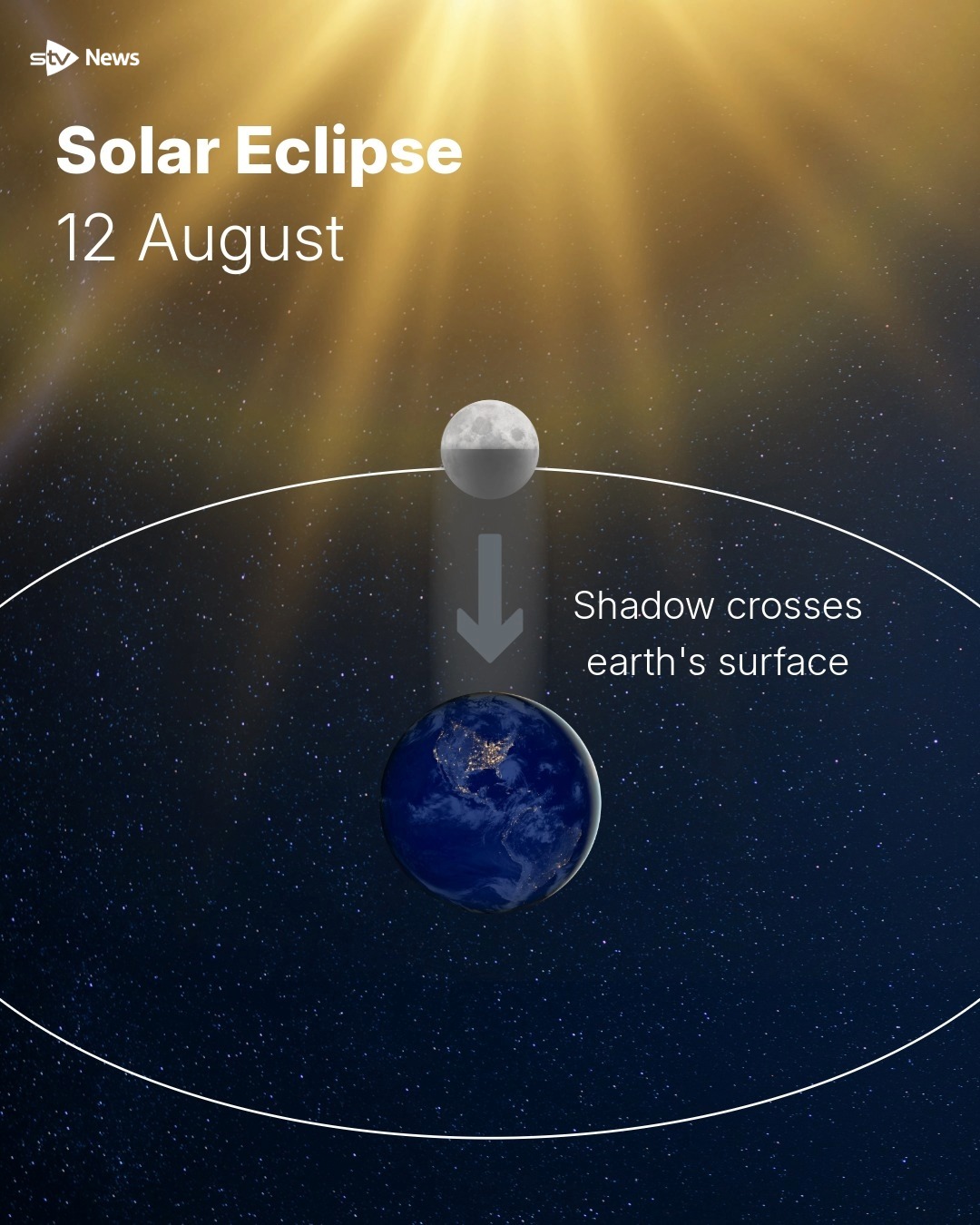
During a solar eclipse, the moon passes between the earth and the sun, casting its shadow onto the earth.
 STV News
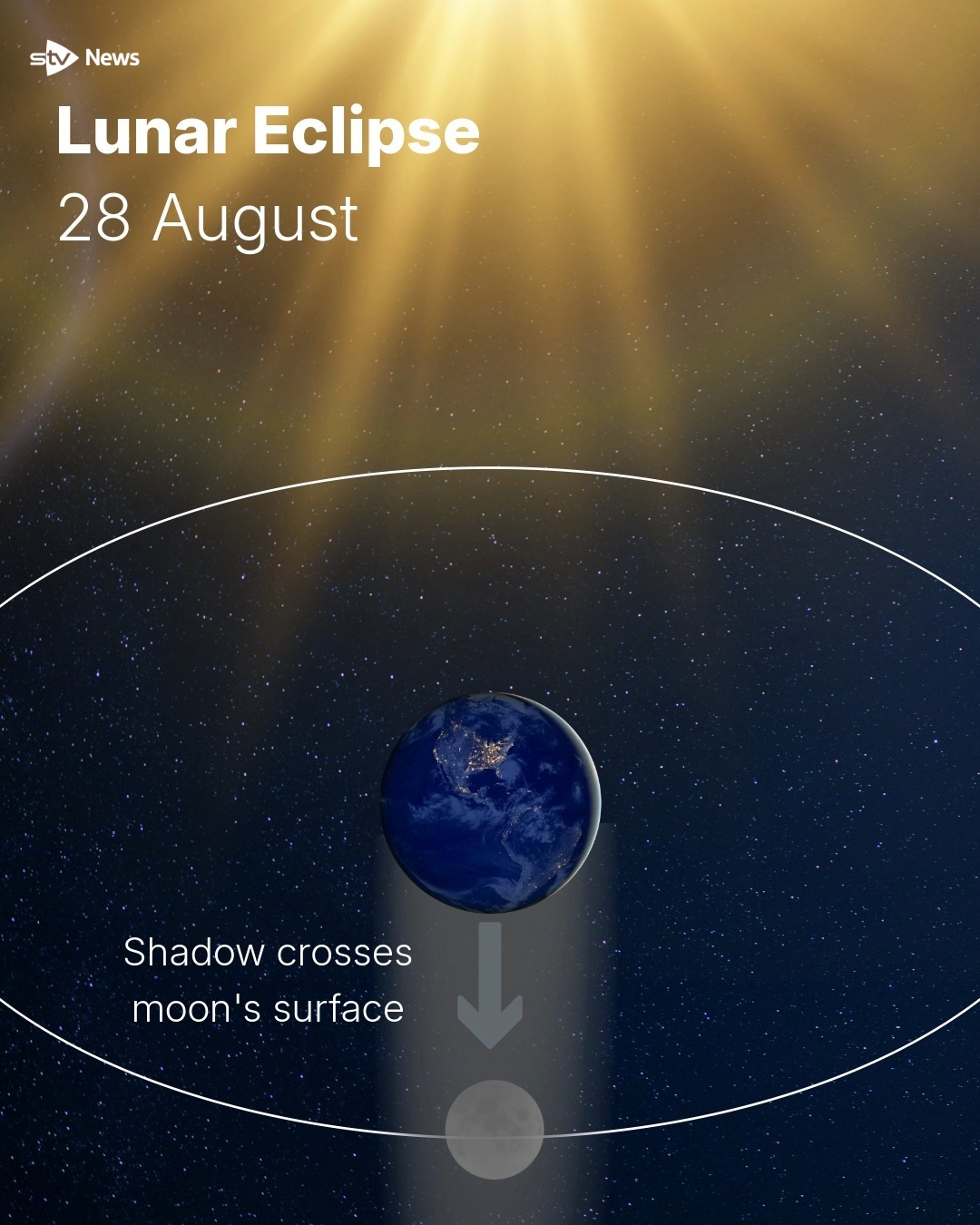
The moon takes roughly a month to orbit the earth, so about two weeks later it’s travelled around to the opposite side. Now the earth is between the sun and the moon – and this time it’s the earth’s shadow that falls across the moon.
And here’s something interesting – if you were standing on the moon watching this happen, you’d actually be seeing a solar eclipse caused by the earth. The earth would appear much bigger in the sky than the sun, completely blocking it out.
Now, because this next eclipse is happening in the early hours of Friday August 28, you’re either going to have to be a night-shift worker… or very keen to see it!
And a word of warning – no, you don’t need your eclipse glasses this time. It’s completely safe to look at a lunar eclipse.
My warning is perhaps not to get too excited! Lunar eclipses are fascinating, but they don’t have quite the same drama as a solar eclipse.
During the early hours of Friday morning, the earth’s shadow will begin creeping across the moon from around 2.30am, with the eclipse reaching its peak just after 5am.
But here’s the really interesting bit.
You might expect the moon to disappear completely once it moves into the earth’s shadow – but it doesn’t.
 STV News
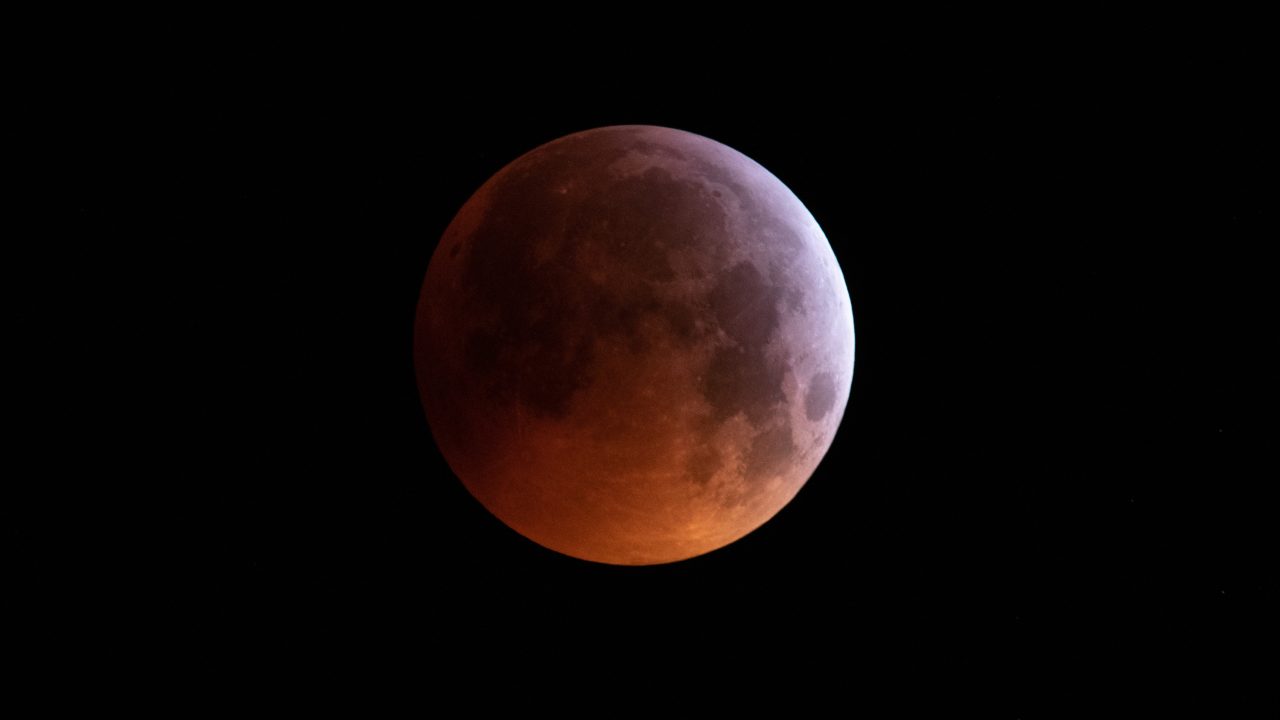
That’s because the earth has an atmosphere. Some sunlight passes through it and is bent around the edge of our planet into the shadow. Our atmosphere scatters away much of the bluer light, while more of the red and orange light makes it through and reaches the moon.
So rather than disappearing into the night sky, the moon can turns dark red – which is why you’ll sometimes hear it called a blood moon.
So, if you’re awake in the early hours of Friday morning, have a look up and – clouds permitting – you might see a rather eerie, dark red moon hanging in the sky.
And if you’re really keen to see it, set your alarm for 5am!
If you miss this one, the next lunar eclipse bigger than this from Scotland comes on Hogmanay 2028 – and, conveniently, that one is even child-friendly, taking place during the late afternoon.
Follow STV News on WhatsApp
Scan the QR code on your mobile device for all the latest news from around the country