Words by Senior Business and Economics Producer Jack Abbey
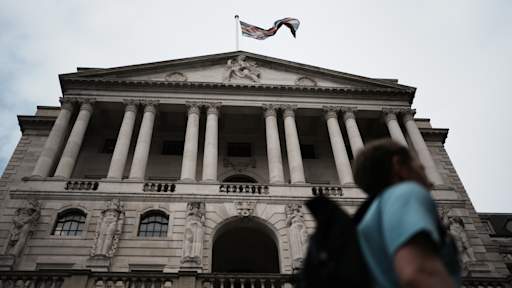
The Bank of England has increased its interest rate for the first time in three years.
The Base Rate today rose 0.25 percentage points to 4% amid rising inflation and a bleak warning from the Bank that price rises are expected to hit 5% by the middle of next year.
“There is now enough inflationary pressure in the pipeline caused by the rise in energy prices, that an increase in the Bank Rate is warranted,” Andrew Bailey, the Bank’s Governor, said.
Andrew Bailey also signalled that at least one more interest rate rise should be expected.
Markets are expecting interest rates to peak at 4.9%, but Bailey today warned against assumptions that a series of rises were on the cards.

“Today’s increases shouldn’t be seen as the first in an inevitable long sequence of hikes. But, unless the conflict in the Middle East is resolved neither does it seem likely to be the last increase,” he said.
Higher interest rates are unwelcome for mortgage holders. Markets have already priced in expected interest rate rises and the average 2-year fixed mortgage now sits at around 6%, up one percentage point since the war began at the end of February.
Inflation hit 3.5% in September, well above the Bank’s 2% target, driven largely by rising energy and fuel prices.
Petrol and diesel pump prices are 30% and 40% respectively higher than before Donald Trump launched his war with Iran.
The closure of the Strait of Hormuz and attacks on energy facilities across the Middle East have also driven up domestic energy bills.
The Bank thinks Ofgem’s energy price cap will increase to £2,150 in January, significantly up from its current level of £1,720.
So far, the Bank’s analysis suggests that high energy costs have not yet driven up other prices and wages.
This is partly because firms have absorbed higher energy prices but also because many firms now make greater use of hedging and fixed-price energy contracts than they did before the last energy shock caused by Russia’s invasion of Ukraine.
But the Bank judges that fixed contracts ending and energy price rises since July have increased the likelihood of companies starting to pass on higher costs to consumers in the form of price hikes and of workers demanding higher wages as their disposable income is eroded by higher inflation.
Fears of increased food prices since the war began have proven unfounded so far but the Bank believes food inflation will rise to 4.8% next year.
The expectation is driven by high energy costs and concerns around the impact of the current El Niño weather event.
On the plus side, the Bank says economic growth has proven more resilient than expected and now thinks the economy will grow by 1.6% this year before weaker growth of 1.2% in 2027.
But that higher growth means there is less slack in the economy, which can absorb price rises, potentially worsening the inflationary impact of rising energy costs.
The Bank also modelled a scenario in which energy prices remain high, oil prices hit $130 per barrel and remain elevated for some time. In that case, they warn inflation could rise as high as 6.2% next year.
Chancellor of the Exchequer John Healey said: “The Iran conflict is reaching deep into the pockets of families and businesses here at home.
“In my Budget I acted to give some breathing space to families and businesses. Twenty million households will get a £100 energy payment, I extended the tax cut on electricity bills and froze fuel duty.
“I also set out the course ahead to get costs down for good. That includes big changes to our energy system so Britain is better protected from global shocks in the future.”
Follow STV News on WhatsApp
Scan the QR code on your mobile device for all the latest news from around the country