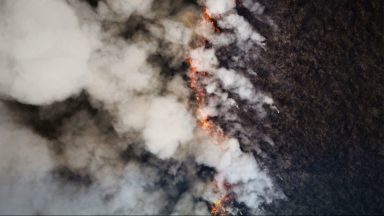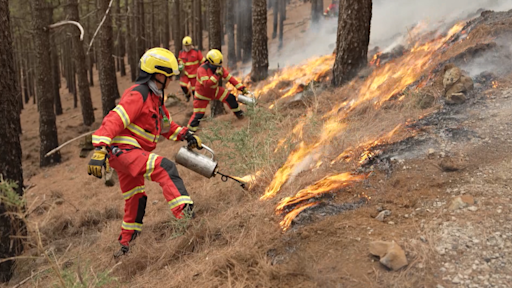
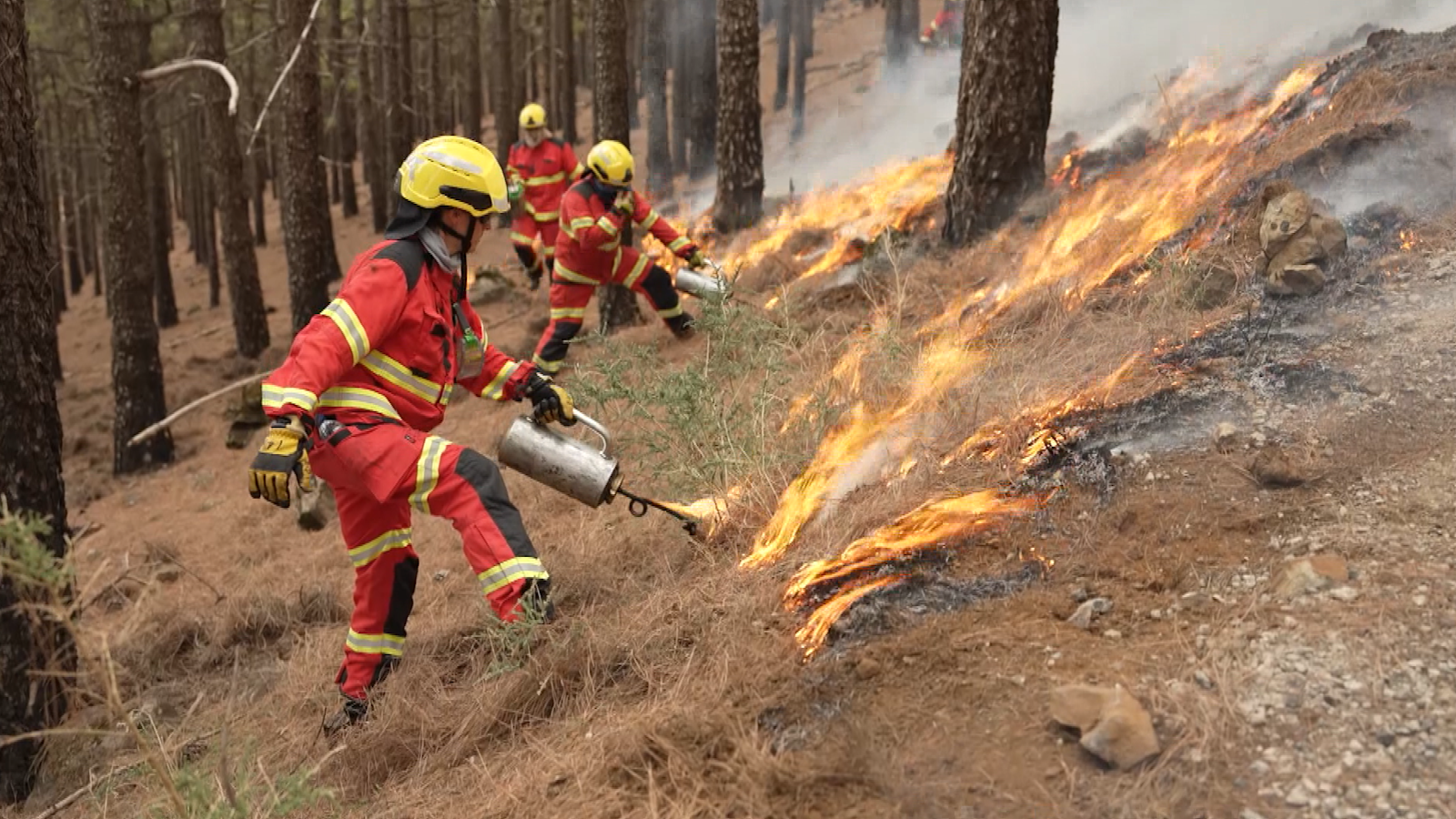
After a summer where wildfires burned longer and more intensely than ever before, specialist UK firefighters are training in techniques that use fire rather than water to put out the flames.
The reason is these fires are often so big and in locations so remote that accessing a sufficient water supply is almost impossible. And what better way to battle the elements than fighting fire with fire?
On Gran Canaria – an island used to intense heat – it’s a technique firefighters are well versed in.
A team of 18 men and women from Lancashire Fire and Rescue have travelled here to train alongside the Pau Costa Foundation.
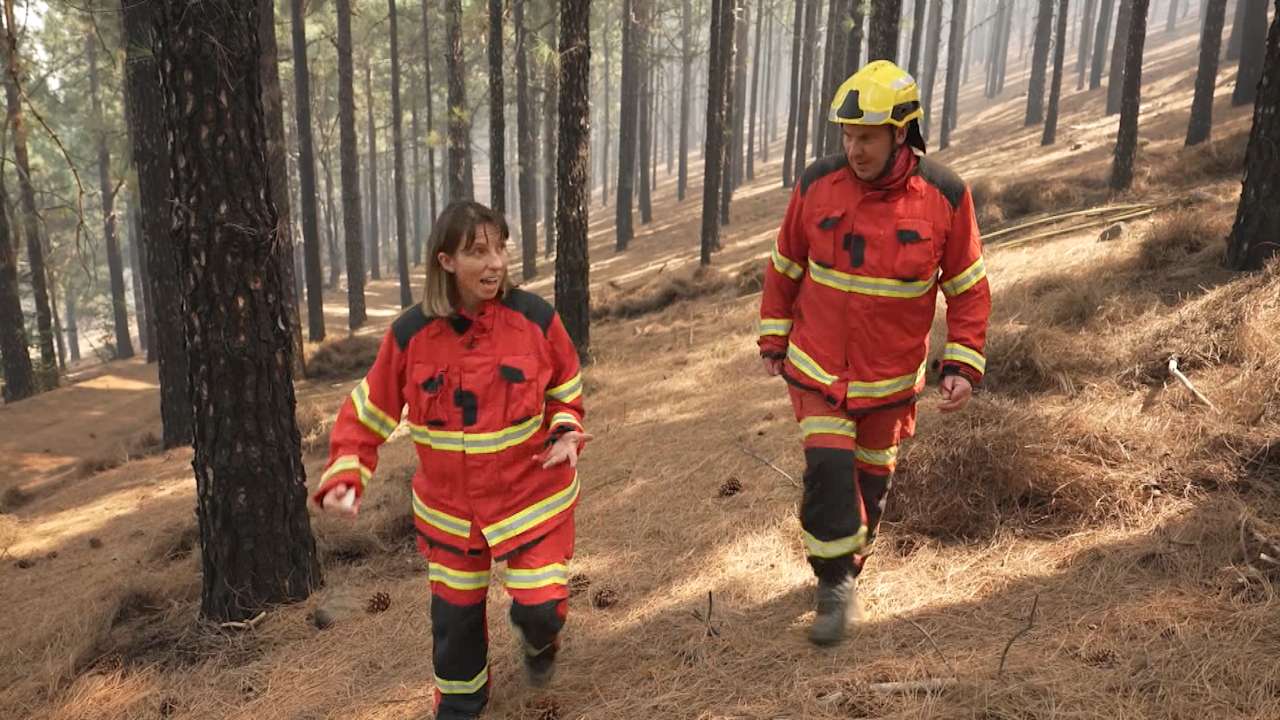
Rob Harvey is their group manager.
“On a moorland we don’t have a lot of water. You know, when we go up to these moorlands, we can’t get a fire engine up there,” he said.
“So we need to use techniques like this that allows us to remove the fuel, which basically stops the fire in its tracks.”
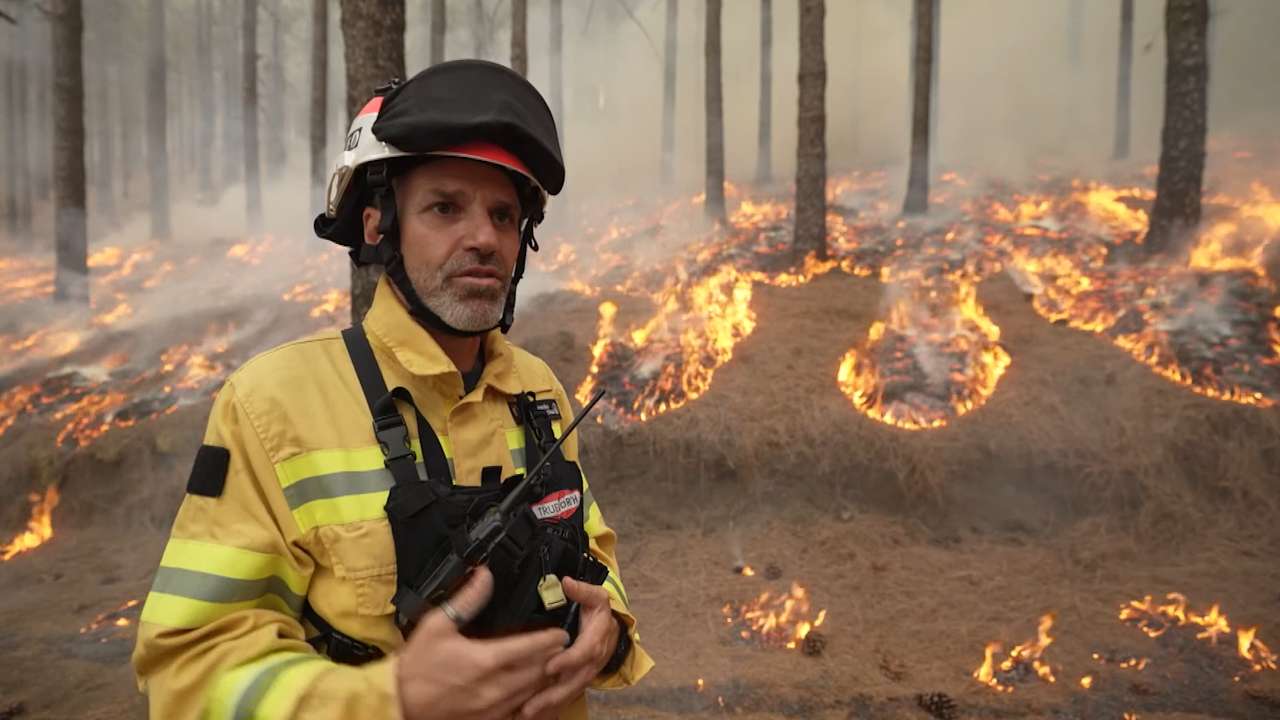
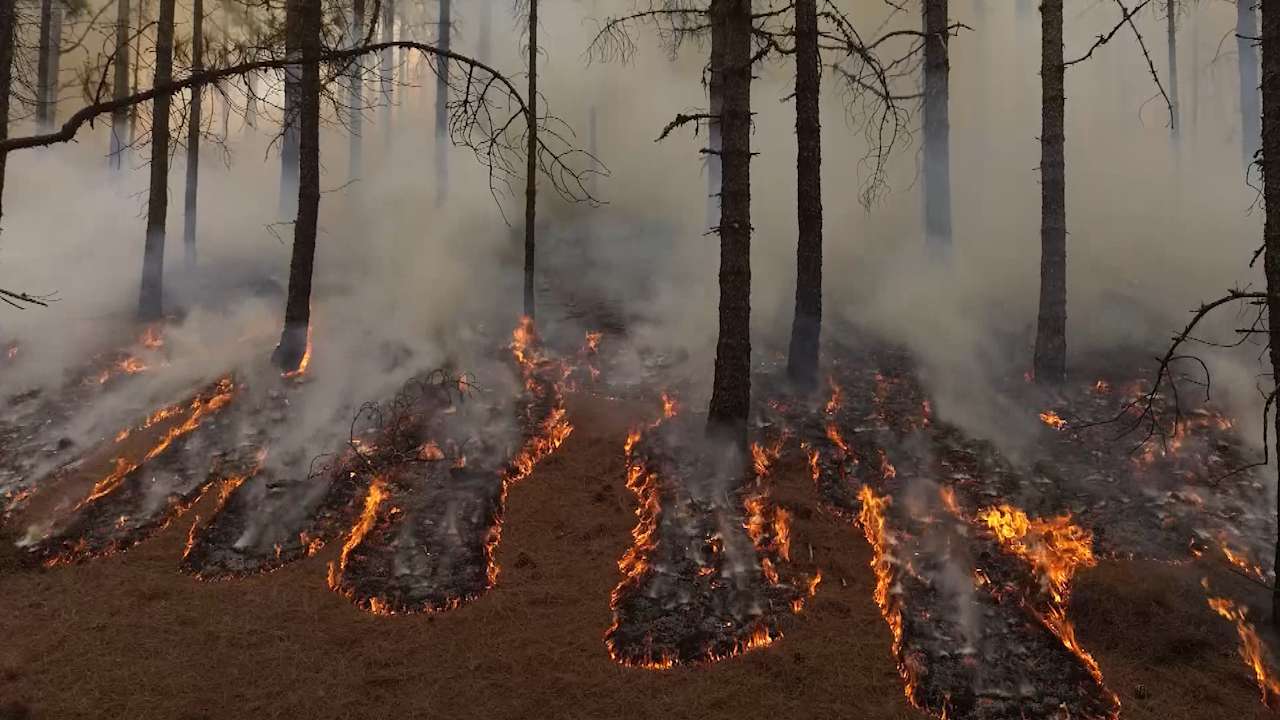
Tactical burning involves the creation of control lines which are then set alight.
They act as a barrier that fire can’t travel through because burning away vegetation removes the fuel that a fire needs to spread.
Firefighter Juan Caamano tells ITV News’ Amy Welch that he is ‘fearful’ for the future
Juan Caamano – the firefighter in charge of today’s training on behalf of the Pau Costa Foundation – has spent his life tackling wildfires and believes we’re at a point where humans really have met their match.
Asked if he is fearful about the future, he says: “Yeah, obviously. I mean, things are changing. Ever changing faster than we thought.
“We thought these were the types of fires we were going to have in 2030, but they’re here now. In the last two years, we have had the worst fire season in Spain that we’ve ever had.
“And we have the best firefighters, the best resources that we have ever had but this is increasing so fast that I’m not sure of where is the limit.”
He says the wildfires near his home in Madrid were so bad this summer he had to evacuate his own family.
The UK faced its hottest summer on record this year and dealt with more wildfires than ever before.
Figures from the National Fire Chiefs Council show there were 1,350 wildfires this summer – the highest number on record and more than 1,000 more than in 2024.
Houses were destroyed in the West Midlands, and disposable barbecues were temporarily banned after it emerged humans are often the main cause.
A specialist team from Lancashire Fire and Rescue – one of six created to form the UK’s National Resilience programme – were sent to tackle wildfires in South Wales, Tintwistle in Derbyshire and the New Forest National Park.
Other specialist teams are based in Greater Manchester, Northumberland, London and South Wales.
What do the unions say?
One in five firefighter jobs have been lost since 2010. The Fire Brigades Union says these specialist wildfire teams are too stretched and that the current system is unsustainable.
They’re calling for 5,000 extra firefighters, specialist PPE and nationally recognised wildfire training for all officers.
They also say the £97 million of government money that’s currently on offer to boost wildfire defences simply isn’t enough.
Firefighter Richard Horrocks says this type of training should be made available to services nationwide
Richard Horrocks has been a firefighter with Lancashire for 26 years and was involved in tackling the moor fires on Winter Hill in 2008.
At its height, 150 firefighters were battling flames which covered an area the size of 1,200 football pitches.
Lancashire Fire and Rescue has invested heavily in wildfire training since then, but Mr Horrock believes that training should be available for officers nationwide.
Asked if he thinks all brigades should be getting training like this, he says: “Yeah they’re gonna have to have people closer by.
“We can’t rely on fire fighters from Rossendale and Lancashire, going all the way down to Devon to put the wildfires out like they have done this year.
“You can’t do that every year so they’ll need to train their staff in what we’ve been trained in, and invest in track vehicles we’ve got otherwise you’ll constantly be going up and down the country and leaving Lancashire short.”
This training on Gran Canaria can’t be replicated in the UK because of legislation and land management restrictions.
However, firefighters on the island say they are grateful for the additional manpower UK teams provide because burning away plots of vegetation will help prevent the spread of wildfire here next summer.
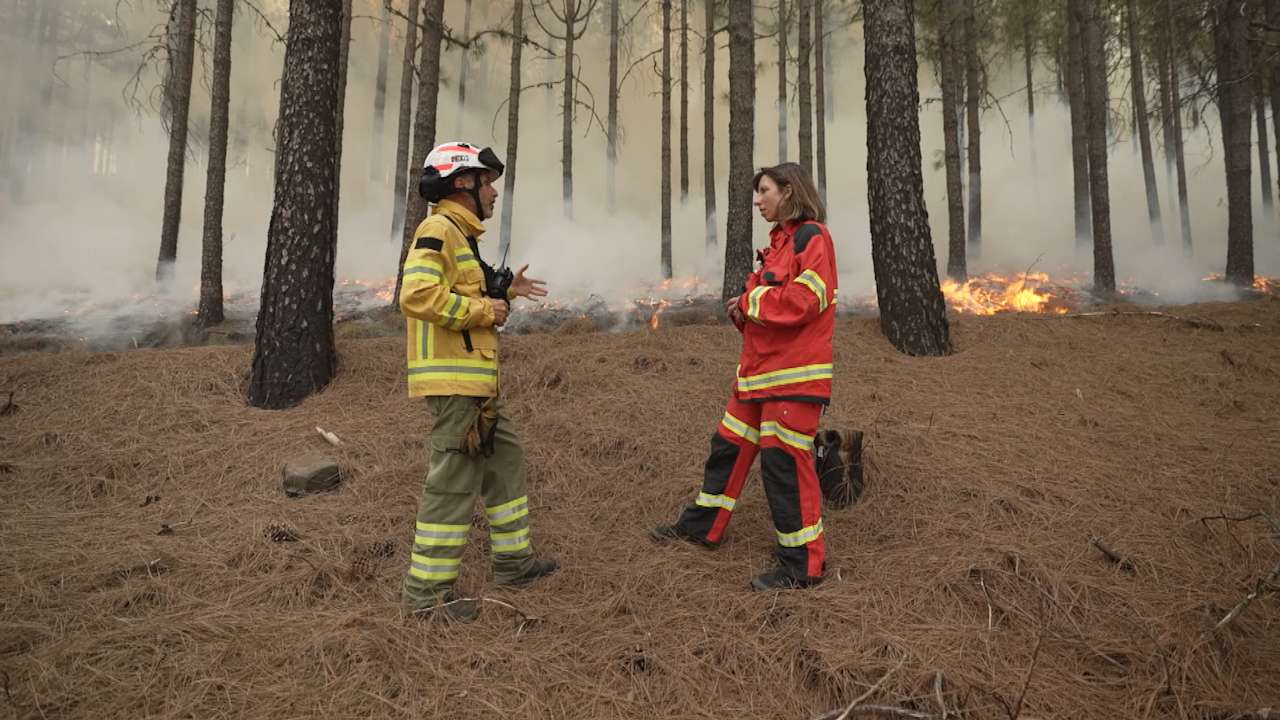
It also raises questions over whether more controlled burning should be allowed in the UK as a preventative measure.
The Heather and Grassland Burning Regulations 2021 limits how much can be burnt. But the Fire Brigades Union say controlled burning is “vital to stop the spread of wildfires while also safeguarding the environment”.
And the National Fire Chiefs Council believes that a balance needs to be struck.
“Wildfires cannot be tackled through emergency response alone. Prevention and land management have a vital role to play in reducing risk and limiting the spread of fire,” it says.
“Prescribed burning can be an effective tool when used safely and appropriately, alongside other measures such as vegetation management and firebreaks.
“We need a balanced approach that places much greater emphasis on preventing fires before they start, alongside greater capacity and capability to respond when a fire does occur.”
Secretary of State for Environment, Food and Rural Affairs, Angela Eagle, believes rewilding our landscapes to create wetter, healthier peatlands rather than burning away vegetation will have a better long-term outcome when it comes to preventing wildfires.
“We know that healthy ecosystems retain more water and can help act as natural firebreaks,” she says.
“That resilience does not just protect us from the impacts of wildfire. It guards against flooding and pollution, too.”
And this issue is likely to form part of the debate at a wildfire summit being hosted by the prime minister on Friday.
He’ll meet with fire chiefs, local leaders and experts to make sure the fires this summer are never repeated.
The government says it is committed to making landscapes more resilient and wants to invest £25 million in restoring dried out peatlands in England so they hold more water and act as a natural firebreak.
Military planes and helicopters are being promised which can tackle wildfires from the sky.
And £45 million pounds of extra investment will pay for state of the art wildfire specific personal protective equipment.
A government spokesperson told ITV News: “We recognise the extraordinary efforts of firefighters and emergency responders who worked around the clock to protect their communities this summer.
“Improving wildfire preparedness is a major government priority which is why we will build on this year’s wildfire response pilot by holding a summit with fire and rescue service partners to understand the best action we can take to help them.”
With temperatures set to rise further in 2027 it’s clear this battle with the elements is far from over and that we need to be ready.
Follow STV News on WhatsApp
Scan the QR code on your mobile device for all the latest news from around the country