
Warning: This story contains distressing details and discussion of attempted suicide
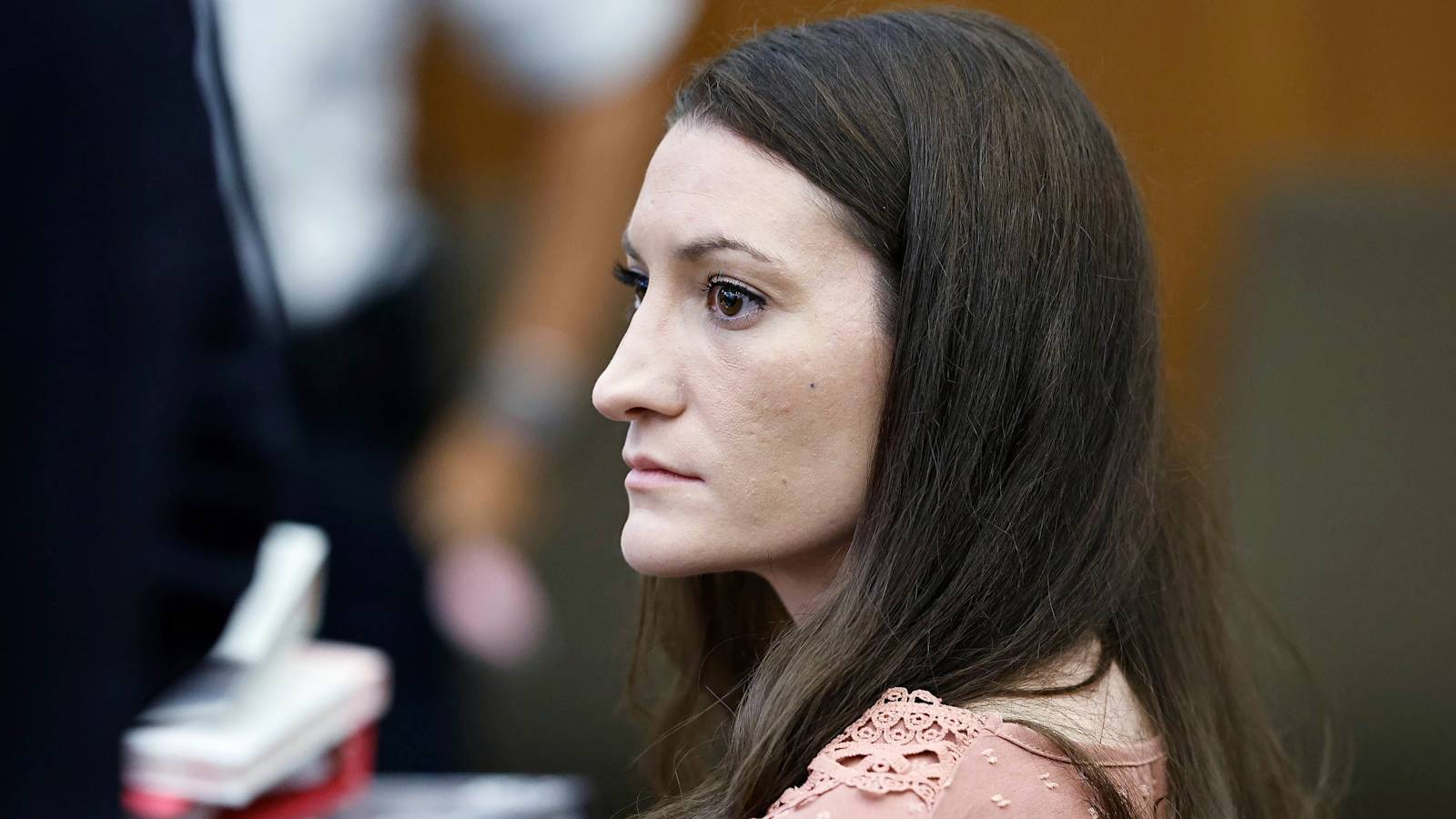
Lindsay Clancy, 36, is an American woman who is currently on trial for the murder of her three young children in 2023.
The former labour and delivery nurse, from Massachusetts, was charged with murder and pleaded not guilty.
Her defence acknowledged that she was responsible for the killings, but argued that she should not be held criminally responsible due to her mental state at the time.
A key question in the trial, which is due to conclude soon, is whether or not postpartum psychosis, a rare and severe mental health disorder, drove her to do it.
What is Lindsay Clancy accused of?
Clancy, 36, killed her three children in Massachusetts in January 2023.
Callan, Dawson and Cora Clancy were between eight months and five years old when they died.
While the defence does not dispute Clancy carried out the killings, they argue that she was experiencing postpartum psychosis at the time of the deaths and cannot be held criminally responsible.
After killing her children, Clancy jumped from a second-floor window in an attempted suicide. She remains paralysed from the waist down.
What has happened in the trial so far?
Prosecution and defense psychiatrists have offered sharply different views on Clancy’s mental state at the time.
Prosecutors say she planned the killings and contrived to get her husband out of the house by sending him to pick up medicine for one of their children and dinner for the family.
On Monday, Kirk Heilbrun, a psychologist and professor of Psychological and Brain Sciences, was the latest prosecution witness to say that while Clancy was mentally ill, she still knew that what she was doing was wrong.
He told jurors that he believed Clancy took her children’s lives so they wouldn’t “suffer” after she killed herself, and that he didn’t believe Clancy’s claim that she hallucinated a voice telling her to kill the children.
Meanwhile, earlier in the trial, jurors heard from other medical experts, called by the defense, who said that her actions were a result of her loss of grip on reality due to postpartum psychosis.
Dr Phillip Resnick, a forensic psychiatrist and expert in filicide, or the killing of a child by a parent, testified on Friday that Clancy was “clearly psychotic” on the day she killed her children and was not in control of her actions.
“It was almost like she was a puppet and someone else was pulling the strings,” he said.
The jury heard that, in the months before the incident, Clancy had sought treatment for mental health problems from multiple providers and admitted herself to a psychiatric hospital.
Prosecutors are then expected to call at least one more expert witness before the trial moves on to closing arguments, likely no earlier than Wednesday.
Why are there protests?
Hundreds of protesters, wearing all pink, have been showing up outside the court to support Clancy and raise awareness around postpartum psychosis.
One protester told the Associated Press (AP): “For me, being here is important because the Massachusetts healthcare system failed Lindsay.
“She reached out for help multiple times; she told them she was having thoughts of harming her children and harming herself, and she was turned away. Countless of times at countless locations.”
What is postpartum psychosis and how common is it?
Postpartum psychosis is a severe mental health disorder, which has been thrust into the spotlight by the Clancy case.
The NHS says that many new mothers experience mild mood changes, known as the “baby blues” which are normal and can last a few days.
However, postpartum psychosis is a “serious mental illness and should be treated as a medical emergency”.
Researchers estimate that the condition afflicts one to two out of 1,000 women after delivery.
It is also different from postpartum depression, which is a mood disorder affecting about one in seven women after giving birth — or more, according to some research.
What are the symptoms?
Symptoms of postpartum psychosis can include hallucinations, delusions, mania, low mood, rapidly changing mood and feeling very confused.
Although most who develop postpartum psychosis don’t harm their children, mothers with severe cases may try to harm themselves or their kids.
When is medical help required?
The illness can get worse rapidly, risking the safety of both mother and baby.
The NHS advise seeing a GP immediately and requesting an urgent assessment on the same day if you, or someone you know, develops symptoms of postpartum psychosis.
It is important to call 999 if there is danger of imminent harm.
Family, a partner, or friends of the mother may be more likely to spot the signs of postpartum psychosis.
Follow STV News on WhatsApp
Scan the QR code on your mobile device for all the latest news from around the country