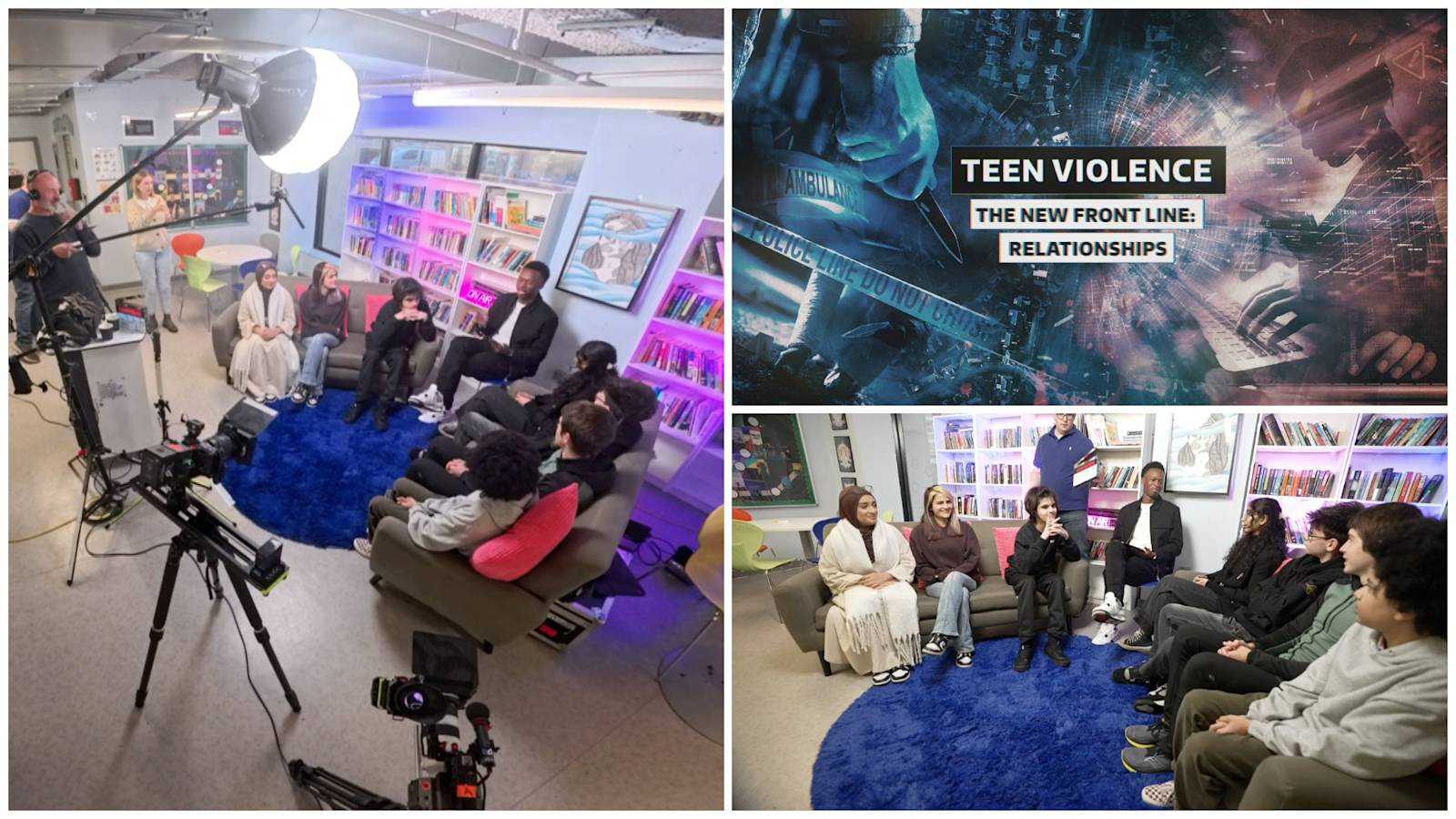
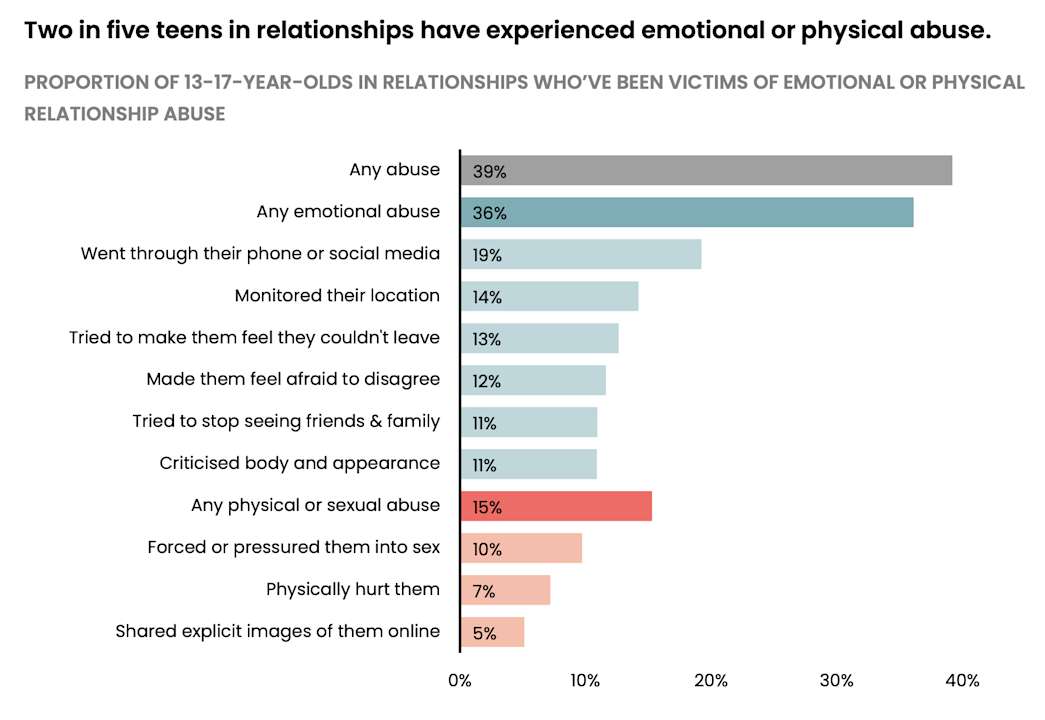
Almost half of teenagers report experiencing or carrying out abusive behaviour in a relationship.
That’s one of the findings from a report shared exclusively with ITV News by the Youth Endowment Fund as part of its annual UK-wide survey, in collaboration with The Rundown.
But statistics alone don’t offer understanding, and can even create distance. Numbers never tell the full story.
So rather than focus solely on percentages, I wanted to hear directly from young people.
With the support of Everyone’s Invited, a charity working to tackle rape culture and already educating more than 67,000 students across the UK, I sat down with seven teenagers in east London.
In the latest in our series on teen violence, ITV News’ Dan Ajose can share the shocking levels of abuse young people say they’ve suffered in relationships
We talked openly about relationships, boundaries, and the realities of growing up in a digital world where expectations, pressures, and surveillance rarely switch off.
Despite everything they are navigating, I found myself unexpectedly hopeful. Sitting in that room, listening to their honesty and maturity, it was impossible to ignore how emotionally aware they already were.
But if teenagers are this emotionally intelligent, why did nearly half of those surveyed report abuse in their relationships?
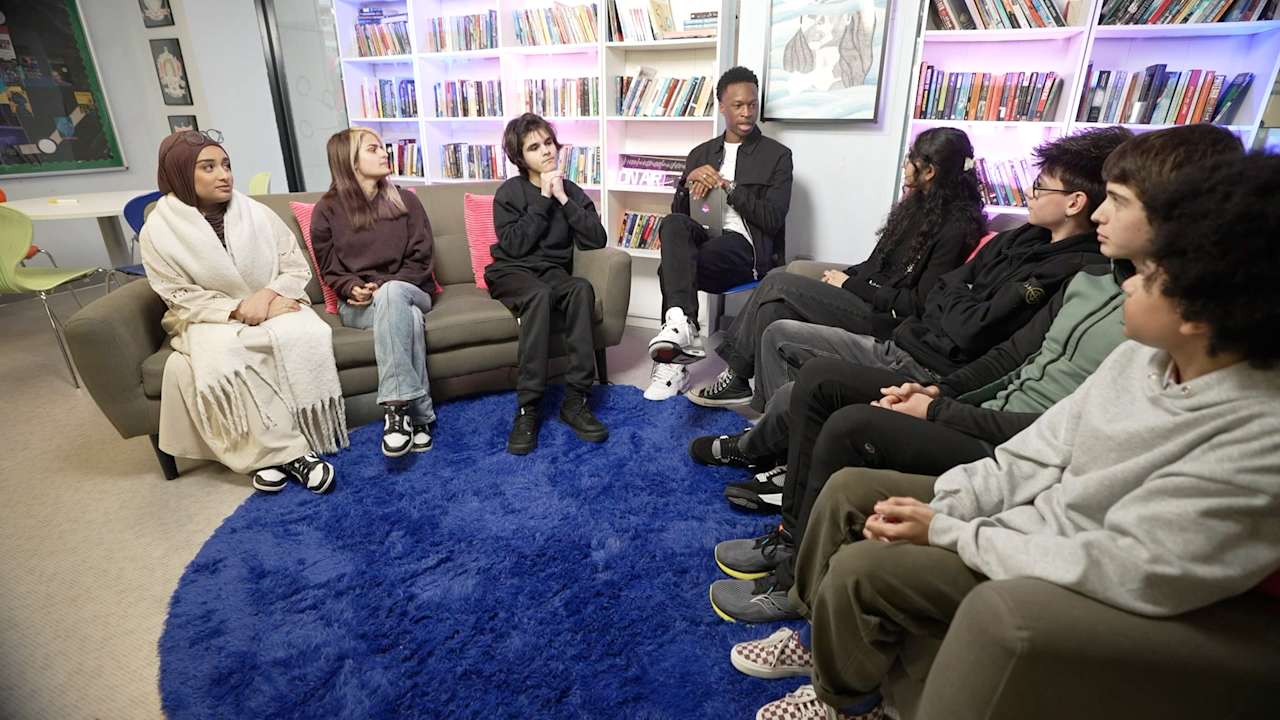
I structured our conversation around four chapters: understanding relationships, social media and boundaries, in-person behaviour, and solutions. We began with the foundations – what does a relationship actually look like?
What struck me was their confidence. They spoke about respect, trust and communication. They recognised the warning signs, the red flags, and articulated them with clarity.
Jon Yates, CEO at the Youth Endowment Fund, told ITV News about the significant impact that education from trained professionals can have on these statistics
Much of the emotional vocabulary that many adults take years to learn was already there: “No trust, misogyny from either side of the relationship, moving too fast, gaslighting, and everything being online”.
I asked what I assumed would be the toughest question: “Why do you think some people don’t see it as abuse in the first place?”
There was no hesitation. They spoke about how love can cloud perspective, how affection can excuse behaviour, how boundaries can slip almost unnoticed, until someone no longer recognises what they’re tolerating.
“It’s hard when you’re not in a relationship to notice certain behaviours, but when you’re in it, it makes it more difficult,” one said.
Another: “If you love a person, you might not see what they’re doing as wrong, you might just see it as they love you.”
Their responses stayed with me, not because they were naïve, but because they weren’t. They reflected a difficult truth – young people often understand abuse long before they experience it.
This national survey gathered the views of 11,000 teenagers.
I spoke to just seven, but while this group showed emotional intelligence and empathy, they couldn’t speak for everyone.
Our conversation turned to social media, where abuse can begin, or behaviours can happen unknowingly, as outlined in the report – checking phones without consent, monitoring locations, sharing private images, or controlling who someone speaks to online.
Those examples sparked immediate recognition. The discussion became more animated.
One teenager summed it up perfectly: “It’s unpredictable to have a relationship at this age, you’re still trying to figure yourself out, let alone another person.”
This reasoning didn’t excuse abusive behaviour, but it helped explain the vulnerability that can sit alongside awareness, knowing the warning signs doesn’t always mean being able to escape them.
As we wrapped up, I wanted to end on a positive: “How to we stop this?”
They were united in one answer – education. Teaching the signs of abuse, how to recognise them early, and how actions can affect others.
Evidence shows that education can make a real difference.
A global review found that specialist lessons, delivered by trained and confident staff, can reduce relationship violence by around 17%.
Bystander intervention programmes also show promise, teaching teenagers how to safely step in during situations of potential sexual assault. Those who take part are not only more confident about intervening but also less likely to commit sexual violence themselves.
In England, those subjects fall under statutory Relationships, Sex and Health Education (RSHE), introduced in all schools in 2020.
Pupils now learn about healthy relationships, consent, boundaries, harassment, coercive behaviour, and where to seek help. But schools interpret guidance differently, meaning teaching can vary greatly in depth and quality.
In December, this inconsistency will come under scrutiny when the Youth Select Committee hears expert evidence on how PSHE is delivered across secondary schools in England, examining whether young people are receiving the education they need to stay safe.
Before we finished, I asked the group what advice they would give to anyone going through abuse. Their message was simple: Share your concerns with a friend or a trusted adult. Whoever it is, they said, there will always be someone willing to listen.
If you are dealing with any of the issues raised, you can find help from the Youth Endowment Fund.
Follow STV News on WhatsApp
Scan the QR code on your mobile device for all the latest news from around the country