
A surge in flu cases has prompted calls for people with symptoms to wear a mask in public places, as ITV News’ Martin Stew reports
Words by ITV News Producer Jamel Smith and Science Correspondent Martin Stew
A new strain of flu is sweeping across the UK, causing a “tidal wave” of illness, an NHS leader has warned.
Hospital admissions for flu are already 56% higher than the same week last year, with experts warning that the peak of the season is yet to come.
Health officials have urged anyone feeling unwell to wear a face mask in public and encouraged those eligible to get vaccinated.
A government spokesperson said: “This will be a tough winter for our NHS and the latest figures confirm flu cases are at very high levels this year.”
But what is this new strain of flu, and how bad is it? ITV News explains.
What is the strain of flu?
A strain of influenza A, known as H3N2 and nicknamed “super flu”, is circulating in England this year.
Because it differs from the variant that dominated last winter, population immunity is lower, making it easier for the virus to spread.
The UK Health Security Agency (UKHSA) has urged people to get a flu jab, saying early data shows this year’s vaccine is offering good protection despite the new strain now driving most cases.
The concern is that H3N2 is associated with more severe illness, with Daniel Elkeles, chief executive of NHS Providers, which represents NHS trusts, describing it as “a very nasty strain of flu”.
He said the UK was experiencing a “tidal wave” of illness.
What is the advice and info on flu jabs?
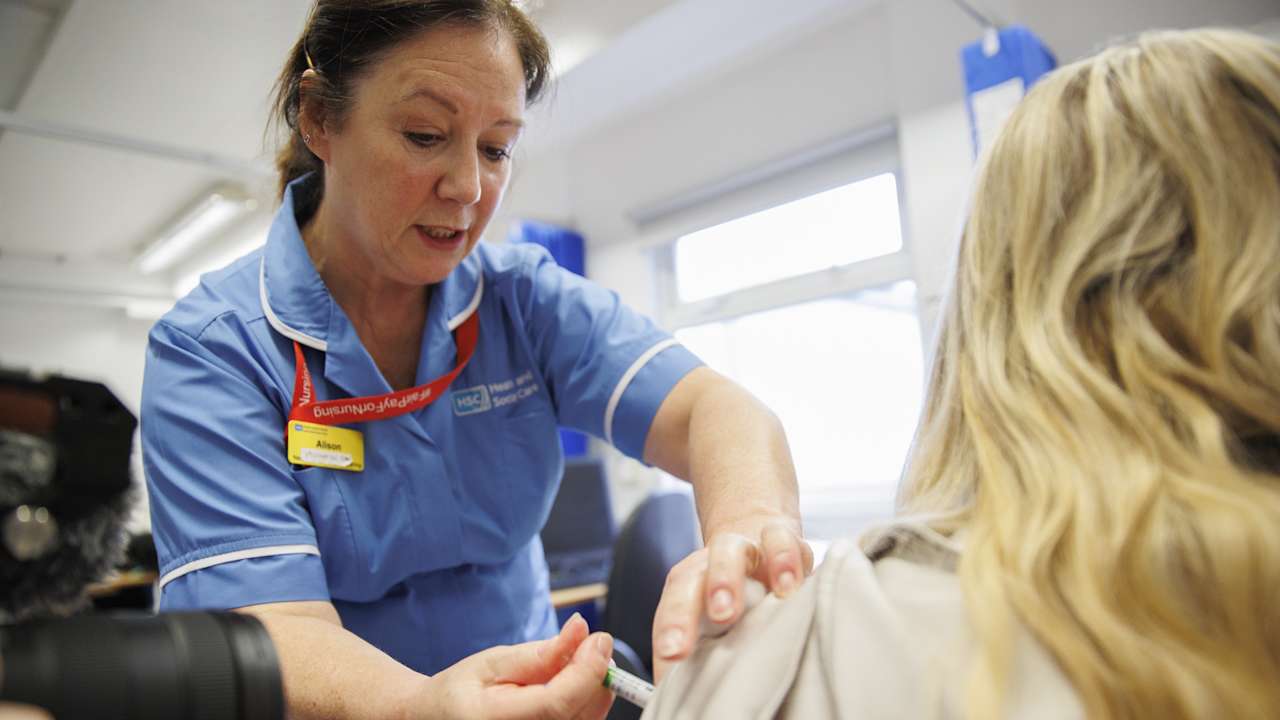
Vaccination remains the best protection against influenza.
Children, adults aged 65 and over, pregnant women, and people with certain health conditions can get the flu vaccine for free on the NHS, while others can pay around £20 at most pharmacies.
Hand washing and wearing masks are also recommended to limit the spread of the flu.
Daniel Elkeles, chief executive of NHS Providers, said: “I think we need to get back into the habit that if you are coughing and sneezing, but you’re not unwell enough to not go to work, then you must wear a mask when you’re in public spaces, including on public transport to stop the chances of you giving your virus to somebody else.
“And we were all very good about infection control during Covid. And we really, really need to get back to that now.”
The NHS also advises that anyone who is unwell should stay at home and avoid contact with others if they have a high temperature or do not feel well enough to carry out normal activities.
Will my flu vaccine still work?
Yes. Early data shows the flu vaccine has been effective in protecting children, even against the H3N2 strain.
According to the UKHSA, the 2025/26 vaccine is currently 70 to 75% effective at preventing hospital attendance in children aged 2 to 17 years, and 30 to 40% effective in adults.
It is normal for vaccines to be more effective in children. We won’t know the final effectiveness until later in the season.
Dr Jamie Lopez Bernal, Consultant Epidemiologist for Immunisation at UKHSA, said: “These results provide reassuring evidence that this season’s flu vaccines currently offer important protection to children and adults, despite concerns about the new subclade.
“The high vaccine effectiveness in children strengthens the case for ensuring all eligible young people get vaccinated. When more children are protected, it helps stop the spread of flu to others around them.”
Is it worth getting a vaccine?
“If you haven’t already had your vaccine and you’re eligible, please go and take it”. That’s the advice of Dr Elkeles.
It can take 14 days for your body to build up immunity.
The vaccine can’t give you the flu, but it is possible to catch it naturally during this time.
Even once you are vaccinated and immunity has built up, you can still catch the flu – but symptoms are likely to be less severe and last for a shorter period.
Why has the flu arrived early?
Influenza moves around the globe, so we keep an eye on what happens during the Southern Hemisphere’s winter (our summer).
This year, the dominant strain of flu ‘drifted’ to H3N2. This was a worry for the World Health Organization, which had to lock in the vaccine it wanted back in February to give pharmaceutical companies time to manufacture it.
This year in the UK, flu started circulating in older children before spreading to primary schools and nurseries.
It is now impacting younger adults. Schoolchildren are all offered vaccinations from September, but it can take months to roll out.
Because herd immunity is lower for this strain, it may have spread faster before vaccines kicked in.
Things have been made worse by the damp, mild weather and the fact that children are still all at school.
What are the ‘super flu’ symptoms?
Flu symptoms develop rapidly, and you are likely to experience extreme tiredness, which helps distinguish the symptoms from a cold, where symptoms appear more gradually, according to the UKHSA.
Typical symptoms of H3N2 influenza are similar to seasonal flu and can include fever, cough, runny nose, body aches, and sometimes vomiting or diarrhoea.
People at higher risk of serious flu-related complications include:
- Children under five (especially under two)
- Adults aged 65 and over
- Pregnant women
- Those with chronic medical conditions such as asthma, diabetes, heart disease, weakened immune systems, or neurological disorders
How bad is the flu compared to last year?
The number of people in hospital with flu in England is at a record level for this time of year.
An average of 1,717 flu patients were in hospital beds in England each day, including 69 in critical care, according to the most recent data.
This is 56% higher than the same week in 2024, when an average of 1,098 patients were in hospital, including 39 in critical care.
Current levels are also well above those seen in 2023 (243 patients) and 2022 (772).
England has recorded 92.7 influenza-related hospital admissions per 100,000 people so far in 2025 (up to November 3), compared with 87.2 per 100,000 at the same point in 2024 – a 6.3% increase year on year, according to figures released by the UKHSA.
Have there been any school closures?
Some schools across the UK have been forced to close temporarily or take extra precautions as a severe strain of flu spreads through classrooms.
Congleton High School in Cheshire closed on November 26 and 27 after a number of flu cases.
The school posted on social media that a deep clean was carried out following discussions with the UKHSA’s North West Health Protection Team and the Infection Control Team.
Responding to closures, a Government spokesperson said: “School attendance is critical for children’s life chances, and while it’s clear cases of flu are going to have an impact on attendance levels, we are clear school closures should only happen in extreme circumstances.
“We provide clear guidance to help parents know exactly when to keep children home, and to help schools both manage children’s wellbeing and keep disruption to a minimum.”
Subscribe free to our weekly newsletter for exclusive and original coverage from ITV News. Direct to your inbox every Friday morning.
What hospitals have been impacted?
The rising flu cases have led to a critical incident being declared at six hospitals in the West Midlands, including Birmingham, Solihull, Stafford and Stoke-on-Trent on Tuesday.
University Hospitals Birmingham NHS Foundation Trust, which runs Good Hope, Heartlands and Queen Elizabeth hospitals in Birmingham as well as Solihull Hospital, said it was due to “exceptional” numbers of patients with flu.
A spokesperson said 269 patients with flu required hospital admission, with mask-wearing being introduced across all clinical departments.
The hospital trust has said its emergency departments remain “overcrowded with extended waits to be seen.”
The trust said in a statement: “Despite expanding capacity in our wards and in our emergency departments, our emergency departments (A&Es) remain overcrowded with extended waits to be seen.
“We are asking the communities we serve to think carefully about how they access healthcare – if you do not have an emergency or life-threatening condition you may be redirected to another healthcare service such as a pharmacy or NHS 111.”
Follow STV News on WhatsApp
Scan the QR code on your mobile device for all the latest news from around the country