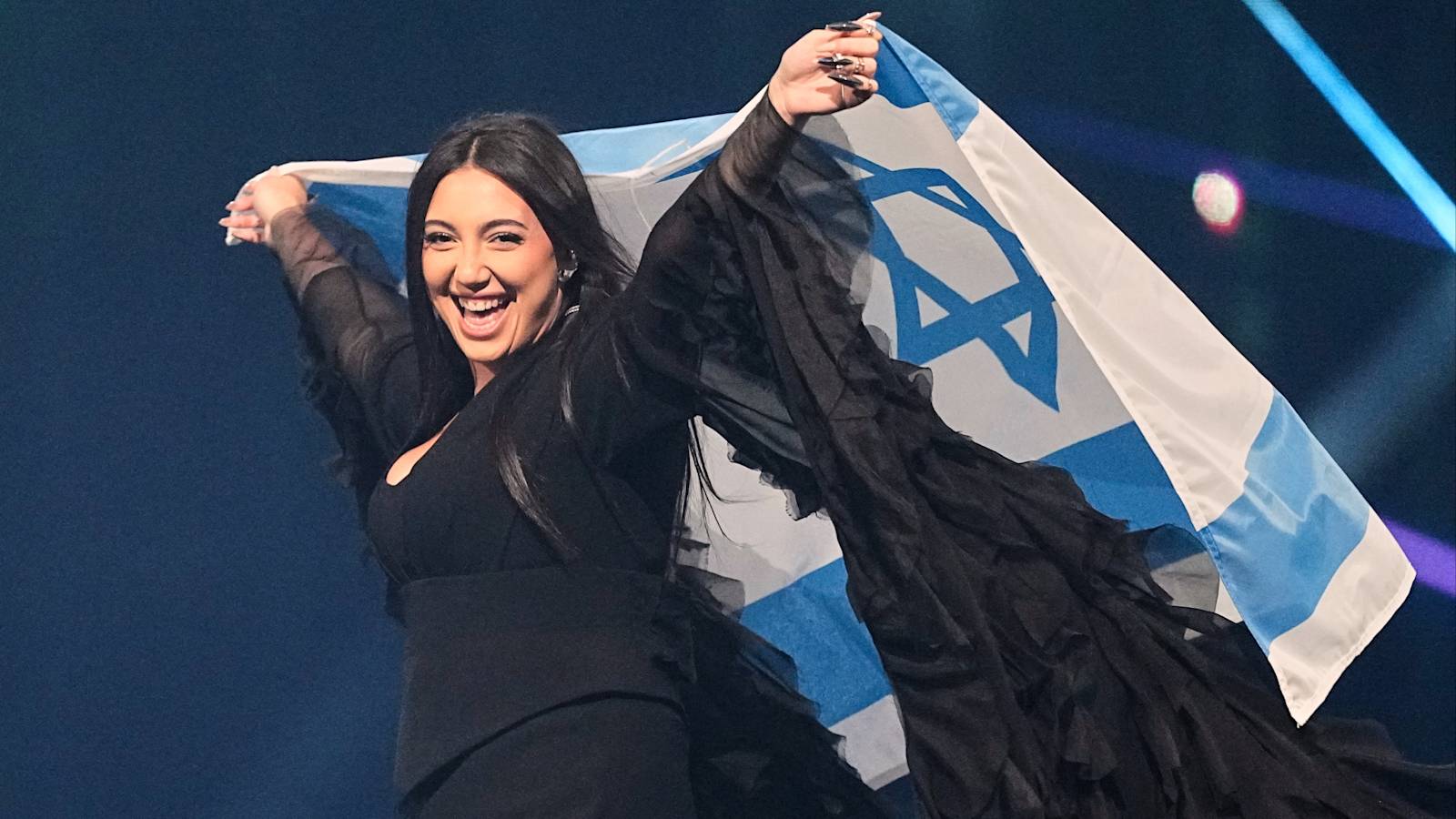
Organisers of the Eurovision Song Contest are expected to make a decision later on Thursday on whether or not Israel should be allowed to participate in the 2026 competition.
The European Broadcasting Union, a group of public broadcasters from 56 countries that runs the event, is to hold a general assembly, where the divisive issue of Israel’s participation is likely to take the centre stage.
Some countries have called for Israel to be excluded over alleged interference in contest voting and the way its government has conducted the war against the militant Hamas group in Gaza.
It is not clear whether a vote will be called, and experts predict delegates will not reach a united position on the issue at the EBU headquarters in Geneva.
“Eurovision is becoming a bit of a fractured event,” said Paul Jordan, an expert on the contest known as Dr Eurovision.
“The slogan is ‘United by Music’… unfortunately it’s disunited through politics. It’s become quite a messy and toxic situation.”

The contest, whose 70th edition is scheduled for Vienna in May 2026, pits acts from dozens of nations against one another for the continent’s musical crown – drawing in more than 100 million viewers every year.
It strives to put pop before politics, but has repeatedly been embroiled in world events, having expelled Russia in 2022 after its full-scale invasion of Ukraine.
The war in Gaza has been its biggest challenge, with pro-Palestinian protesters demonstrating against Israel outside the last two Eurovision contests in Basel, Switzerland, in May and Malmo, Sweden, in 2024.
The war in Gaza has also exposed rifts in the European broadcasting world.
Austria, which is set to host after Viennese singer JJ won in May with “Wasted Love,” supports Israel’s participation, while Germany is also said to back Israel.
Iceland, Ireland, the Netherlands, Slovenia and Spain are among the countries that have threatened to sit out the contest if Israel is allowed to take part.
Spain is part of the “Big Five” of countries that automatically qualify for the contest due to their financial contributions, while Iceland has the highest-percentage viewing audience of any country, according to Eurovision expert Dean Vuletic.
Ireland and Sweden both hold the joint record for the highest number of wins – each tying at seven victories – making them big names in the competition.
Opponents of Israel’s participation criticise the conduct of the war in Gaza, which has left more than 70,000 people dead, according to the territory’s health ministry, which operates under the Hamas-run government and whose detailed records are viewed as generally reliable by the international community.
Israel’s government has repeatedly defended its campaign as a response to the October 7, 2023, attack by Hamas-led militants, which saw 1,200 people – mostly civilians – killed in the attack and 251 taken hostage.
Israel also has faced allegations of interference in the voting process in Eurovision.

It’s not clear whether a decrease in violence in Gaza, where a US-brokered ceasefire is for the most part holding, or EBU plans to change voting processes to guard against political interference will be enough to placate some broadcasters who are on the fence.
EBU said officials at Thursday’s meeting will be asked to consider that package of new measures, including reducing the number of votes per payment method, and a return of “professional juries” to the semi-finals.
A vote on participation will only take place if member broadcasters decide those steps are not sufficient to protect the “neutrality and impartiality” of the contest, the broadcasting union said in an email on Wednesday.
Members have until mid-December to confirm their participation next year, and a final list will be announced by Christmas, it said.
Mr Vuletic, who wrote a book about Europe and the Eurovision Song Contest, said a boycott by any EU member country would be significant because they are “not dictatorships” and are meant, like Israel, to share values of democracy, human rights and diversity.
“It would be the biggest boycott of Eurovision ever. There have been boycotts in the past, but they have been usually bilateral,” he said.
The least likely scenario, he said, would be for Israel to decide unilaterally sit out. The country’s national broadcaster, Kan, has made no such announcement.
The fallout of a boycott could have implications for viewership and money at a time when many broadcasters are under financial pressure from government funding cuts and the advent of social media that has steered away eyeballs.
The controversy over Israel’s 2026 participation threatens to overshadow the return next year of three countries – Bulgaria, Moldova and Romania – after periods of absence due to financial and artistic reasons.
“There are no winners here. Regardless of what happens, whether Israel is in or out, whether countries stay or go, it’s not what Eurovision should be.
“It’s meant to be joyous and about bringing people together despite our politics,” Mr Jordan said.
“Unfortunately, it’s become, I think, a bit of a political football.”
Follow STV News on WhatsApp
Scan the QR code on your mobile device for all the latest news from around the country