
The Eurovision Song Contest has changed its rules so that the next winner will be automatically ineligible to host the following year if their state is involved in an “armed conflict” or “sensitive geopolitical situation”.
A country will also be ineligible to host if “any other situation materially affects the security, safety or stability of their state or immediate region”, the contest said in a statement on Wednesday.
The new rules mean the European Broadcasting Union (EBU), who organise the annual event, could commission an independent security assessment into a winner’s region if necessary.
“If the winning Member is deemed unable to host, the EBU will identify an alternative Host Broadcaster,” the statement said.
The changes were made following feedback from participating broadcasters in this year’s contest, and are designed to provide greater clarity for artists and production staff, according to the EBU.
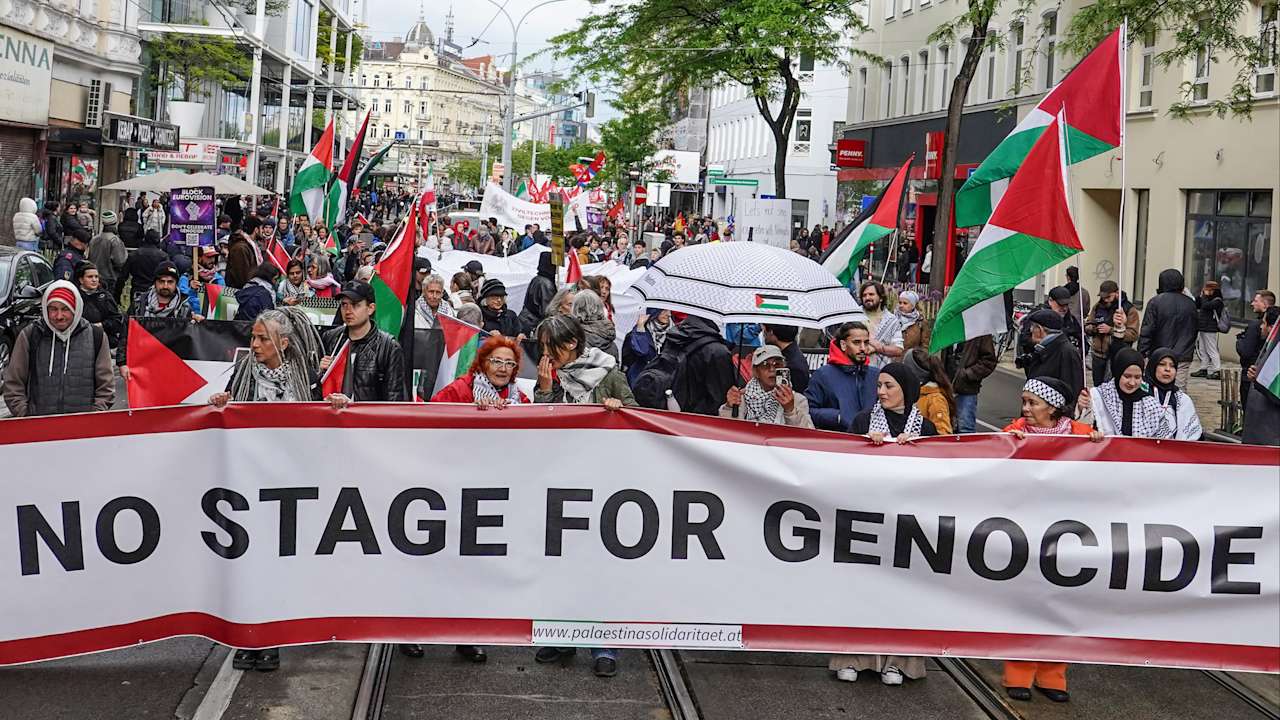
Spain, the Netherlands, Ireland and Slovenia all boycotted this year’s Eurovision over Israel’s inclusion amid the war in Gaza.
Others rules changed include the age of participants, with artists representing their country needing to now be at least 18, rather than 16, on the day of their first rehearsal.
This adaptation is part of an effort to “strengthen safeguarding and protect younger artists from the pressures associated with competing at the Eurovision Song Contest”, Eurovision said.
The news comes as part of the Eurovision Song Contest’s annual rule review and also included clarification around audio rules.
“The core principle remains unchanged: the Lead Singer(s) must perform the main melody live”, the statement said.
“Backing tracks and pre-recorded elements may be used in accordance with the Rules, but the lead vocal must be the only element performing the main melody and they cannot replace or unduly assist the live vocal performance.”
Speaking on the overall rule changes, Martin Green CBE, director of the Eurovision Song Contest, said the annual review of the rules keeps the competition “fair, transparent and consistent for all those who participate”.
“These changes are about giving everyone involved greater clarity, protecting artists and ensuring the Contest continues to provide a safe and welcoming environment, while preserving the spirit and integrity that make the Eurovision Song Contest so special,” Green said.
The 2027 Eurovision Song Contest is set to be held in Bulgaria after singer Dara won this year’s event in Vienna, Austria, in May.
Despite protests ahead of and during the event, Israel’s Noam Bettan came in second place during the competition with the song Michelle.
Follow STV News on WhatsApp
Scan the QR code on your mobile device for all the latest news from around the country