
Words by Akshay Raja
From the growing use of large language models (LLMs) such as ChatGPT, to plans for the launch of driverless taxis in the UK this year, we are witnessing the transformative effects of artificial intelligence (AI) in our day-to-day lives.
One technology yet to make its way into everyday use is the humanoid robot. But this could soon change.
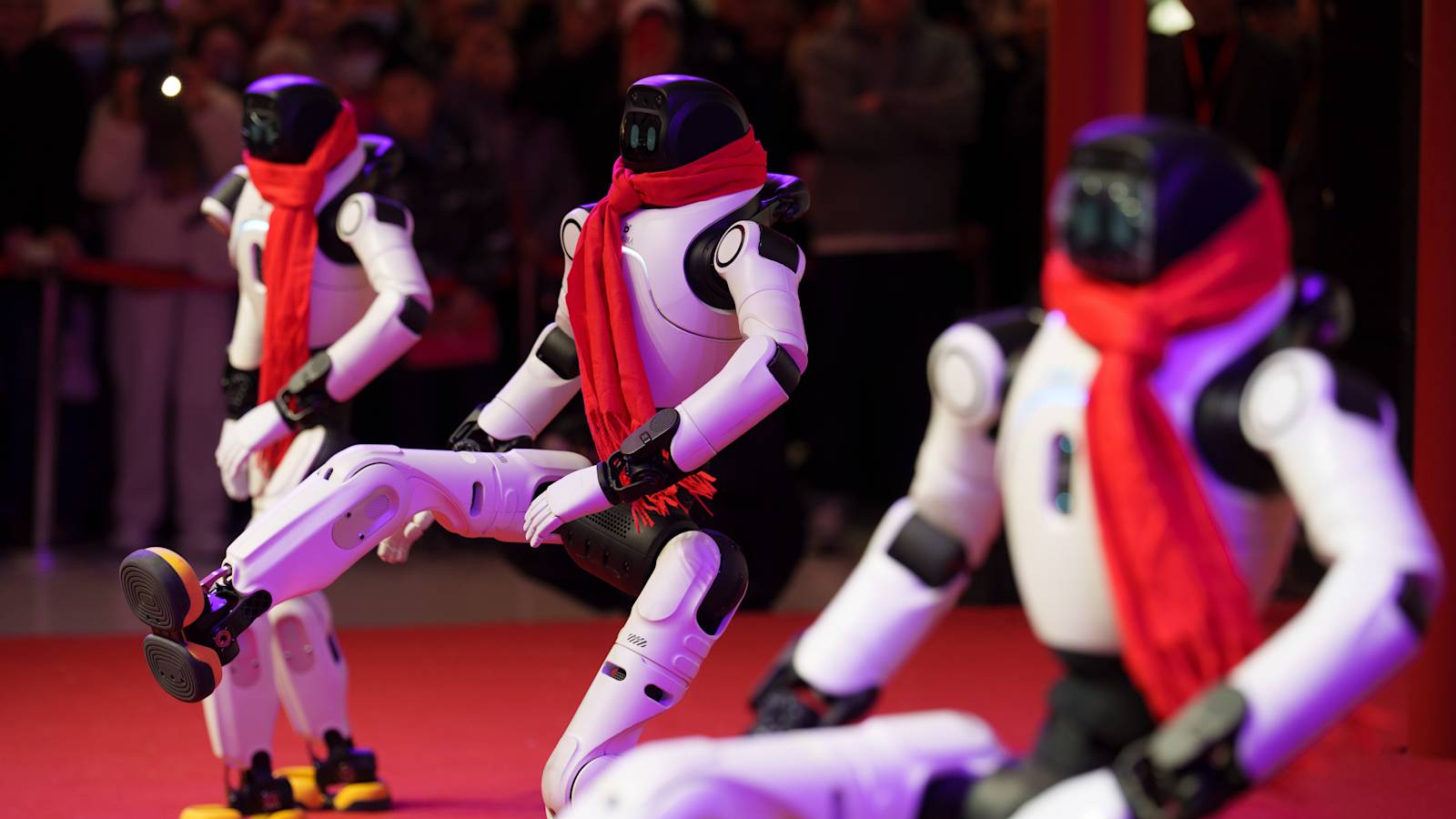
Videos emerging from China’s Spring Festival Gala showed humanoids performing fluid martial arts moves in perfect synchronicity.
A video released by Chinese robotics company Unitree shows humanoid robots demonstrating their kung fu moves at Beijing’s Temple of Heaven. Credit: CCTV
As these humanlike figures flipped, leapt and kicked with ease, you would be forgiven for thinking they have been doing it for years.
But footage from less than 12 months earlier showed similar robots stumbling around on a football pitch, tripping up over nothing and waddling into each other.
Some experts remain sceptical. They warn against being disillusioned by these performative displays, highlighting instead the security and safety risks humanoid robots could pose if we do not exercise caution.
So should we be excited by this technology, or worried?
Physical harms and safety risks
Dr Andrew Hundt is a Computing Innovation Fellow at Carnegie Mellon University. He distinguishes between the pre-scripted displays of humanoids and how they would perform in new, unpredictable locations.
Dr Hundt highlights the limitations of the technology’s current capacities, saying: “If they then have to, say, interact in crowds or manipulate objects […] suddenly their abilities appear to drop.”
Robotics manufacturer, Humanoid, echoes Dr Hundt’s claim. In an email to ITV News, the company writes: “If there’s one thing that the industry is doing wrong at the moment, it is the hype.”
While the team at Humanoid recognise the impressive nature of the demonstrations, they clarify these “are mostly here for marketing reasons and don’t necessarily reflect real commercial readiness.”
Andrew Hundt explains the dangers humanoids pose, despite the impressive developments we have seen over the last year.
“There is a lot of potential to help people out and save people a lot of trouble,” Dr Hundt says. “But on the other hand, these systems are getting capable enough to look like they can work, but still dangerous enough to be a risk to people.”
Clarifying how dangerous robots can actually be, he suggests AI systems are significantly limited in handling interactive safety, saying “they’re just really not good at long-term reasoning at the moment.” Dr Hundt fears there could be “a number of scandals on the way” if this is not resolved.
He does not believe enough is currently being done to deal with these issues, but developers at Humanoid say safety is their main focus.
The company is currently working on two models for commercial and industrial use. These will only be introduced to homes once Humanoid have ensured “robots can operate in human environments”.
Factory floors offer a suitable environment to trial this due to their structured and predictable environments, which allow the company “to test robots, collect data, and develop reliable capabilities before moving into more complex environments like homes”.
Discrimination
Another issue encountered by Dr Hundt during his research is that the AI models, which are intended for use in the humanoid robots, “tend to also do certain kinds of harm based on differences in race, gender, and disability status.”
One AI system suggested a robot should display a “face of disgust” if facing a Christian, Muslim or Jewish person.
Some humanoids have already exhibited signs of discriminatory treatment based on race and ethnicity.
Dr Masoumeh Mansouri is an Associate Professor in the School of Computer Science at the University of Birmingham. She similarly points to findings that LLM-driven robots risk “enacting discrimination, violence, and unlawful actions.”
If similar AI models are run in the sort of humanoid robots we have seen recently, Dr Mansouri fears how bad the consequences could be.
Developers at Humanoid said their responsibility is “to address bias risks in AI systems”.
Privacy issues
Privacy issues are not unique to humanoids and robotics, but Dr Mansouri recognises we are entering a “new territory” where robots are granted wider access to private and public spaces.
Given the lack of care with which technology is typically introduced to the public domain, Dr Mansouri fears there could be particularly harmful consequences.
She has observed two LLMs which could be used in humanoids approving requests to take non-consensual photographs of someone in a shower.
Dr Masoumeh Mansouri explains the potential for humanoids to violate personal privacy if deployed on a wider scale.
For the team at Humanoid, “robots will only become widespread if people trust them”. A key pillar of this trust is “data privacy you can control”.
As well as having a responsibility to ensure the safety of the technology which is implemented, Humanoid believes developers “need to educate industries and the public on how these platforms work and how to use them safely”.
Should we be worried about humanoids?
Neither Dr Hundt or Dr Mansouri believe humanoid robots are currently safe enough to be deployed in the public domain.
For Dr Hundt, though, the risks should not be overstated. He believes the harms posed can be managed through the regulation of the AI systems which they are driven by.
He says: “I do think that people should be worried about it, not in an existential sense, but more in a sense that you should also be worried about cars when you cross the street because cars are extremely dangerous generally.”
For Humanoid, the technology should not be feared as something that will replace humans, but rather be seen as a tool “to amplify human potential”.
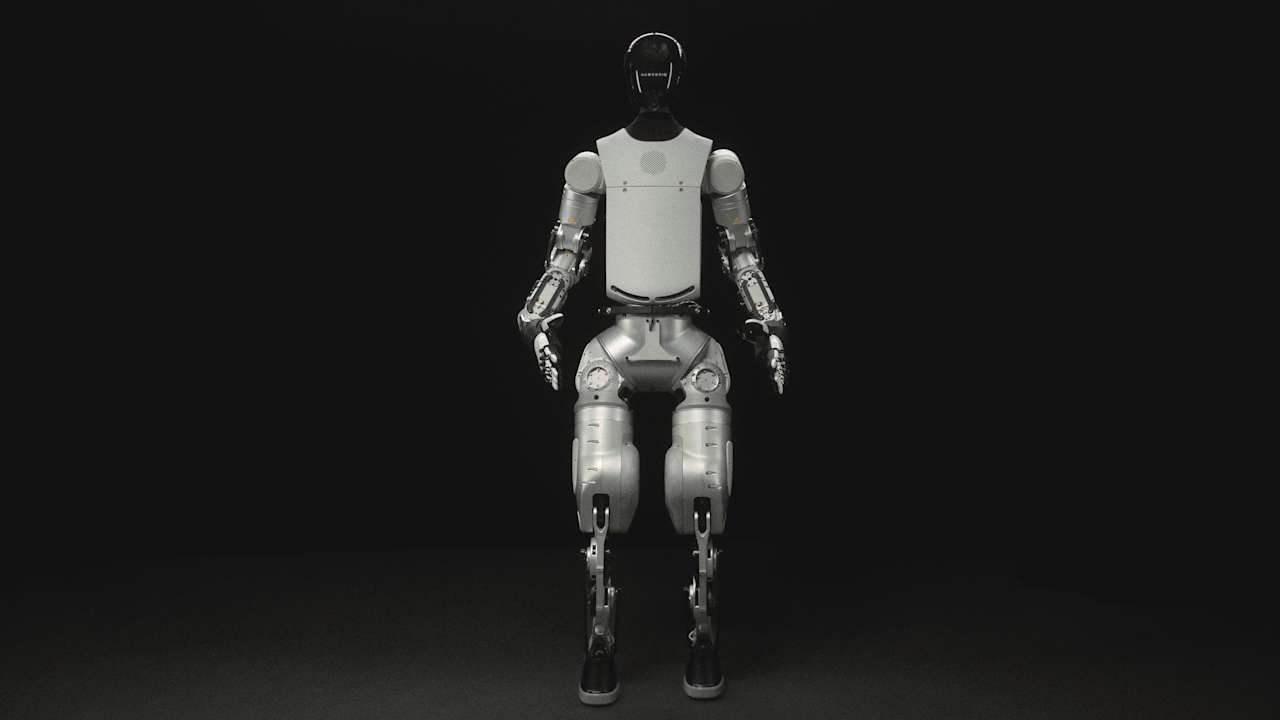
Despite recognising the technology will not develop overnight, the company does not think we are far away as many think. Humanoid says: “One of the biggest misconceptions about the industry is that humanoids are still decades away.
“But in reality, development is moving extremely fast. Many companies globally are already running pilots in warehouses, logistics centres, retail, and manufacturing.
“The first limited home-use pilots have also begun in some countries. Within a few years, it’s very likely people will personally know someone interacting with a humanoid robot.”
“As AI capabilities improve, robots will increasingly handle repetitive, monotonous, or hazardous work, and these are tasks that are difficult to fill or that are unsafe for humans”, the company says. This will enable people to pursue more “creative” or “meaningful” roles, it says.
And it looks like we will not have long to wait to find out whether humanoids will be helping with the admin – or impacting our lives in more harmful ways.
Follow STV News on WhatsApp
Scan the QR code on your mobile device for all the latest news from around the country