New technical education routes will be available to 14-year-olds under plans unveiled by Andy Burnham to tackle rising youth unemployment.
The prime minister said he was on “a mission” to curb the rise of young people not in education, employment or training (Neet), which now stands at more than one million.
Burham’s proposals to shake up the education system were aimed at preventing the rising trend rather than tackling the current figure, but he did not set a date for getting the Neet numbers falling.
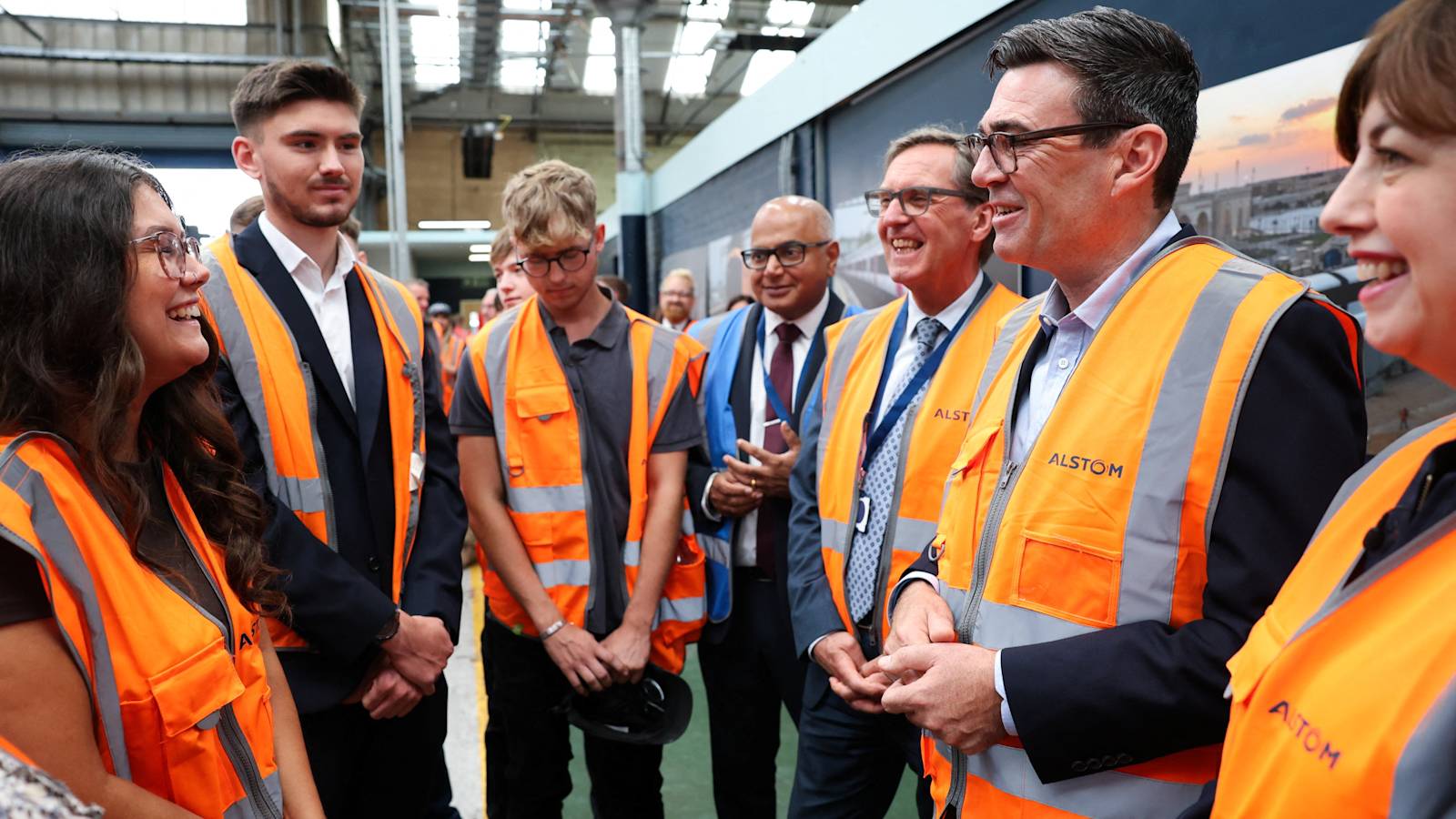
He told reporters during a Tuesday visit to Derby: “I will commit, in my time in office, to get the number of young people who are not in education, employment, and training down. I will commit to that.
“When precisely I can get there will is a hard thing to say right now.”
Under the plans, from Year 10, pupils will be able to combine core academic subjects, such as English and maths, with technical education linked to jobs available in their area.
The new technical pathways, set to be rolled out in September 2028, will pair skills training with work experience and connections with local employers.
He said: “We’ve had a system built for too long around the university route and it sends a message to some young people that they’re some kind of second-class citizens and it’s just not right.
“They need an education system that works for them, that offers a path to all young people that’s balanced between academic and technical.”
He said that young people are “let down” by the current system and promised that “from today, Britain will value the hard hat every bit as much as the graduation cap.”

The prime minister added the new plan would help young people find “quality, well-paid jobs where they live”.
Burnham said: “Fixing the youth unemployment crisis in Britain will require a shake-up in how we do things – and that’s what this government will do.
“I want to ensure that our education system leaves no dead ends for our young people.”
Ofsted will also change the way they inspect schools and measure performance, ensuring they recognise schools that provide high-quality technical education and support young people to develop the skills, experience and confidence employers are seeking.
The plans build on his devolution policy, bringing in regional mayors, local leaders, schools, colleges and employers to create the new technical pathways, which can be tailored around local industries and growth sectors.
These could include advanced manufacturing, AI, digital and technology, clean energy, life sciences, construction, healthcare or the creative industries, depending on local strengths.
There are currently no clear details about how the scheme would work in areas of low industrial activity where the options for jobs and technical education may be more limited.
Burnham introduced the Greater Manchester Baccalaureate (MBacc) during his time as mayor, which is aimed at offering a technical education alternative to the academic English Baccalaureate (EBacc).
Education Secretary Lucy Powell said: “By offering high-quality technical and vocational education alongside academic achievement, we’ll give more young people the chance to leave education with the skills, confidence and opportunities they need to thrive in today’s economy and the careers of the future.”
The changes follow Alan Milburn’s warning in his May report that Britain risked leaving behind a “lost generation” of young people ill-prepared for work.
Milburn welcomed the plans, adding: “They are a big step in the right direction and consistent with the findings of my review.”
However, shadow education secretary Laura Trott criticised the policy and said: “The announcements today don’t come anywhere close to undoing the damage Labour has already done to the job market.”
She said that the current Labour policy, including the increase to minimum wage, was driving the high number of youth unemployment.
She said: “They are making it too expensive to hire young people, and destroying jobs with their jobs tax and employer red tape.”
Liberal Democrat education spokesperson Munira Wilson said the plan “must come in with built-in safeguards to allow young people the flexibility to retrospectively change direction and move between ‘academic’ and ‘technical’”.
She added: “We must not allow these changes to predetermine children’s futures at just 14, baking in disadvantage.”
General Secretary of the NAHT school leaders union Paul Whiteman called for greater clarity on the plans and said: “We welcome the ambition to strengthen technical and vocational education…
“However, this announcement sets out a direction of travel rather than detailed proposals, and schools will need much greater clarity about what it means in practice and over funding.”
General secretary of the Association of School and College Leaders Pepe Di’Iasio said they are pleased the Government is treating this as an “urgent priority”, but the timing of the announcement is “unfortunate”.
He said: “To make major educational policy announcements in the middle of the summer holiday is wrong, particularly when there is so little detail.”
Connie Muttock, head of policy at the Centre for Young Lives think tank, said: “This announcement is an important leap forward towards rebuilding a high-achieving, high aspirations, high-quality education system that works for all children, wherever they grow up.”
Follow STV News on WhatsApp
Scan the QR code on your mobile device for all the latest news from around the country