Words by Daniel Boal, ITV News Producer
Australia has one of the world’s toughest laws on gun ownership already, but the mass shooting at Bondi Beach over the weekend could lead to even tougher restrictions.
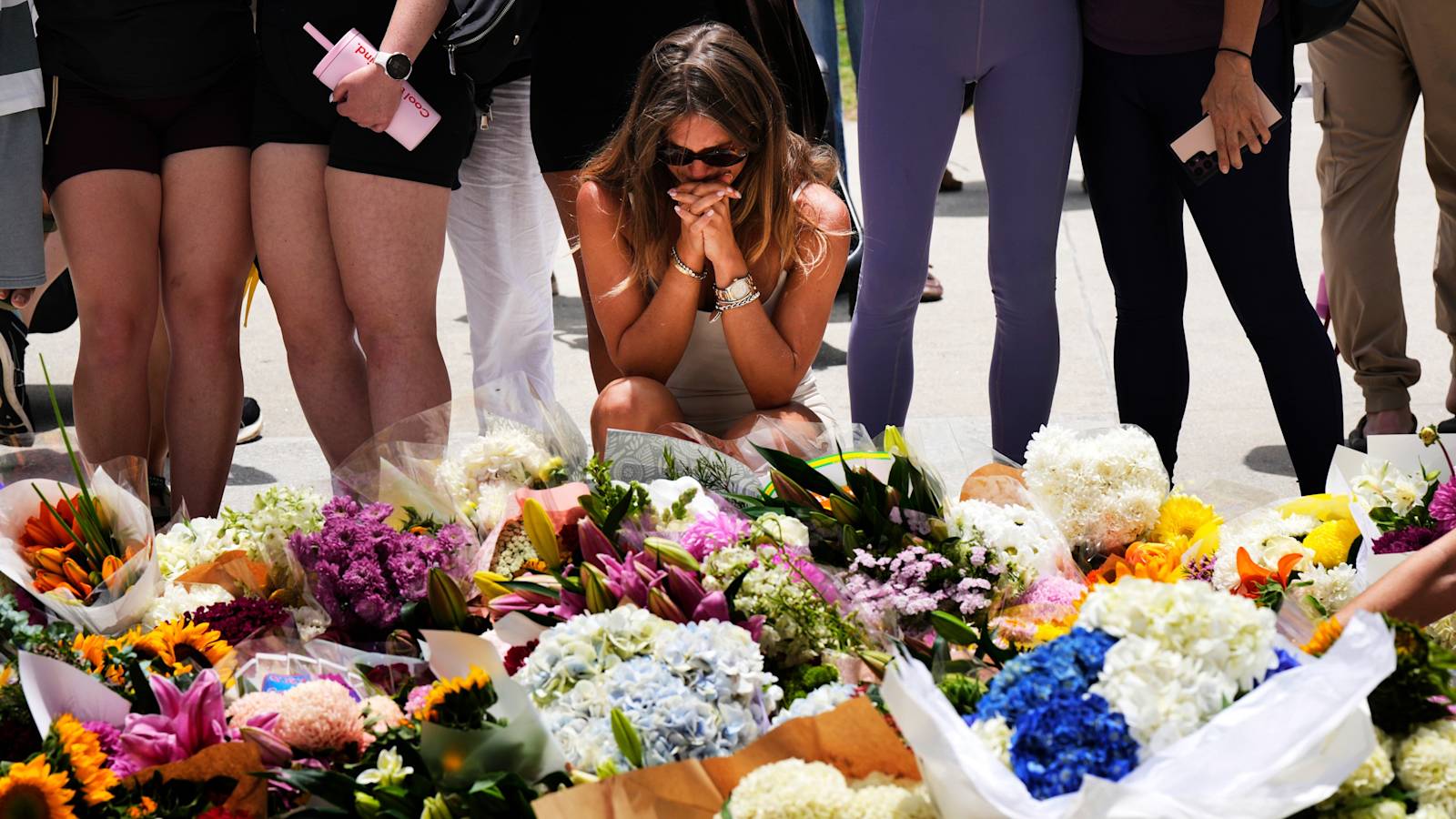
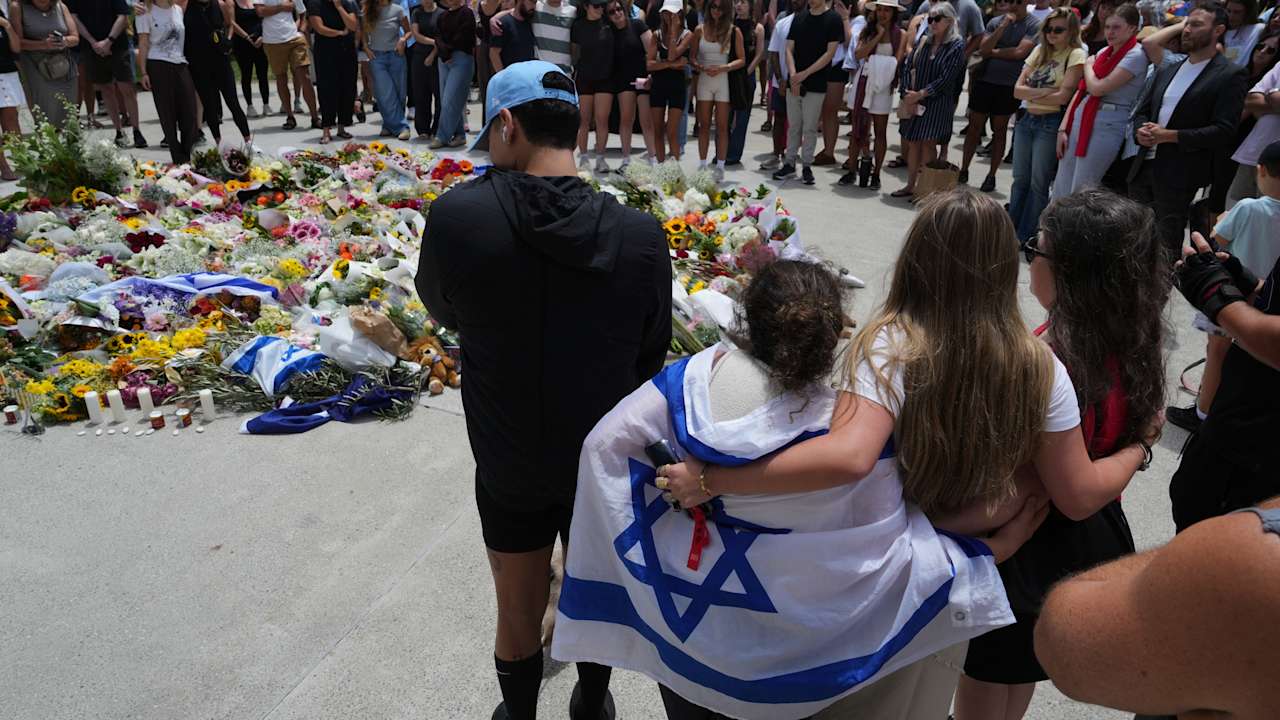
At least 15 people were killed, and 40 were taken to the hospital after two men fired on a Jewish Hanukkah event near the beach on Sunday. Those killed included a 10-year-old girl, a British-born rabbi, and a Holocaust survivor.
Within 24 hours, federal and state government leaders agreed to overhaul the gun control laws once again.
The action could include a renegotiation of the landmark national firearms agreement that essentially banned rapid-fire rifles after a lone gunman killed 35 people in Tasmania in 1996.
The mass killing galvanised the country into action at the time, and within two weeks, new laws were in place for who could and couldn’t own a gun.
Here, ITV News explains Australia’s current gun laws and how they could change…
Sunday’s attack
The suspects of the Bondi Beach attack have been named by Australian media as 50-year-old Sajid Akram and his 24-year-old son Naveed Akram.
Akram was shot and killed by police at the scene while his son remains in a coma in hospital, Prime Minister Anthony Albanese said.
The 50-year-old man had held a gun license for a decade and had amassed his six guns legally. His son, who doesn’t have a gun license, is an Australian-born citizen.
“Two active improved devices” were found at the scene and have since been rendered safe by police, according to Channel 7.
Gun ownership on the rise
Until Sunday, Australia had decades of proof that tough gun laws can make a country safer, with one of the world’s lowest gun homicide rates per capita.
From July 2023 to June 2024, there were only 31 gun-related murders, according to the Australian Institute of Criminology.
Something that has, however, continued to rise is the number of guns being held legally. Over the past two decades, gun ownership has steadily risen – it is thought that at least four million guns are currently held by Australian citizens.
All states and territories agree on the National Firearms Agreement, which requires all gun owners to have a license and register their firearms.
It also banned semi-automatic and pump-action long guns and required a “genuine reason” from each applicant to own a gun.
However, the laws on gun ownership still differ from state to state.
New South Wales
New South Wales, where Bondi Beach is located, has heavy regulation on gun ownership. State police issue licenses and permits while carrying out checks that firearms are stored correctly.
Strict eligibility criteria for a license must be met. And police under the ACT have extraordinary powers to regulate firearms, such as on-the-spot searches as well as storage inspections, with or without the consent of the license holder.
A license can cost between $100 (£50) and $250 (£125), depending on duration.
A new offence for possessing a stolen firearm was introduced back in 2014 after the Lindt Cafe siege, increasing the maximum sentence to 14 years in prison.
The NSW government also has an Illegal Firearms Investigation and Reward Scheme.
Christopher Minns, Premier of New South Wales, where Sydney is the state capital, said his state’s gun laws would change, but he could not yet detail how.
Victoria
In Victoria, like many Australian states, you must have a “genuine reason” for gun ownership.
These can include sport and target shooting, recreational hunting and vermin control, farming, collection (not use), employment reasons, animal welfare, pest control, or firearms instruction.
Anyone with a criminal conviction or intervention order is automatically disqualified from application processes.
Police can also refuse on the grounds of physical or mental illness, drug or alcohol abuse, or on the advice of a medical professional. If you are caught with an unregistered firearm in Victoria, you can be jailed for up to 17 years.
Carrying a loaded weapon in a public place is also banned and carries a jail term of 10 years.
Queensland
A license is required to own a firearm in Queensland. The process has several strict background checks and the “genuine need” to own a firearm.
To be eligible, you need to be older than 18 years old, have a legitimate reason for ownership, have no criminal record, and have suitable storage facilities.
Any violation of the state’s weapons laws could incur a 13-year prison sentence and a large fine.
Western Australia
Western Australia has some of the strictest gun-control laws in the country. To own a firearm, you must have a license, which has eight categories that need to be passed.
In WA, you must:
- Be over 18 years of age
- Hold a valid firearms license for one of the eight specific categories (individual, collector, business, agricultural, club, range, trade, government)
- Provide a genuine reason; self-defence is explicitly not allowed across Australia as a reason
- Complete mandatory theory and practical training
- Undergo a mandatory health assessment
- No criminal record or family restraining order
- Have secure storage facilities
There is also a limit of 10 guns for most people – fewer for those who have hunting licenses.
Northern Territory
The state has the second-highest gun ownership in Australia and some of the least stringent rules. Unlike most states, the Northern Territory has waived the 28-day waiting period to acquire a gun for those who already own one.
Gun licenses are also somewhat cheaper, ranging from around $81 (£40) to $280 (£140).
Laws were, however, introduced in 2019, which increased the maximum penalty for a range of firearms offences.
South Australia
To obtain a firearm in South Australia, you need to attend a police station with 100 points of ID to put yourself forward for a background check before you can obtain a gun license.
In Australia, identification documents carry a points tally; for instance, a current Australian passport is worth around 70 points, and a utility bill is worth around 10 points.
Any suspicion over a person’s fitness to possess a firearm can be reported to the registrar of firearms.
The state also has a public database of people who are subject to the state’s firearms prohibition order.
What could new gun laws look like?
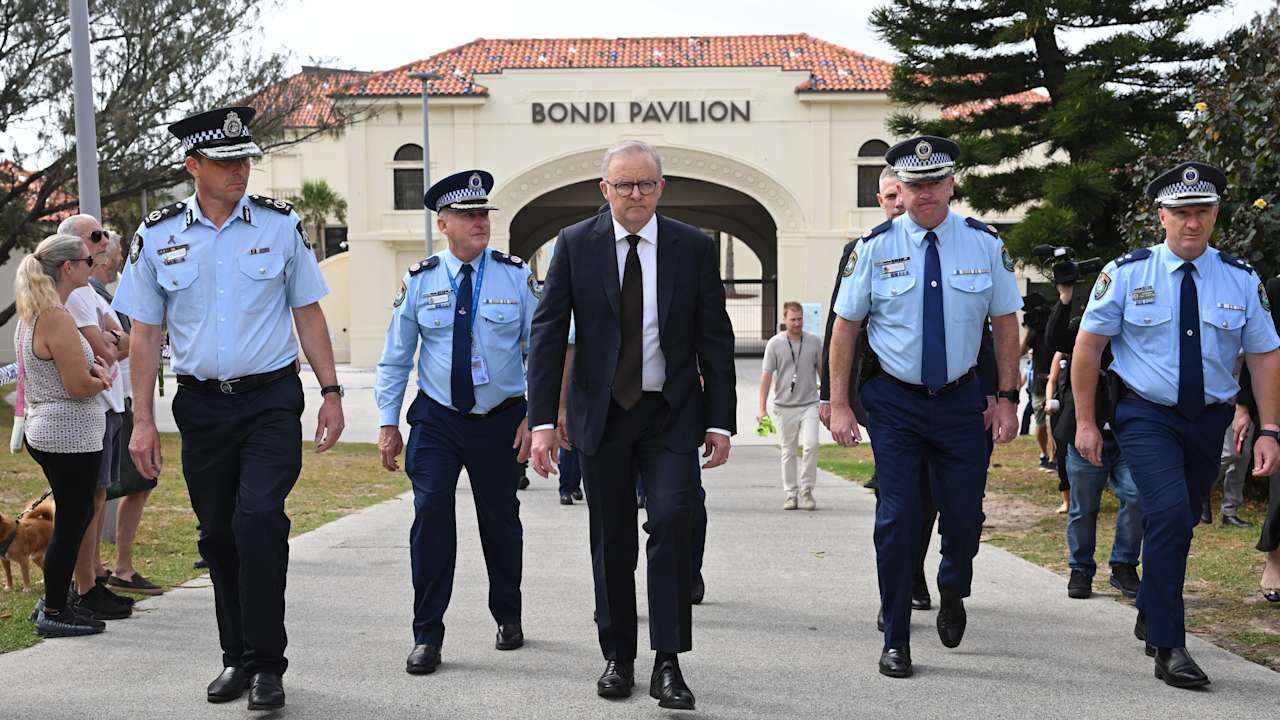
Albanese called the Bondi massacre an act of “antisemitic terrorism” that struck at the heart of the nation.
Government leaders proposed restricting gun ownership to Australian citizens, a measure that would have excluded the older gunman, who came to Australia in 1998 on a student visa and became a permanent resident after marrying a local woman. Officials wouldn’t confirm what country he had migrated from.
The government leaders also proposed the “additional use of criminal intelligence” in deciding who was eligible for a gun license. That could mean the son’s suspicious associates could disqualify the father from owning a gun.
Restrictions could be placed on the number of guns held and what type of firearm. Licenses could also expire after a certain amount of time, and more frequent checks on the license holder’s suitability may be implemented.
Work would also begin on tougher restrictions on the import of firearms and other weapons, including “3D printing, novel technology and firearms equipment that can hold large amounts of ammunition,” the government said in a statement.
Speaking to ABC, Albanese said that he would look to bring gun laws together across Australia.
He said: “I would put them all together, making sure that they operate effectively and that they’re kept up to date and that they’re updated for the changing threat.
“We live in a more dangerous world in 2025. The threat of antisemitism, as we have seen, is very real. Threats of other occurrences, such as the rise in the far right, which has also been identified.”
Minns, Premier of New South Wales, where Sydney is the state capital, said: “It means introducing a bill to Parliament to – I mean to be really blunt – make it more difficult to get these horrifying weapons that have no practical use in our community,” he said.
“If you’re not a farmer, you’re not involved in agriculture, why do you need these massive weapons that put the public in danger and make life dangerous and difficult for New South Wales Police?” Minns asked.
Follow STV News on WhatsApp
Scan the QR code on your mobile device for all the latest news from around the country