
 University of Glasgow
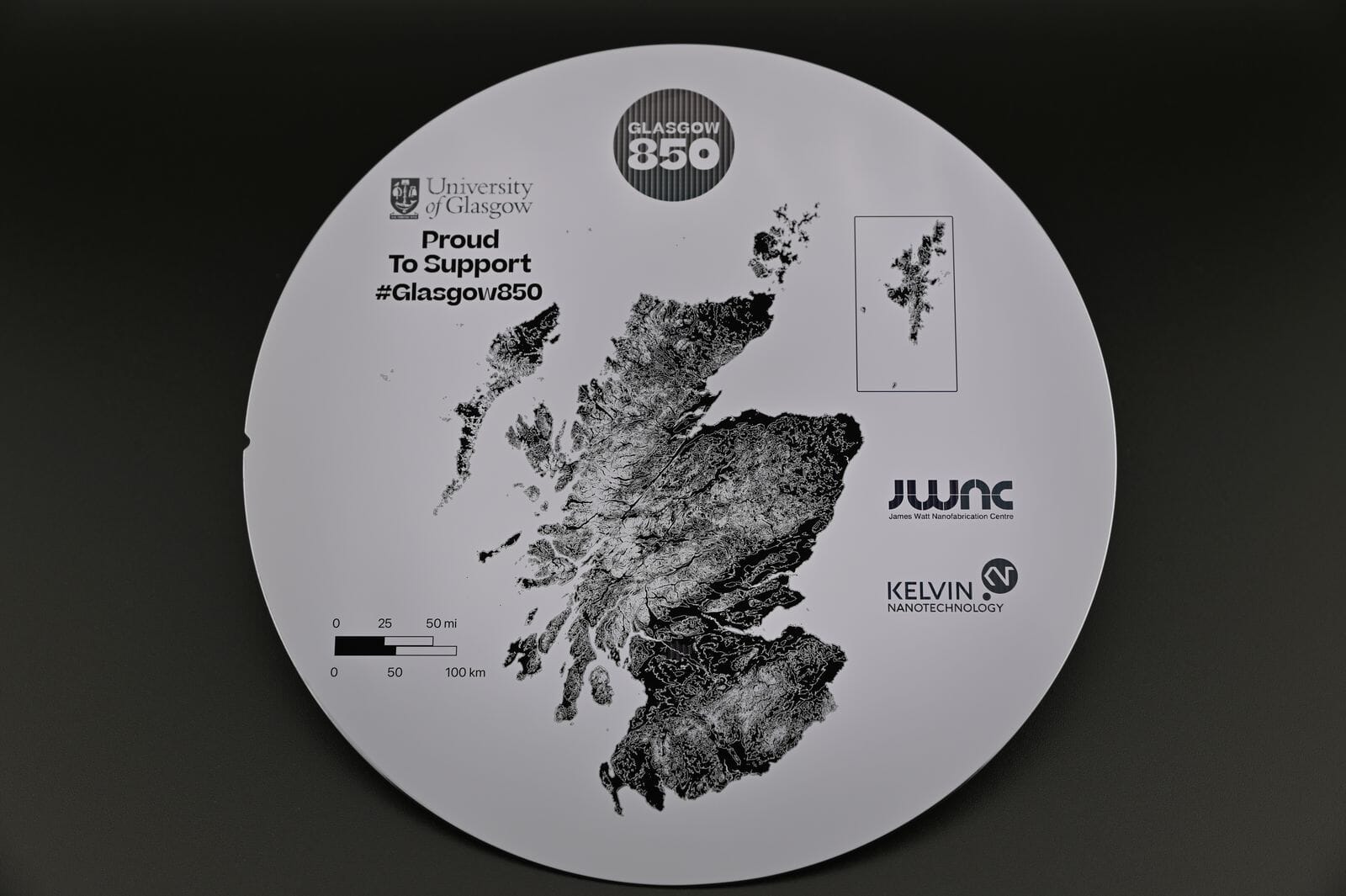
Researchers at the University of Glasgow have recreated the Glasgow 850 logo in “unprecedented detail” using the wavelength of light.
The etching includes what the team believe to be the world’s smallest depiction of the River Clyde, which is just 50 microns across – the width of a human hair.
The tribute was created on a six-inch silicon wafer using Glasgow University’s £35m cutting-edge James Watt Nanofabrication Centre (JWNC) with techniques more usually applied to create advanced semiconductor devices for critical technologies.
The JWNC produces around 10% of the global supply chain of certain crucial components, which enable essential modern technologies like cloud computing and artificial intelligence.
It also plays a key role in the development of critical technologies including photonic, semiconductor and quantum components for next-generation devices.
Drawing on these technologies, researchers decided to pay tribute to Glasgow by creating the image of Scotland etched in the wavelength of light.
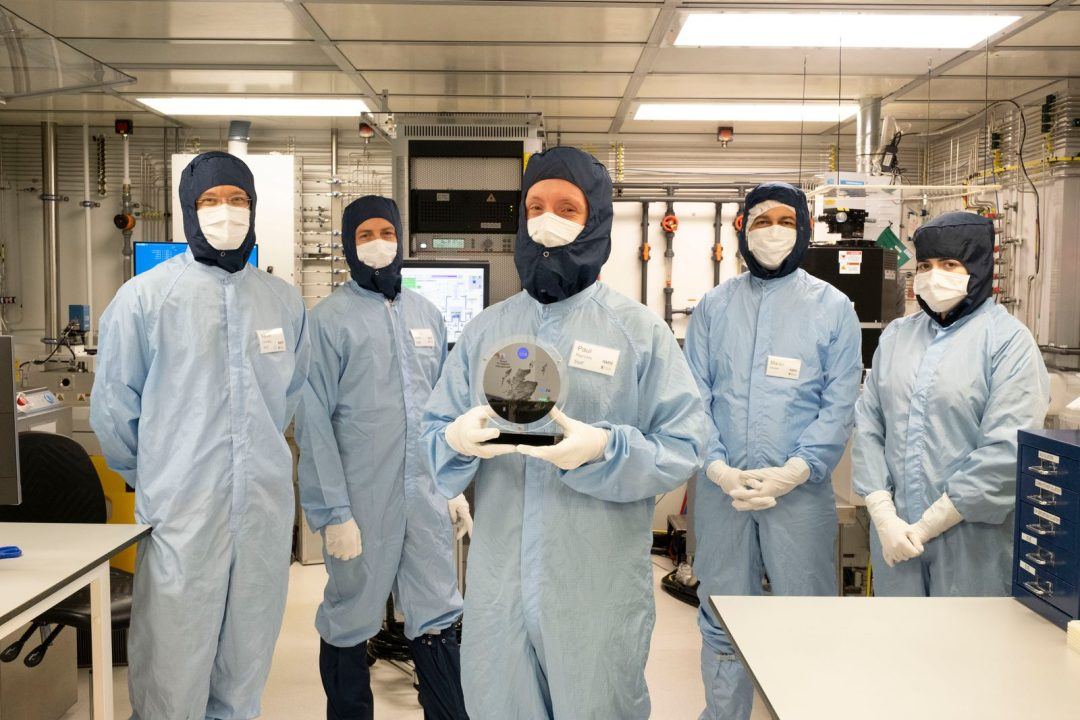
Over 24 hours of continuous operation, researchers used the JWNC’s £3m electron beam lithography tool to etch the contours of the Scottish countryside on the face of the wafer.
 University of Glasgow
“Think of it like the world’s sharpest pencil,” Dr Paul Reynolds, a senior research JWNC engineer who led the development of the image, said.
“It uses a stream of electrons to draw the incredibly fine patterns required for modern electronics, down to just eight nanometers.”
As the city celebrates its 850th birthday in 2025, Dr Reynolds said the university team is “proud” to be doing their part to celebrate.
“I don’t think there’s anywhere else in the UK which has the mix of technical expertise and manufacturing facilities required to make something this detailed,” he said.
Professor Martin Weides, the director of the JWNC, highlighted that advanced manufacturing has long been a key part of Glasgow’s history and economic development.
“It’s remarkable to think that, when Glasgow was founded, the invention of the printing press was still more than 250 years in the future, but today at the JWNC we’re able to write on silicon at the wavelength of light,” Prof Weides said.
Glasgow City Council leader Susan Aitken added that the accomplishment, in Glasgow’s anniversary year, “perfectly sums up our evolution from a traditional manufacturing city to one at the forefront of pioneering precision engineering”.
Follow STV News on WhatsApp
Scan the QR code on your mobile device for all the latest news from around the country