 PA Media
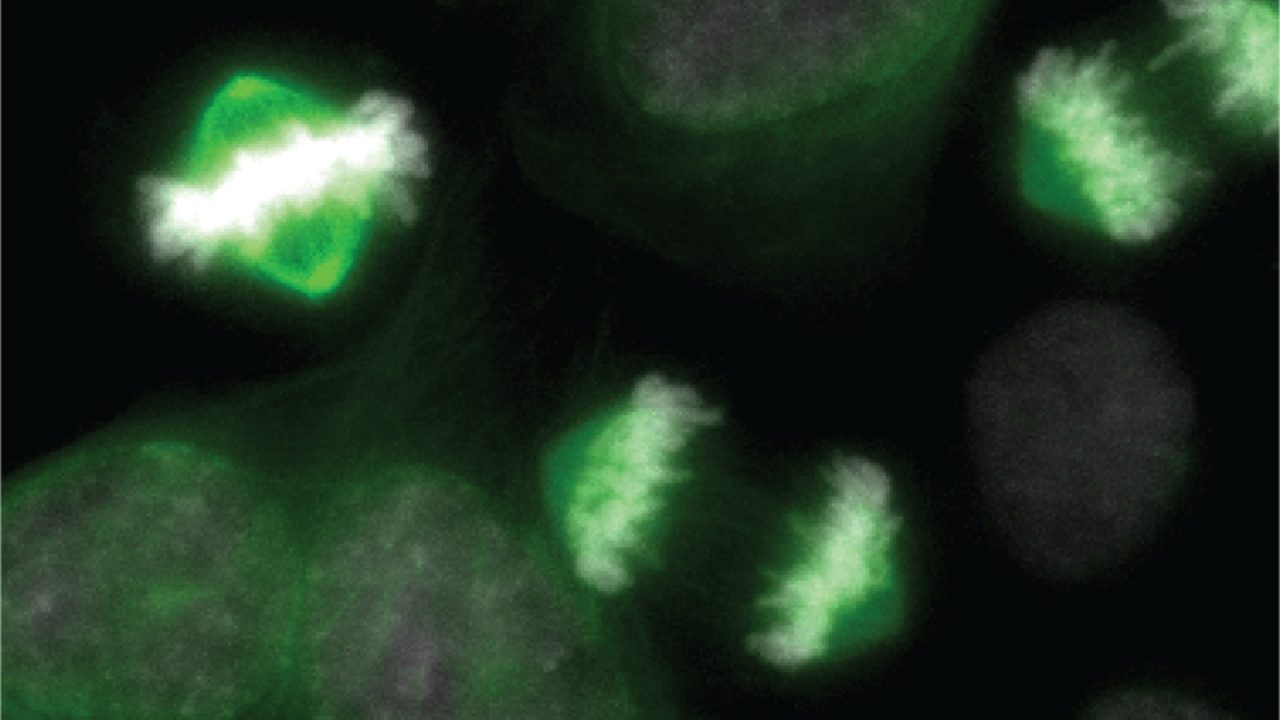
Researchers from the University of Dundee will examine the signals that drive cell division – an essential process that enables our bodies to develop, and to repair injuries.
They said it is well known that our cells must “switch” signals on or off to divide, but that what remains unclear is why some signals must “flash” continually on and off for our cells to divide properly.
This flashing can control the way in which cells behave and, if malfunctioning, could lead to health consequences, including the development of cancer.
The team said decoding these hidden signals could explain how cells divide accurately, how this process goes wrong in diseases such as cancer, and how these could potentially be treated better.
Study lead Professor Adrian Saurin, from the university’s Faculty of Health, said: “Many of the proteins inside our cells are controlled by chemical tags – phosphates – which are effectively light switches.
“They attach to proteins to turn them ‘on’ and when they detach this turns them ‘off’ again.
“We know a huge amount about which proteins are turned ‘on’ or ‘off’ at any given time in our cells, but what we don’t know is how quickly these proteins can ‘flash’ on and off over time.
“So we’re missing a huge part of the puzzle, because the rate that these signals flash could effectively be a form of biological morse code, which sends messages to control the behaviour.”
The rapid on-off cycles are known as phosphorylation–dephosphorylation (PdP) dynamics.
Prof Saurin continued: “We have now created the first tools to decipher this code, which we hope will explain how our cells divide accurately, and shine a light on how this can be used to benefit patients affected by cancer.”
Study co-investigator Dr Tony Ly, from Dundee University’s Faculty of Life Sciences, said: “We’re especially pleased to be leading this project from Dundee since protein phosphorylation is a topic that Dundee is already internationally recognised for.
“This research capitalises on our longstanding collaboration, bringing together complementary expertise, to shed new light on an aspect of phosphorylation that is virtually unexplored.
“Unlocking this knowledge will present us with an opportunity to better understand cancer in the future, perhaps revealing new treatment ideas.”
The eight-year project is funded by a £4 million award from Wellcome and will be conducted in conjunction with the Max Planck Institute of Molecular Physiology in Dortmund, Germany.
Professor Andrea Musacchio, director at the Max Planck Institute and also a co-investigator, said “Our expertise in the biochemical reconstitution of the kinetochore complements the diverse skillsets of our team and gives us the opportunity to understand these patterns during cell division in healthy cells, and what goes wrong in cancer cells that allow them to evolve and become resistant to chemotherapy.”
Scientists are embarking on a new multimillion-pound study they hope will reveal the workings of the cellular “light switches” that are a potential cause of cancer.
Researchers from the University of Dundee will examine the signals that drive cell division – an essential process that enables our bodies to develop, and to repair injuries.
They said it is well known that our cells must “switch” signals on or off to divide, but that what remains unclear is why some signals must “flash” continually on and off for our cells to divide properly.
This flashing can control the way in which cells behave and, if malfunctioning, could lead to health consequences, including the development of cancer.
The team said decoding these hidden signals could explain how cells divide accurately, how this process goes wrong in diseases such as cancer, and how these could potentially be treated better.
Study lead Professor Adrian Saurin, from the university’s Faculty of Health, said: “Many of the proteins inside our cells are controlled by chemical tags – phosphates – which are effectively light switches.
“They attach to proteins to turn them ‘on’ and when they detach this turns them ‘off’ again.
“We know a huge amount about which proteins are turned ‘on’ or ‘off’ at any given time in our cells, but what we don’t know is how quickly these proteins can ‘flash’ on and off over time.
“So we’re missing a huge part of the puzzle, because the rate that these signals flash could effectively be a form of biological morse code, which sends messages to control the behaviour.”
The rapid on-off cycles are known as phosphorylation–dephosphorylation (PdP) dynamics.
Prof Saurin continued: “We have now created the first tools to decipher this code, which we hope will explain how our cells divide accurately, and shine a light on how this can be used to benefit patients affected by cancer.”
Study co-investigator Dr Tony Ly, from Dundee University’s Faculty of Life Sciences, said: “We’re especially pleased to be leading this project from Dundee since protein phosphorylation is a topic that Dundee is already internationally recognised for.
“This research capitalises on our longstanding collaboration, bringing together complementary expertise, to shed new light on an aspect of phosphorylation that is virtually unexplored.
“Unlocking this knowledge will present us with an opportunity to better understand cancer in the future, perhaps revealing new treatment ideas.”
The eight-year project is funded by a £4 million award from Wellcome and will be conducted in conjunction with the Max Planck Institute of Molecular Physiology in Dortmund, Germany.
Professor Andrea Musacchio, director at the Max Planck Institute and also a co-investigator, said “Our expertise in the biochemical reconstitution of the kinetochore complements the diverse skillsets of our team and gives us the opportunity to understand these patterns during cell division in healthy cells, and what goes wrong in cancer cells that allow them to evolve and become resistant to chemotherapy.”
Follow STV News on WhatsApp
Scan the QR code on your mobile device for all the latest news from around the country