 PA Media
A Premier League club is trialling a new blood test designed to warn athletes when they are becoming more susceptible to injury, with developers saying it could enable professional sportspeople to continue “well into their 40s”.
Nottingham Forest is partnering with Glasgow-based biotechnology company Entourage on the 12-week study, which will initially involve its 25-player men’s B-Team squad.
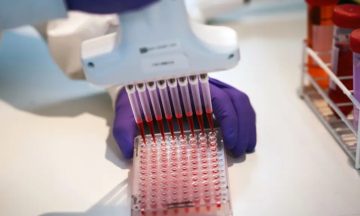
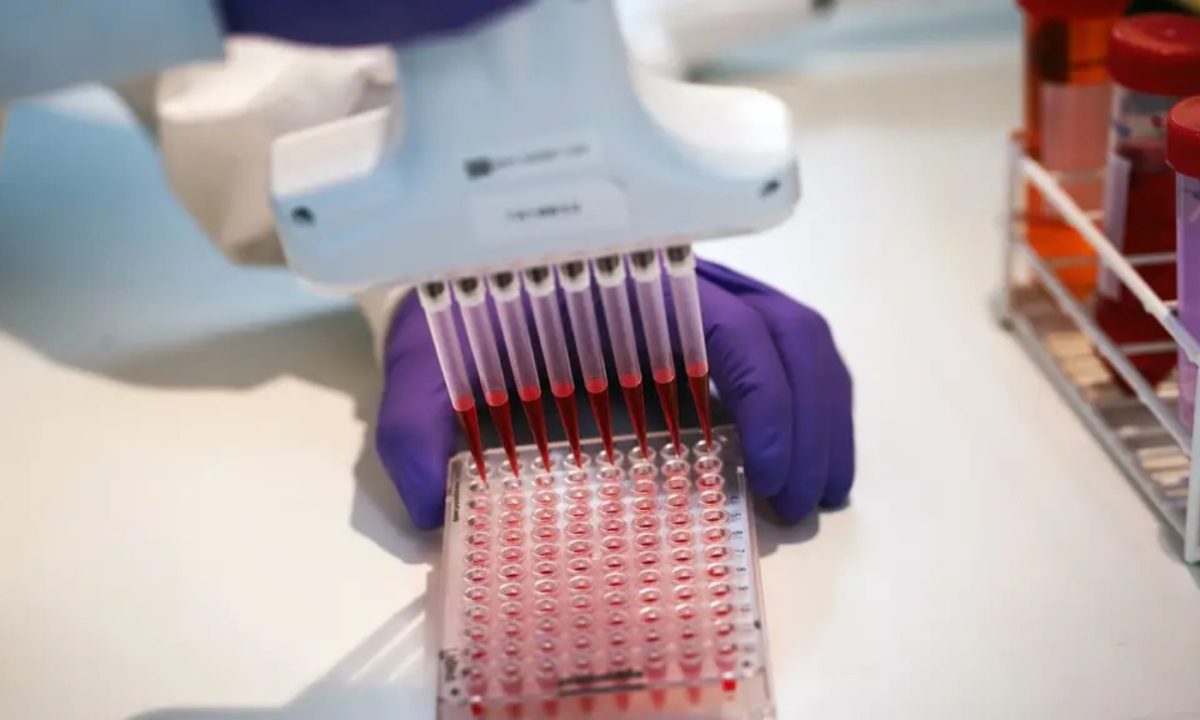
The footballers will have blood samples analysed twice a week, allowing researchers to track thousands of proteins and build a picture of how individuals respond to training, matches, injury and recovery.
The findings will be examined alongside the club’s existing training, workload and clinical information to investigate whether particular patterns could indicate increased risk of non-contact soft tissue injuries.
According to Uefa research, hamstring injuries alone accounted for one in five days lost to injury in 2021/22 – double their share two decades earlier.
Separate research across English professional football found a median absence of 19 days for hamstring injuries.
Professor Patrick Gunning, Entourage’s chief executive and co-founder, said: “One of the questions we are trying to answer is whether there are signals in the blood that could indicate an increased risk of a non-contact injury.
“That is something we need to investigate through the study.
“If athletes and their clubs can track factors they previously could not see, and use that information to look after themselves, I think we could see a larger proportion continuing to compete professionally well into their 40s.”
The trial, which is supported by Scottish Enterprise funding, centres on proteomics – the study of proteins.
Researchers will follow changes in blood markers associated with processes including inflammation and immune function.
They will also examine protein signals associated with senescent cells, sometimes called “zombie cells”, which have stopped dividing but remain in the body and can contribute to inflammation.
The study will explore how these signals change following injury and during recovery.
The trial will help establish if the tests can predict or prevent injuries, and if successful, Prof Gunning believes another application could be understanding why players exposed to similar workloads need different recovery approaches.
“If you understand a player’s individual biology, you can start to understand what works for them and what does not,” he said.
“If one player’s inflammation remains much higher than another’s after a match, that could help the medical team consider whether they need a different recovery approach.”
The study will help develop a reference profile – or baseline – for professional footballers, building on Entourage’s existing dataset covering thousands of people aged 18 to 96.
The company said the technology could also lead to “Moneyball for biodata”, with biological information eventually complementing performance statistics when clubs assess players’ long-term availability and transfer value.
Prof Gunning said: “A professional athlete’s profile can look different from that of someone in the general population.
“We need to understand what is normal for those athletes so that we have something meaningful against which to compare changes.
“The possibilities for the application of this technology are huge.
“In European football, for example, where clubs own registrations, we could see players identified with the potential to go right to the top of the game.
“Similarly, we may see smaller clubs picking up bargains on players perceived to be injury risks.”
Dimitrios Kalogiannidis, Nottingham Forest’s head of medical, said: “We are deeply committed to evidence-led player care.
“We believe in the importance of building a more robust biological profile of each player, so we’re pleased to be taking part in this research study that could benefit Nottingham Forest and the wider game for years to come.”
Entourage is a University of Glasgow spin-out company co-founded by Prof Gunning along with Dr Taleb Sedghi and Dr Mark Lindsay.
It launched with a five million-dollar (£3.7M) pre-seed raise and operates its research centre at Kelvin Campus in Glasgow.
Prof Gunning said advances in instruments and computing, particularly AI, had made protein analysis faster and less expensive, opening possibilities beyond elite sport.
“There are already published examples of how plasma proteomics could help identify conditions including cardiovascular disease, Alzheimer’s and type 2 diabetes,” he said.
“That is part of what makes the wider potential so exciting.
“It has the potential to be a significant medical trial in sports – with implications far beyond.”
Dr Lindsay said: “We’re moving soft-tissue care from estimation to measurement.
“We read the biology of the injury, precision directives guide every stage of treatment, and return to play is decided by the data. You can’t manage what you can’t measure.”
Entourage will report its findings to Forest at the end of the study.
Follow STV News on WhatsApp
Scan the QR code on your mobile device for all the latest news from around the country