 Google Maps
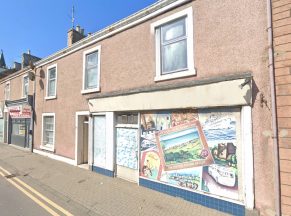
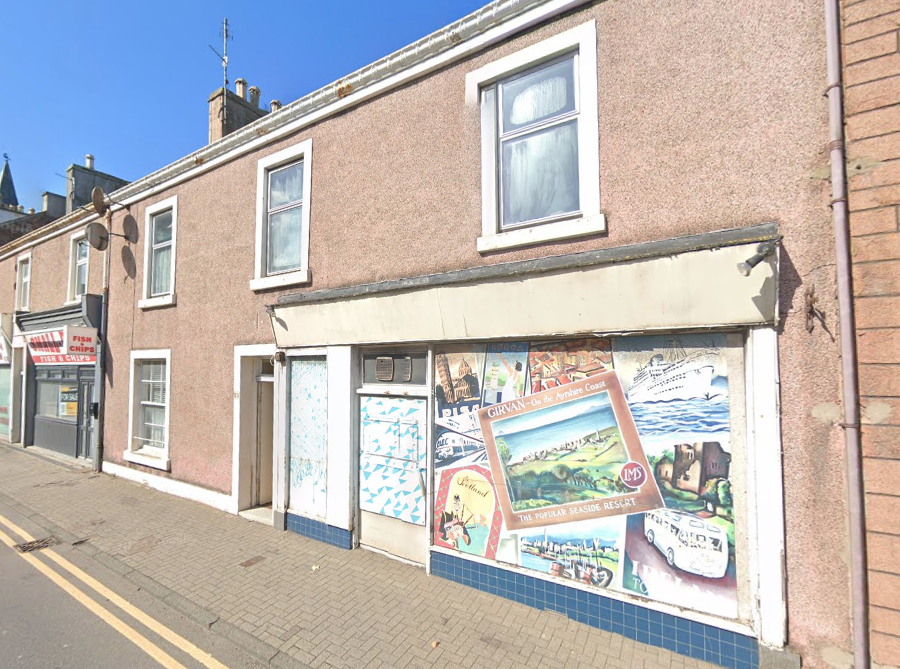
Plans to turn a former Girvan café into a 12-bedroom shared house have been put on hold after South Ayrshire councillors unanimously agreed to visit the property before making a decision.
The proposal to convert the vacant building at 23-25 Bridge Street into a house of multiple occupancy (HMO) has attracted 82 objections, with concerns raised about waste collection, road safety, parking and the potential impact on the town centre.
Speculation that the accommodation could be used to house asylum seekers was also discussed at length, with council officers stressing there was no evidence to support the claims and the applicant insisting it would simply provide affordable accommodation for local people.
South Ayrshire Council’s Regulatory Panel considered the application from Southsea Ozel Property Holdings Ltd, which had been recommended for approval by planning officers.
The proposals would see the former café and residential accommodation converted into 12 bedrooms with shared kitchen, dining and bathroom facilities, with extensions to the rear of the building.
Addressing the panel, Girvan councillor Gavin Scott raised concerns about the practicalities of accommodating residents in the property.
He questioned how household waste would be stored and collected, given the limited space at the rear of the building and its position on the busy A77.
He also expressed concerns about fire safety and residents having to evacuate directly onto the pavement beside the main road.
Councillor Scott told the panel: “I strongly suggest you go on a site visit and pause this application until a site visit is complete before making a decision.”
Council planning officers explained that waste collection sacks could be provided instead of wheelie bins, with rubbish stored in the rear courtyard until collection days.
However, councillors questioned whether these arrangements would be suitable for a property containing 12 bedrooms.
Councillor Alec Clark, who said he had lived and worked in Girvan for many years, also questioned whether the proposed accommodation would meet the town’s housing needs.
He argued that Girvan needed more family homes rather than individual rooms and raised concerns about the potential loss of commercial premises in the town centre.
He said: “What we’re looking for is family homes to sustain businesses, to sustain schools, and to sustain the town of Girvan.”
Councillor Clark also highlighted ongoing regeneration efforts in Girvan and questioned whether the proposed development would support those ambitions.
The meeting also heard that concerns had been raised among objectors about the possibility of the property being used to accommodate asylum seekers.
Supervisory planner Graham Fyfe addressed the issue directly, explaining that the applicant had confirmed this was not the intended purpose of the accommodation.
He also said the council had not received any enquiry about using the property for this purpose.
Mr Fyfe stressed that planning applications must be determined on their planning merits.
He explained that the identity, nationality, immigration status or personal circumstances were not material planning considerations.
The applicant’s agent, architect Simon Ash, told councillors that his client would be willing to accept a condition preventing the property from being used as asylum seeker accommodation to reassure the local community.
Mr Ash added that the applicant would also be willing to accept a restriction on Airbnb-style accommodation.
However, a council officer advised that it would not be appropriate to restrict occupancy to particular groups of people through the planning process.
The panel was told that other arrangements, including short-term accommodation and HMO licensing, were dealt with under separate legislation.
Mr Ash maintained that the intention was to provide affordable, long-term accommodation for local people, adding that the applicant had experience operating HMOs elsewhere in the UK and intended to move to Girvan.
He also outlined plans for regular property inspections and weekly cleaning to ensure the accommodation was properly managed.
They said the development would bring a disused building back into residential use and provide more affordable housing options.
The panel was also reminded that planning permission would not, on its own, allow the property to operate as an HMO, with a separate licence required from the council.
In their report, planning officers said the conversion would bring a long-term vacant building back into productive use, provide additional accommodation and preserve the character of the conservation area.
Officers also concluded there was insufficient evidence to justify refusing the application on grounds including parking, drainage, residential amenity or waste management.
But councillors agreed that further consideration was required before reaching a decision.
A motion from Councillor Clark, seconded by panel chair Councillor Alan Lamont, to hold a site visit and continue the application to a future meeting was approved unanimously.
Follow STV News on WhatsApp
Scan the QR code on your mobile device for all the latest news from around the country