 STV News
Key Points
-
 Scotland’s prison population remains near record levels at around 8,500 despite emergency early release measures.
 - Inside HMP Barlinnie, staff say overcrowding and increasingly complex needs are putting the system under severe strain.
- Early releases have compressed preparation time for prisoners from weeks to, in some cases, just days.
- Homelessness, addiction and mental health issues remain the biggest barriers to staying out of prison after release.
- New rules coming into force next month aim to reduce numbers further, but ministers accept long-term reform is still needed.
Nearly 8,500 people are currently behind bars, despite the Scottish Government’s rolling emergency early release scheme.
The policy has seen hundreds of short-term prisoners freed ahead of schedule, but it has not eased the strain in a meaningful way.
These “special measures” are due to end next month, before new rules come into force that will change when some prisoners are automatically released.
Inside HMP Barlinnie in the north-east of Glasgow, the pressure is obvious. Cells are full, staff are stretched and prisoners are preparing to leave at short notice.
More will walk out the gates in the coming days – some with support in place but others facing a far less certain future.
Outside the prison, some organisations describe the situation as chaos.
 STV News
‘Just now is exceptional’
Neil Currie, head of offender outcomes at HMP Barlinnie, says the system is operating beyond anything he has seen before.
“Just now is exceptional. We peaked on Tuesday with the highest numbers that we’ve ever had in custody,” Currie told STV News.
“It’s right across the service, so everybody feels it. Obviously, frontline staff and prisoners feel it the most. That’s where the pinch is. If it weren’t early release, we would be in a worse position, but it doesn’t give us the respite that we need ”
The challenge is not just about numbers. The population itself is becoming more complex.
Currie added: “The complex nature of the people that we’re getting in custody as well adds to that. We’re facing a new wave of psychoactive substances coming into prison that we’ve never had to deal with before.
“So that gives us a lot to deal with and a lot to contend with, with regard to the behaviours when they come in.”
Lives on fast forward
Preparing someone for release is supposed to take time. Housing needs to be arranged, benefits sorted, support services lined up.
Normally, staff at the Link Centre would start preparation work eight weeks before a prisoner is released. Under the early release measures, however, timescales are compressed – in some cases to just seven days.
Some 40% leave prison homeless, with nowhere to go. Addiction and mental health issues are also major challenges.
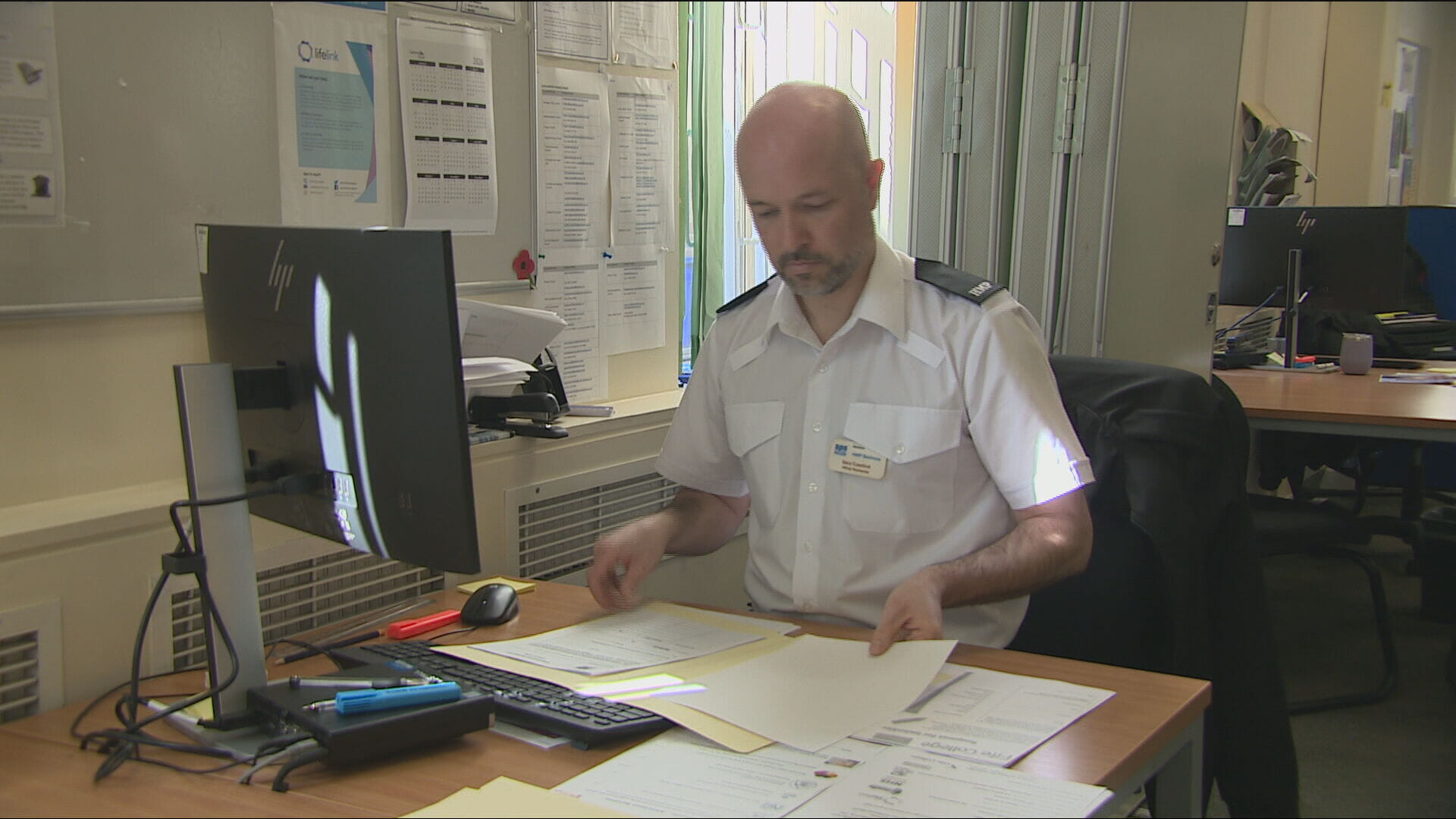
Gary Crawford, who works in the prison’s Link Centre, says the same problems come up again and again.
 STV News
“You do see a lot of repeat offenders. Every time you just hope that they’ll stay out a bit longer and they’ll not come back. It is just trying to break that cycle,” he told STV News.
“When they come back in, you ask what’s went wrong, it tends to be they’ve not had anywhere to go when they get out. They’ve had issues with drugs, they have fallen back down that slippery slope.
“They’ve lost their place in a hostel. They’ve not gone to appointments they should have done and before they know it again, all roads end up back in here for them.
“It (early release) has not made a massive difference in the grand scheme of things as you’ve still have the high numbers over in the halls. There are three main issues that we’re facing. Homelessness, mental health, drugs.”
In a small number of cases, prisoners are choosing to stay inside longer so they do not lose a place in rehab.
Crawford added: “We have had a few folk that have turned down the option to get out early because they’ve got rehab set up for their original lib date. By not taking the early release, they know when they leave here, they’ve got a place available in rehab.
“It is quite a small proportion of people, but it just shows you that they do want to change that.“
‘It is just brutal in here’
For those living it, the reality is straightforward.
One prisoner, Stephen (not his real name), is serving 21 months for drug offences. He came to the Link Centre expecting to hear about his request for a prison transfer, only to find he’ll be out by the end of the week – five months earlier than planned.
“I wasn’t expecting that at all,” he said. “I was trying to get moved to another jail and they just told me I was getting out.
 STV News
“It is just brutal in here (Barlinnie). You need to work cos you’d be just sitting about with drug addicts all day. I don’t want to come back from my work some days, it’s just brutal man.”
He feels ready to leave, but says others are not.
“I’m prepared, aye but there’s a lot of people in here that won’t be. My co-pilot just now, he’s not got a house – nothing to go to. I don’t want to come back, it’s just a hellhole.”
Early release measures set to end
The early release measures will end next month. From May, certain short-term prisoners will be automatically released after serving 30% of their sentence instead of 40%.
This will potentially reduce the numbers behind bars by more than 300.
In Barlinnie, those leading rehab efforts describe the current situation as exceptional and say a complex population along with a rise in the use of psychoactive substances in their prison adds to pressures.
Currie said: “A lot of the men might fail first, second, third, fourth time. It’s about being resilient and carrying on. Guys that go out for three months and come back, that may be a win for us because previously they could have been out for three days and back.
 STV News
“So the main thing is getting throughcare in place and allowing them then to go on and contribute to the community. We don’t want them just going out and not contributing. But when the numbers are so high, it makes it harder for us to get rehabilitative services in place.”
Easing the transition from prison to community
Prison staff work with partners to ease the transition into the community. This work relies on building trust over time.
Upside is based in 16 jails to provide ongoing support. Its staff are working to compressed timescales – three months of preparation reduced to a few weeks and that’s having an impact on the outside, with a marked increase in people disengaging after liberation.
Haydn Pasi, head of the national voluntary throughcare partnership (Upside), said: “We are having to put plans in place at very short notice.
“That can make it challenging to complete risk assessments and build needs assessments and really understand what people are looking to get from a service like Upside and how we can help them.”
“There is a risk that people’s vulnerability is heightened because of that compressed timescale to plan. We work very closely with other agencies and housing is one of those critical needs.
“So over 40% of the people we are supporting that are coming out under emergency early release are returning as homeless and that’s a big area of work that we are supporting. So there is concerns about that increased vulnerability.”
SISCO also works to bridge that gap between prison and community and believes the whole justice system needs radical overhaul.
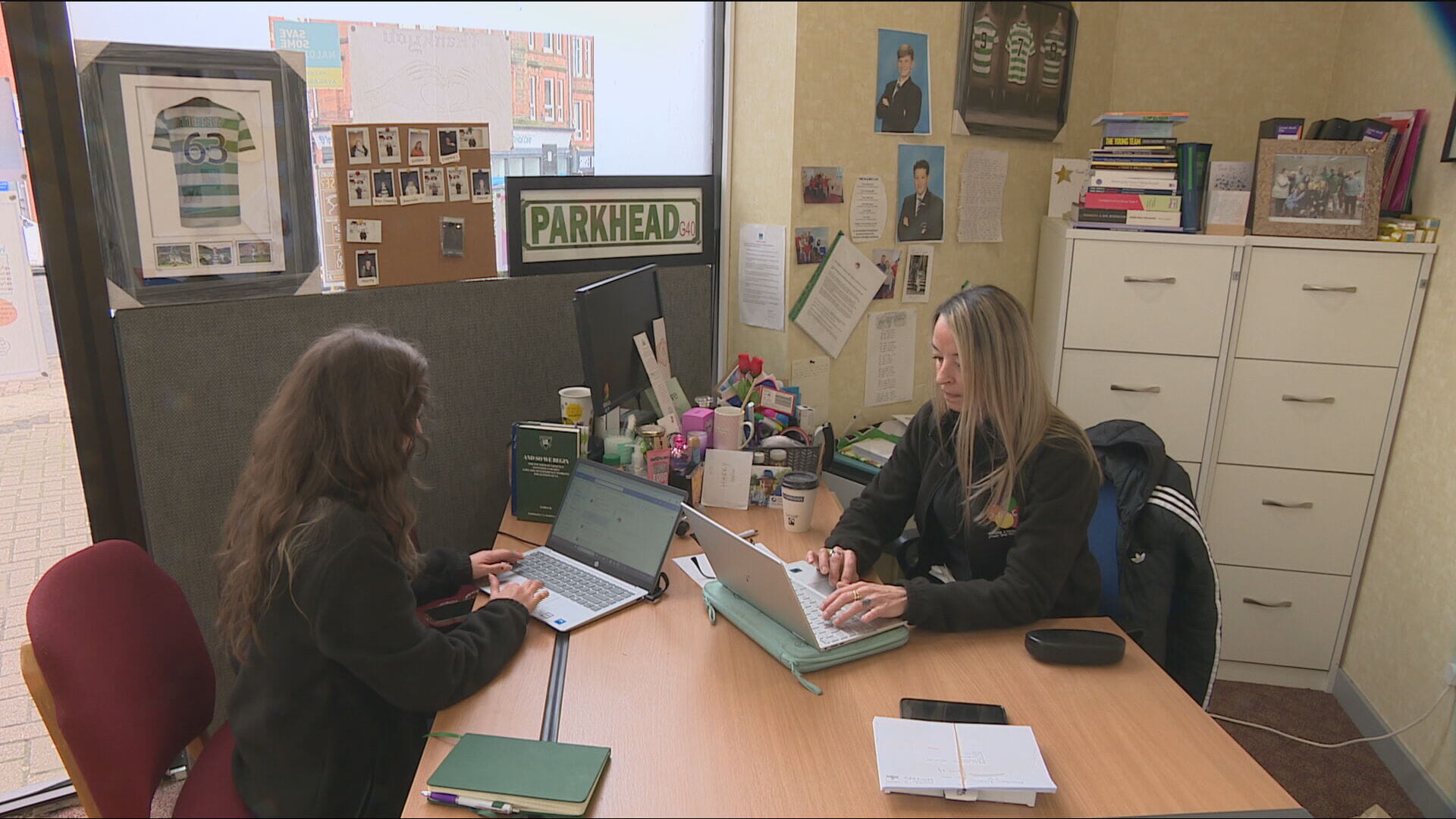
Natalie Logan, director of service at SISCO Recovery, said: “Early release has not worked, it doesn’t give us adequate time in the community. It’s chaos, absolute chaos.
 STV News
“Chaos in people’s thinking, chaos in timescales, doesn’t give community resources adequate time to put prescriptions together and we are putting a demand on family members to potentially take people in that they are not just ready to forgive.
“I think homelessness is higher and its always been a major factor. Ultimately people end up in a hostel that is not equipped for those leaving prison.
“We are basically trying our best with a sticky plaster at the moment. Psychoactive substances have changed the whole dynamic of what prison is like, and it’s changed the impact we can have on people, so we need to look at harm reduction in a very different way.”
“In my personal opinion, the whole justice system is completely broken, we need a radical overhaul for perpetrators, victims, family members and tax payers.”
Early release adds to anxiety and fear
Victims groups say early release has added to the anxiety and fear of those they support.
Debbie Adams, interim chief executive at Victim Support Scotland: said: “Victims tell us that they do feel they are not given the same priority. They think where is my voice in that?
“They were given a sentence and it doesn’t look like they are serving that sentence. So communication is really critical so that victims understand what is now in place and understand what it means when someone is given a sentence. “
“For anyone who thinks they may be affected by the release of the prisoner in their case, we would encourage them sign up to the Victim Notification Scheme so that they can be kept informed, plan for their safety, and avoid potentially meeting the released prisoner unexpectantly.”
The Scottish Government said public safety remains a priority and work is under way to tackle overcrowding, reduce reoffending and support reintegration.
 STV News
Justice secretary Angela Constance said: “Scotland’s prison population is at a critical point, and last Wednesday’s vote reflects Parliament’s recognition that we must act to ensure our prisons can continue to operate safely and effectively, and deliver important rehabilitative work.
“Moving the automatic release point for certain short-term prisoners from 40% to 30% of their sentence is part of a considered, responsible approach to managing the prison estate sustainably. We estimate it will deliver a sustained reduction of between 239 and 312 in the prison population.
“Public safety remains a priority for this Government. Exclusions for sexual offences and domestic abuse offences remain firmly in place, and victims registered with the Victim Notification Scheme will be informed of relevant releases.
“This is an immediate measure, but it cannot be the whole answer. Addressing Scotland’s prison population in the long term will require bold, collaborative action to ensure our prisons function effectively and communities remain safe.”
Follow STV News on WhatsApp
Scan the QR code on your mobile device for all the latest news from around the country