 STV News
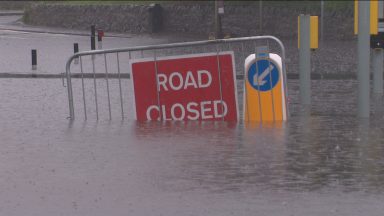
Work to reduce flooding as a result of heavy rainfall across Glasgow is being continued by Glasgow City Council.
A report being brought before the environment and liveable neighbourhoods committee on Tuesday highlights that flood risk and climate change still present a “significant” environmental risk to the city.
The document which updates elected members on the roads and infrastructure as well as investment requirements confirms that the city council is proactively working in partnership with key stakeholders in the Metropolitan Glasgow Strategic Drainage Partnership.
Together they are looking to deliver a programme of drainage schemes targeting areas of the city where rainfall adversely impacts communities.
The aim of these schemes is to reduce flood risks and impacts on homes, businesses and travel corridors, improve water quality, bring greenspace improvements and increase drainage capacity.
The report also notes that floods are not always due to blocked gullies.
During periods of intense rainfall, the underlying capacity of the sewer network may be insufficient to cope with the volume of water and sewers may back up through the gullies.
Seasonal leaf fall is also a common source of complaints when leaves clog up gully grates preventing floodwater from draining.
This issue can be resolved with the help of the residents themselves by clearing leaves in the vicinity of their property.
The report states: “We are pleased to offer advice and assistance to any residents wishing more information and even basic equipment to do this.
“Sustainable Drainage Systems (SUDS) provide an environmentally friendly method to manage surface water and aim to control the flow, volume and frequency of surface water and prevent pollution by intercepting silt and runoff.
“New SUDS infrastructure, such as; rain gardens, swales, basins, ponds or tree pits, have been installed as part of the expansion of the cycle network and the continued City Deal programme.
“This infrastructure requires increased inspection and maintenance as well as different plant and machinery to maintain it. We are monitoring the maintenance costs of early schemes to more accurately quantify the increased costs of maintenance and expect to include this in a future ASOR. (Annual Status and Operations Report).”
Follow STV News on WhatsApp
Scan the QR code on your mobile device for all the latest news from around the country