The new leader of Glasgow City Council has backed calls for a pause in housing asylum seekers in the city.
Ricky Bell argues halting applications and changes to Scotland’s homelessness laws are needed to ease pressure on services, though refugee groups insist Glasgow’s housing crisis is rooted in a shortage of affordable homes rather than asylum dispersal.
Glasgow has the highest number of Home Office-assisted asylum seekers in the UK, with 3,938 people currently housed in the city.
According to recent government data, the city has the highest number of Home Office-assisted asylum seekers in the UK at 3,938.
The figure is higher than Birmingham at 2,136, Liverpool at 1,961 and Coventry at 1,700.
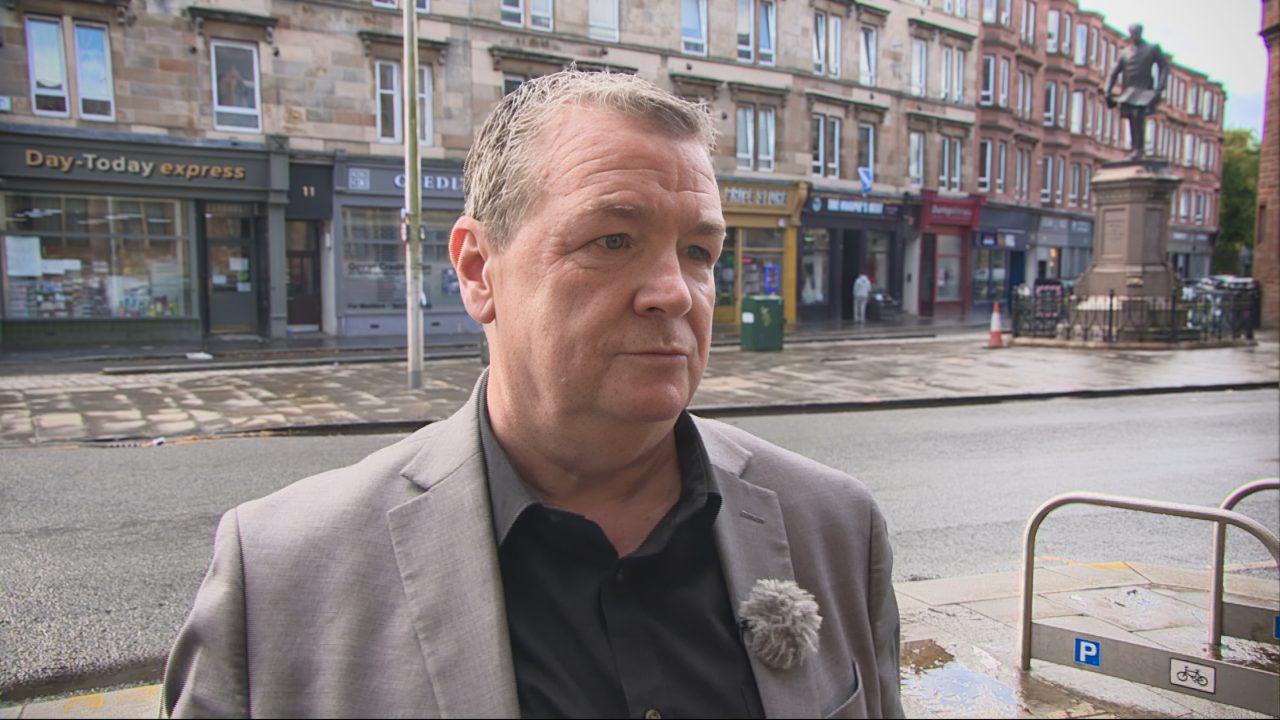
Bell told STV News: “What we’ve called for is a pause. I don’t think we need to stop altogether, but I think we need a pause to get us into a better situation to be able to cope with.
“There are neighbouring authorities round about Glasgow who’ve got empty homes just now, and we’ve got a queue of people looking for homes. We could move some of those people and that would help the situation immediately.
“Let’s make sure we get this done properly so it’s a good experience for Glaswegians and for the people that are coming to the country.”
Homelessness is one of many budget pressures facing the council.
The cost of addressing applications from refugees was £38m in 2025-26, with officials forecasting the figure could grow to £56m for the coming year.
Bell argued the pressure intensifies once asylum seekers are granted refugee status and enter the homelessness system.
The Home Office funds housing while assessing asylum claims. Once granted leave to remain, refugees lose support within weeks and must find alternative accommodatio.
Scottish law allows people to register as homeless in any authority, leading most refugees to present in Glasgow as a city with established communities and support networks.
Bell says: “I don’t think it’s sustainable. We are basically carrying the burden of homelessness for the whole of Scotland. The UK Government is processing an enormous number of people through their system.
“I think even the Scottish Government realise that what’s currently happening is unsustainable, and so something has to give.
“I think there’s opportunities for them to make this a more straightforward process that doesn’t land the burden in Glasgow.”
But refugee charities warn halting asylum dispersal will not end Glasgow’s housing crisis.
A Scottish Refugee Council spokesperson said: “The housing crisis has not been caused by refugees and people seeking asylum. They are being trapped in a process that results in homelessness by design.
“We are all being let down by a broken asylum system and decades of chronic underfunding for social housing.
“Instead of blaming refugees for Glasgow’s housing emergency, politicians should focus on finding solutions and creating a system that works for people seeking protection and the communities who welcome them.”
A Scottish Government spokesperson said: “We are aware of the acute pressures facing Glasgow City Council, as a result of the UK Government’s mismanagement of asylum policy. While the legal duty for preventing and responding to homelessness sits with local authorities, we are providing Glasgow Council with £123m this year through our Affordable Housing Supply Programme, alongside additional support for the resettlement of refugees.
“We are taking decisive action to tackle homelessness and are investing up to £4.9bn across Scotland over the next four years to support the delivery of around 36,000 affordable homes.
“We are working with Glasgow City Council on a number of actions to help reduce their homelessness pressures as there is not one single solution to address the issues facing the city.”
A UK Government spokesperson said: “We are committed to successfully transitioning refugees from asylum accommodation and mitigating the risk of homelessness. That is why we extended the grace period from 28 days to 42.
“We are closing every asylum hotel and moving asylum seekers into alternative accommodation, including former military sites.
“We are working to fairly house asylum seekers across the country, engaging with local authorities to reduce the impact on communities.”
Follow STV News on WhatsApp
Scan the QR code on your mobile device for all the latest news from around the country