A Glasgow artist claims he may have been among the first people to place a traffic cone on Glasgow’s Duke of Wellington statue – years before the act became synonymous with the city.
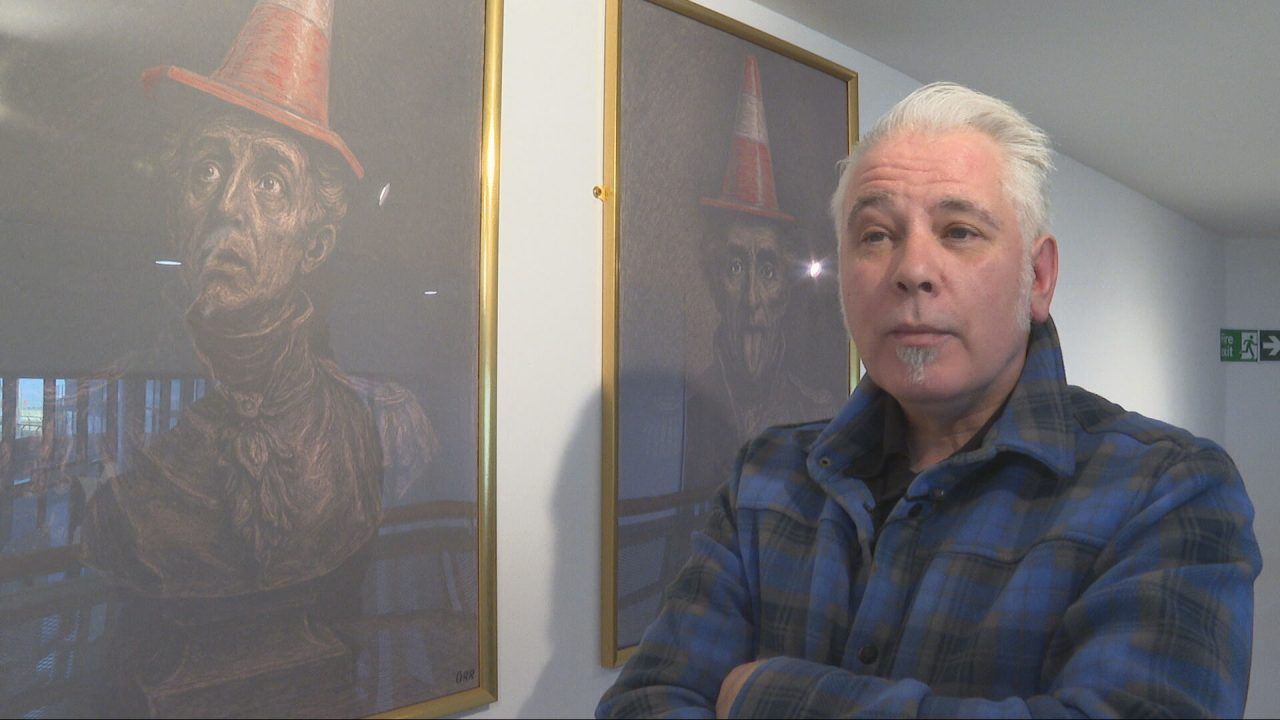
Artist, sculptor and filmmaker Jason Patrick Orr, who is exhibiting at the Gallery of Modern Art, said he remembers “coning” the statue in 1979, when he was just ten years old.
He said he remembers performing the feat while out with school friends in the town centre.
“Legend has it that drunken students coned Wellington in the 1980s – I’m sure he was coned well before that,” he told STV News.
“I’m only one of many Glaswegians who have coned Wellington. I coned Wellington when I was ten years old in 1979.
“I remember doing it with my friends, but can’t remember how the whole thing came about. We were cheered on by other people.”

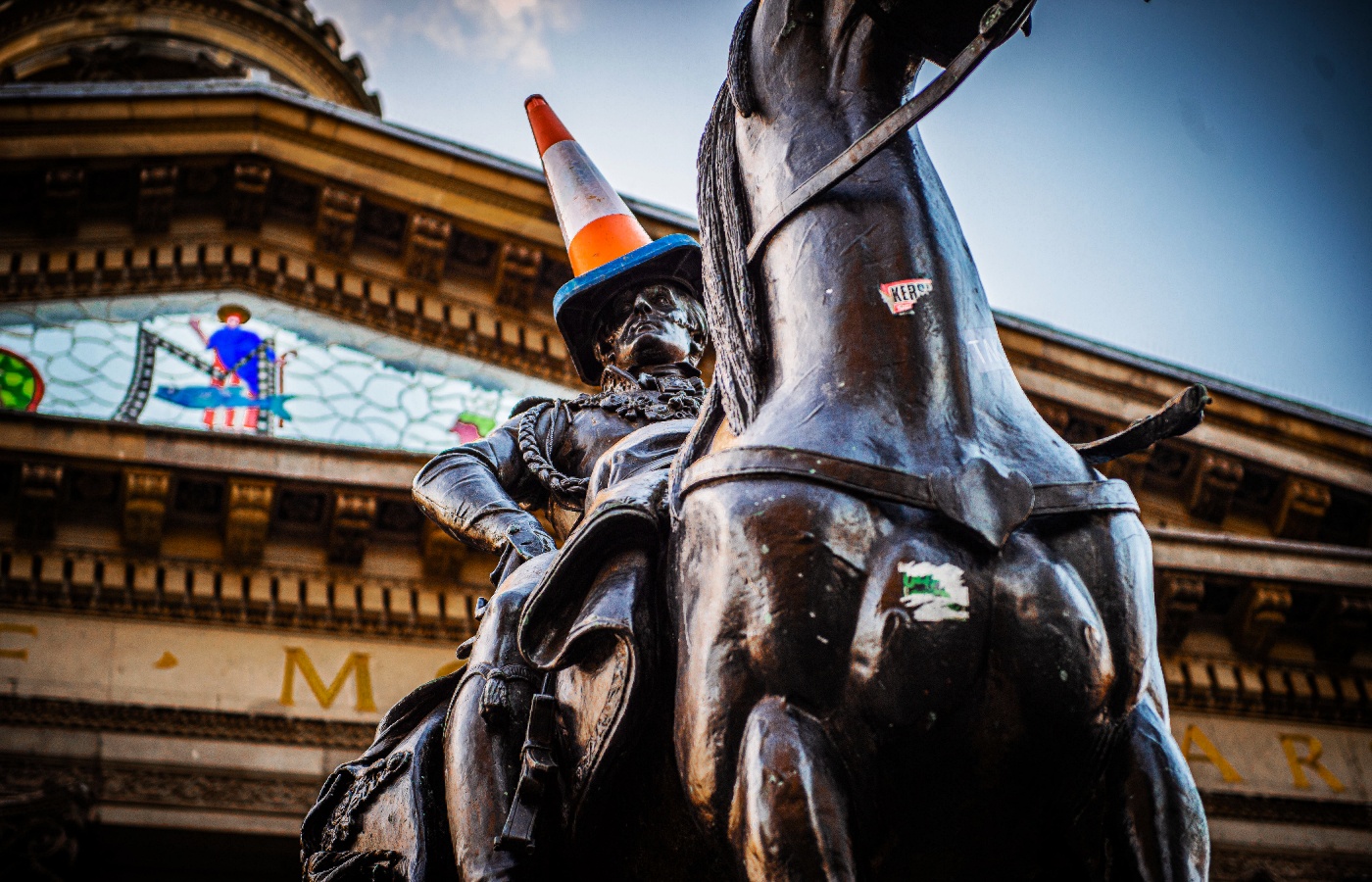
The Duke of Wellington statue, erected in the 19th century, is famously crowned with a traffic cone, replaced repeatedly by locals whenever it is removed.
The council eventually abandoned attempts to take it down, as the process cost thousands annually.
Jason attributed his prank to lessons he learned at school about punishment and public shaming in Victorian classrooms.
He recalls that his primary teacher Mrs Dickson – who was the sister of Billy Connolly and a “strong influence” in his life – taught the class about the dunce’s cap.
“This whole story starts with her – she taught us that in Victorian classrooms if you were naughty, you were put in the corner. If you were super naughty, you put the dunce’s cap on.”
Jason also recalls his grandfather telling him that many of the statues represented British military figures, shaping how he understood public monuments as a child.
 STV News
“He used to take me round famous buildings and sculptures in Glasgow. He’d refer to these people and say, ‘they were against Irish and Scottish people’.”
He added: “As a young boy you think, ‘that’s a bad person, a naughty person’. You can’t put a sculpture in the corner, so why don’t you put a cone on them? A traffic cone was handy.”
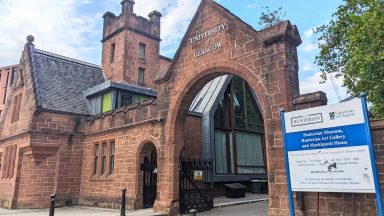
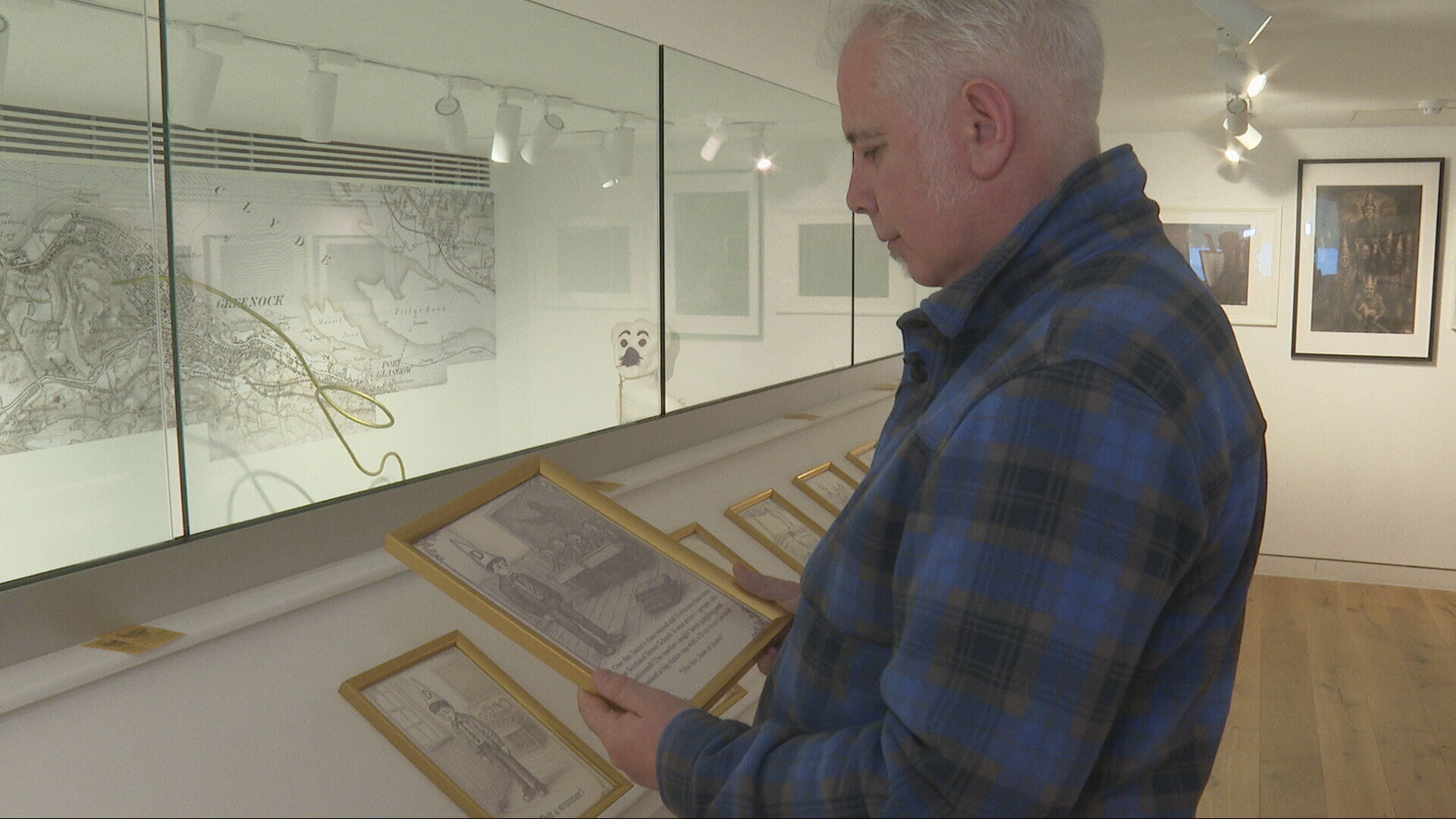
Those memories have helped form the basis of Jason’s new exhibition, Reclaiming The Cone, at the Gallery of Modern Art.
The display includes paintings and drawings of people wearing traffic cones alongside recognisable Scottish references such as the Tall Ship Bar from River City and the Clansman pub from Still Game.
“This exhibit is me remembering certain things that I believe is fact, and remembering memories and that’s what it is. It’s me having fun and creating artworks inspired by this story.
“It’s taking the idea of coning Wellington, and asking: what if I came to everybody? What would Glasgow look like? What would Scotland look like? Those myths and legends becoming something bigger.”
 STV News
Jason said headwear has become an area of growing interest in his art, functioning either as a tool of ridicule or a symbol of status.
“A crown is a very strong positive thing. The king has a crown, but in society, if you put a crown on, you’re elevating yourself above other people. I wear a cap, which is a symbol of the working classes.
“How does the headgear change the status of the individual? I’m really interested in that as an artist.
“The cone doesn’t need to be a negative thing – some of the people in the pictures are happy, others aren’t.”
Jason says his lifelong love of storytelling has shaped his work – and he hopes it resonates with visitors.
“I have always been interested since I was a small boy in stories and storytelling, history and cinema,” he said.
“I’m developing the idea that me and you are part of the city – we’re all part of this community.
“I want to invent characters that that could live in our world.”
Follow STV News on WhatsApp
Scan the QR code on your mobile device for all the latest news from around the country