 Getty Images
Ally McCoist believes Renfrewshire Council’s decision to take no action over the height of two trees on his Bridge of Weir property should be upheld.
The football pundit’s neighbour recently challenged the local authority’s ruling that a ‘high hedge notice’ should not be served via an appeal to Scottish ministers.
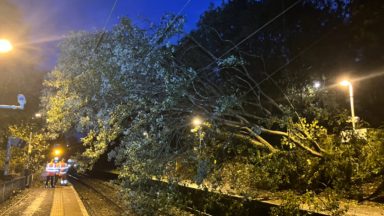
Alan Tyers claimed the “fast-growing, very old Sycamores” block light into his house and falling branches have damaged his roof during adverse weather events.
He sought a solution under the High Hedges (Scotland) Act 2013, which allows councils to order for qualifying trees to be cut back, but the application was refused in April.
Mr McCoist supported that finding, writing to the case officer last week: “I respectfully submit that the appeal should be refused and the council’s decision upheld.”
The former Scotland international also questioned whether the specific trees meet the statutory definition of a ‘high hedge’ in the first place.
He added: “These are two mature, deciduous trees standing over six metres apart. They are not managed as a hedge and do not resemble what would ordinarily be understood to be a hedge.
“Their spacing, character and management are inconsistent with hedge planting as described in the guidance.
“It is respectfully submitted that the trees do not fall within the statutory definition of a ‘high hedge’ at all and that the original application should have been refused on that basis alone. This appeal should certainly be refused.”
Planners previously said it was not considered their height – estimated to be in excess of 27 metres – “adversely affects the enjoyment of the domestic property” which someone “could reasonably expect to have.”
But Mr Tyers refused to back down and escalated the matter to the planning and environmental appeals division at the end of April.
In his appeal form, he said: “These are fast-growing, very old Sycamores, which combined with increased storm activity and high wind events over recent years in line with climate change, have meant that the problem has increased year on year.
“I am now living with the real fear and risk of tree collapse onto my house.
“During storms, the upstairs rooms to that side of the house overshadowed by the trees are unusable for fear of tree collapse and by virtue of noise of falling debris.
“The trees overhang my rear door and block out light from the rear windowed door area, causing my rear hallway to be darkened.”
The council explained in its report of handling it had considered the site as a whole, including the “scale, nature and characteristics” of the neighbouring properties and their plots as well as the “arrangement, make up and characteristics of the trees” in coming to its decision.
In its official notice, it added: “It is not considered that the height of the high hedge adversely affects the enjoyment of the domestic property to which an occupant of that property could reasonably expect to have. A high hedge notice should not be served.”
Mr McCoist felt the local authority was entitled to come to this conclusion, adding: “The council carried out a detailed assessment of the likely effect on light, the characteristics of the windows said to be affected, the wider site context and the characteristics of the trees themselves.
“The report notes, amongst other things, that the trees are deciduous broadleaf specimens which allow light penetration; rooms referred to benefit from additional windows and other sources of natural light; the impact is limited and localised within substantial plots; and no significant impacts were identified on the windows of the property.”
In a case update last week, the Scottish Government confirmed the appeal has been allocated to a reporter for consideration. A target date of July 28 has been set by the division.
Follow STV News on WhatsApp
Scan the QR code on your mobile device for all the latest news from around the country