
 Adobe Stock
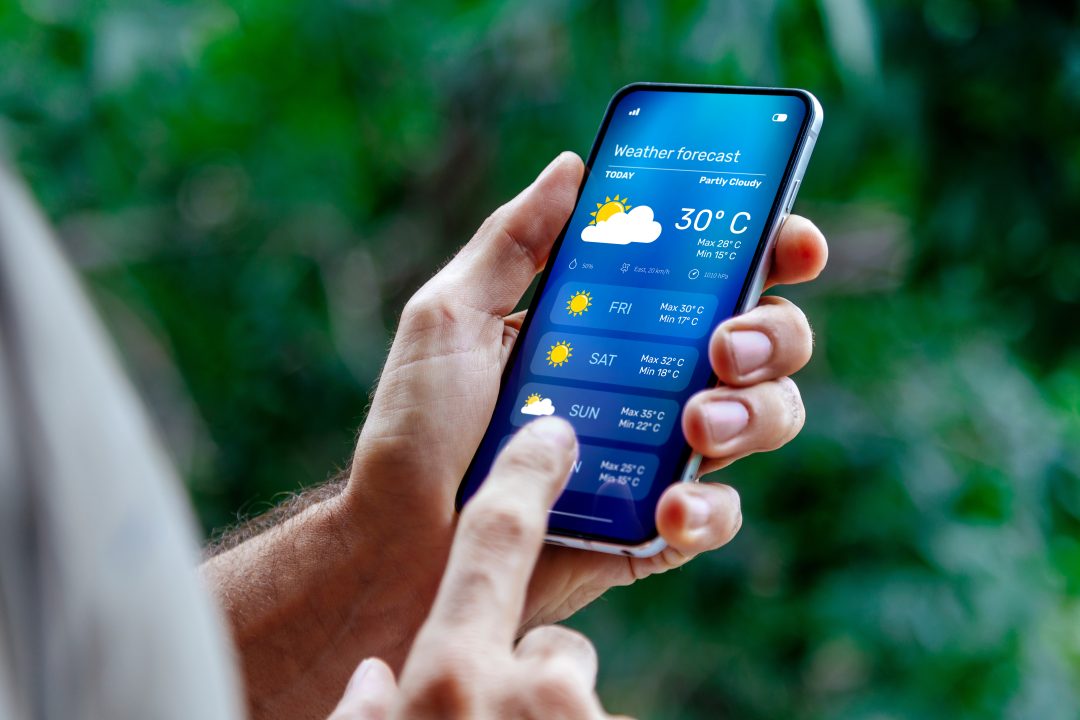
“Why do the weather symbols for the weekend on my forecast app seem to change every day?”
I know – it’s infuriating. Especially if you’ve got a wedding coming up, a long-planned BBQ, or you’re just trying to work out whether you can get a big load of washing out on the line.
But why does it keep changing, and is there actually any point in looking that far ahead?
One personal gripe of mine, even from friends and family, is when people tell me they’ve looked at that weekend next month and the weather looks like it’s going to be amazing – my answer – that’s highly unlikely.
Everyone has done it – checking an app at the start of December to see the snow forecast for Christmas Day. It piques excitement, only for it to be a day of rain and temperatures of 10C. What happened to the snow?
 Adobe Stock
The forecast you see is just one scenario
Most forecasts you see on your phone just show one of many scenarios – so imagine this. There’s hundreds of different versions of the long-term forecast and even though your chosen day in a week’s time shows sunshine and a high of 20C, there’s probably another one which shows 28C with thunderstorms and another which is 15C with heavy rain.
You can even check this yourself – pick a few different apps and look at their forecasts and pretty much every one will show something different for next week.
Why does the forecast change every time I look at the app?
Well, picture it like this. The forecast you’re looking at is just one model run, and it’s updated every few hours. Each time it’s rerun, the outcome can shift – sometimes only slightly, sometimes quite a bit.
For today and tomorrow, those changes are usually minimal. We’re only talking hours or a couple of days ahead, so the forecast is pretty much nailed down. But the further out you go, the more variation you’ll see from run to run.
That’s because of small, subtle changes happening right now. For example, a band of rain over Canada might currently look like it’ll reach us next week – but a few hours ago it appeared likely to miss Scotland by 50 miles. Tiny differences early on can lead to much bigger changes further down the line.
Are app forecasts useless?
No, I’m not saying that, but what I am saying is you can trust them a few days out, as things will probably not change too much for the next three days, but beyond that, reliability really drops as there are more scenarios because of subtle changes that could happen in the next few days.
So by all means, dust off the BBQ if all apps point to a warm, sunny day tomorrow, but don’t plan a BBQ for that day in two weeks that looks good!
 iStock
Where is best to look for an accurate forecast?
This is one of the most asked questions I get, and while I wish I could say one was better than the other most of them are just showing one of many outcomes, so most of them are legit.
However, I’d say anything which uses data from the Met Office (including our own STV app) for UK locations is best, as they often use a blend of several models to show trends are more likely outcomes.
So that’s where that headline came from?
Absolutely, because we all have access to these apps and model data is now widely available for anyone to look at for free. All it takes is for someone to look at one model or even cherry-pick one which looks good and will get you hits and give you some credibility, because it’s based on something!
No matter what day I look at the models I could write a story about an upcoming heatwave, snow, relentless rain or scorching sunshine, because inevitably at least one model will go off on one and show something which is complete fantasy. But hey, if I write about that one lone model, it’ll get loads of people talking about it and sharing it, which will help me get loads of hits and shares – sound good, huh?! Yes, but not accurate.
 Adobe Stock
Do you ever pick one model to sensationalise a forecast?
On TV, I’ll sometimes talk about what might happen over the next four weeks, but it’s usually in terms of the overall trend, not specific outcomes. I’ll be honest – it would be more exciting to latch onto one of the more extreme or “rogue” models, but it wouldn’t be accurate or honest.
Instead, I focus on whether the general signal is for things to turn warmer or colder in the weeks ahead. I’ll often acknowledge the more extreme forecasts as well, mainly to highlight the uncertainty in the outlook. For example, it looks warmer overall, but there is one model showing a much bigger warm-up – that outcome exists, but it’s not likely.
So those extremes aren’t completely ignored, but they’re kept in context – as possibilities, not predictions.
Follow STV News on WhatsApp
Scan the QR code on your mobile device for all the latest news from around the country