
 Adobe Stock
It’s just days to go until one of Scotland’s biggest solar eclipses in more than 100 years.
The eclipse will begin at 6pm on Wednesday, August 12.
Because it will occur nearer the end of the day, having a clear view to the west is vital as the sun will be lower in the sky.
For more details, check out Sean Batty’s complete guide to the solar eclipse in Scotland.
Where does it rank among the biggest eclipses we’ve experienced since 1900?
Number One – 1954
 STV News
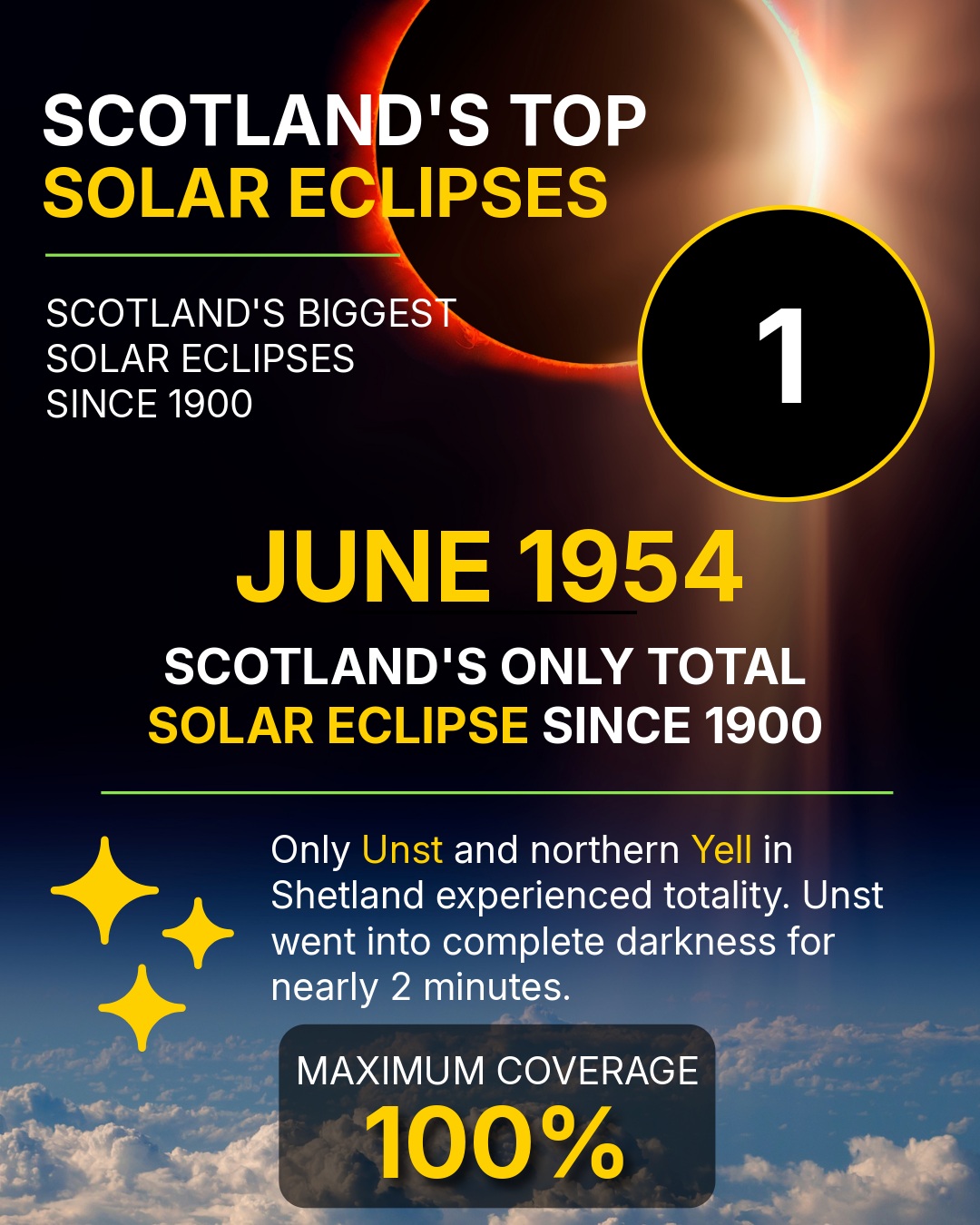
Taking the top spot is the total solar eclipse of 1954.
A total eclipse is the one everyone dreams of seeing at least once in their lifetime, but this one was witnessed by very few people. The path of totality only clipped Unst and Yell in Shetland.
So, if you’re over 80 and happened to be in Unst that day, you might actually remember it. If that’s you, I’d love to hear from you!
Did you witness the 1954 solar eclipse on Unst?
Tell us your story.
In fact, many astronomers from Greenwich decided not to travel to Shetland because of how remote it was, choosing to observe the eclipse in Sweden instead.
For those lucky enough to be in Unst, the sky turned completely dark for almost two minutes. Over Yell, totality lasted just several seconds.
Elsewhere, Aberdeen and Inverness still saw an impressive 88% of the sun covered, while Glasgow and Dumfries reached around 80%.
Number Two – 2015
 STV News
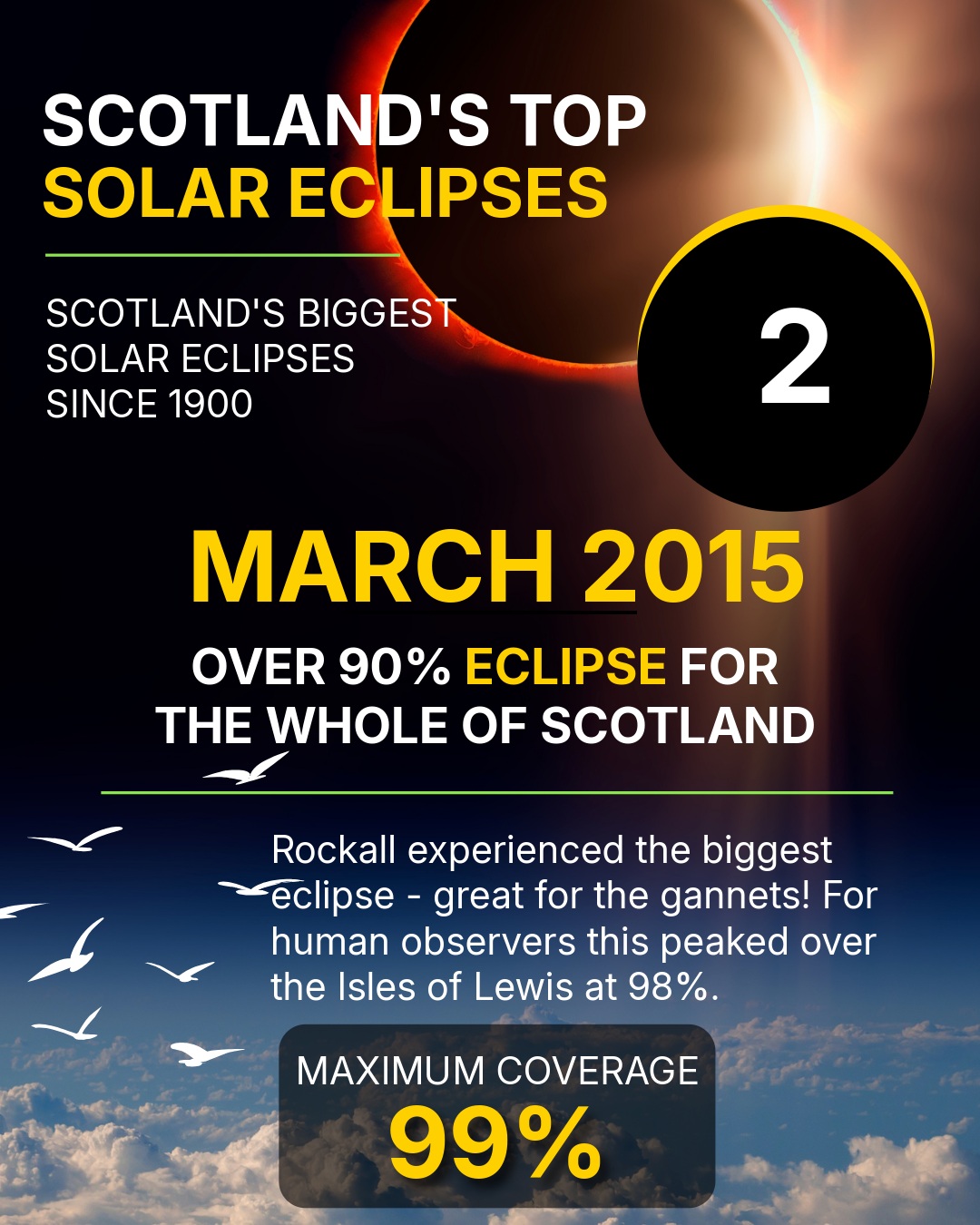
This is probably the one most people watching will remember.
The eclipse reached just under 100% over Rockall – which must have been quite the spectacle for the gannets! For people, though, the best view was from western Lewis, where the moon covered around 98% of the sun.
You might be surprised to learn that I’ve generally found that you need as much as 80% of the Sun to be obscured before it noticeably darkens. During this eclipse, it became so gloomy in parts of the north and west that some street lights switched on.
Fort William and Inverness reached around 95% coverage, with Aberdeen and Edinburgh close behind at about 93%.
Number Three – 1925
 STV News
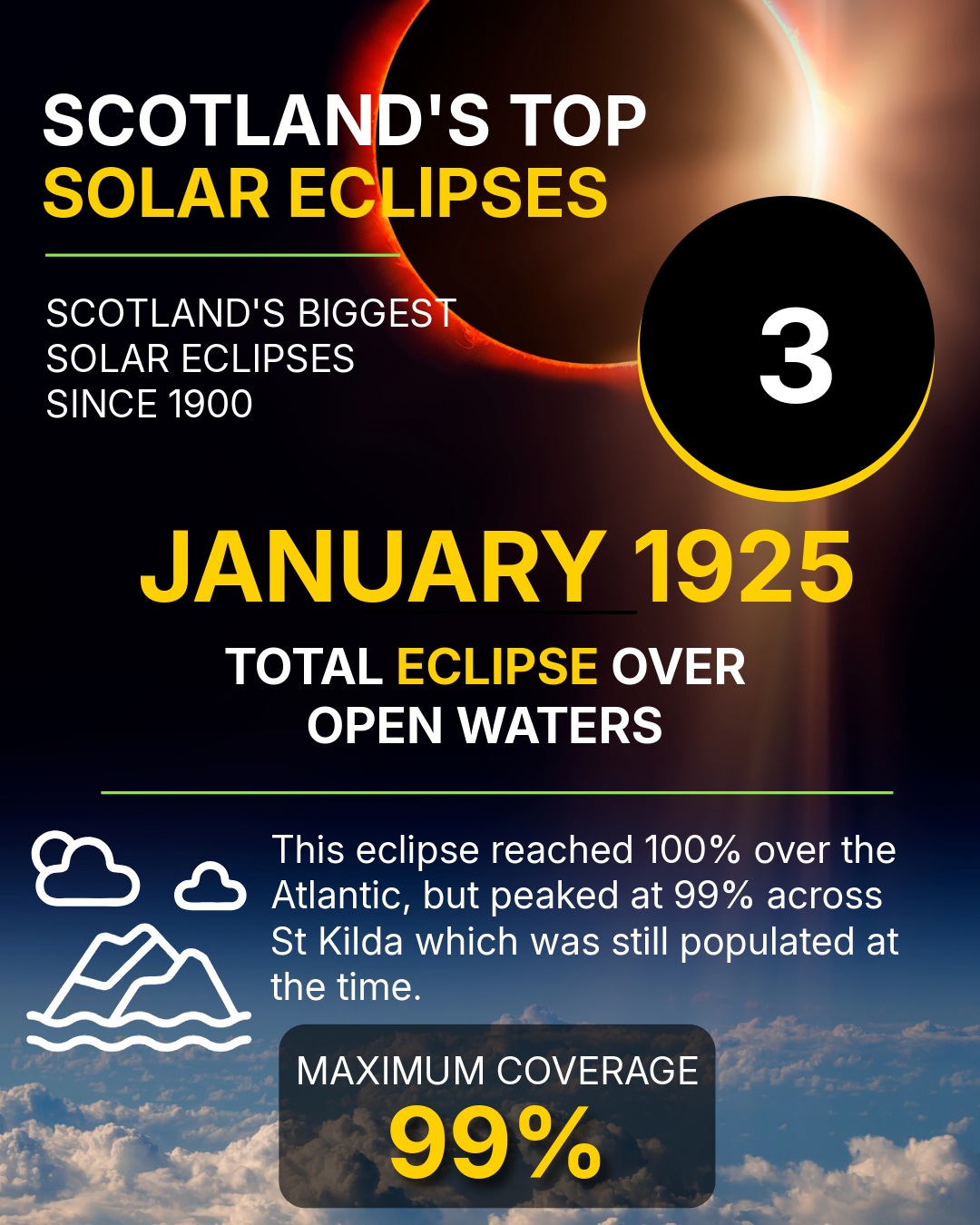
Travelling further back in time, we come to the eclipse of 1925.
It peaked at just over 99%, but once again that maximum passed over Rockall and St Kilda. Unlike today, though, around 40 people were still living on St Kilda, so at least someone got to experience near totality.
The Isle of Lewis wasn’t far behind, with the western side of the island seeing around 99% of the sun eclipsed.
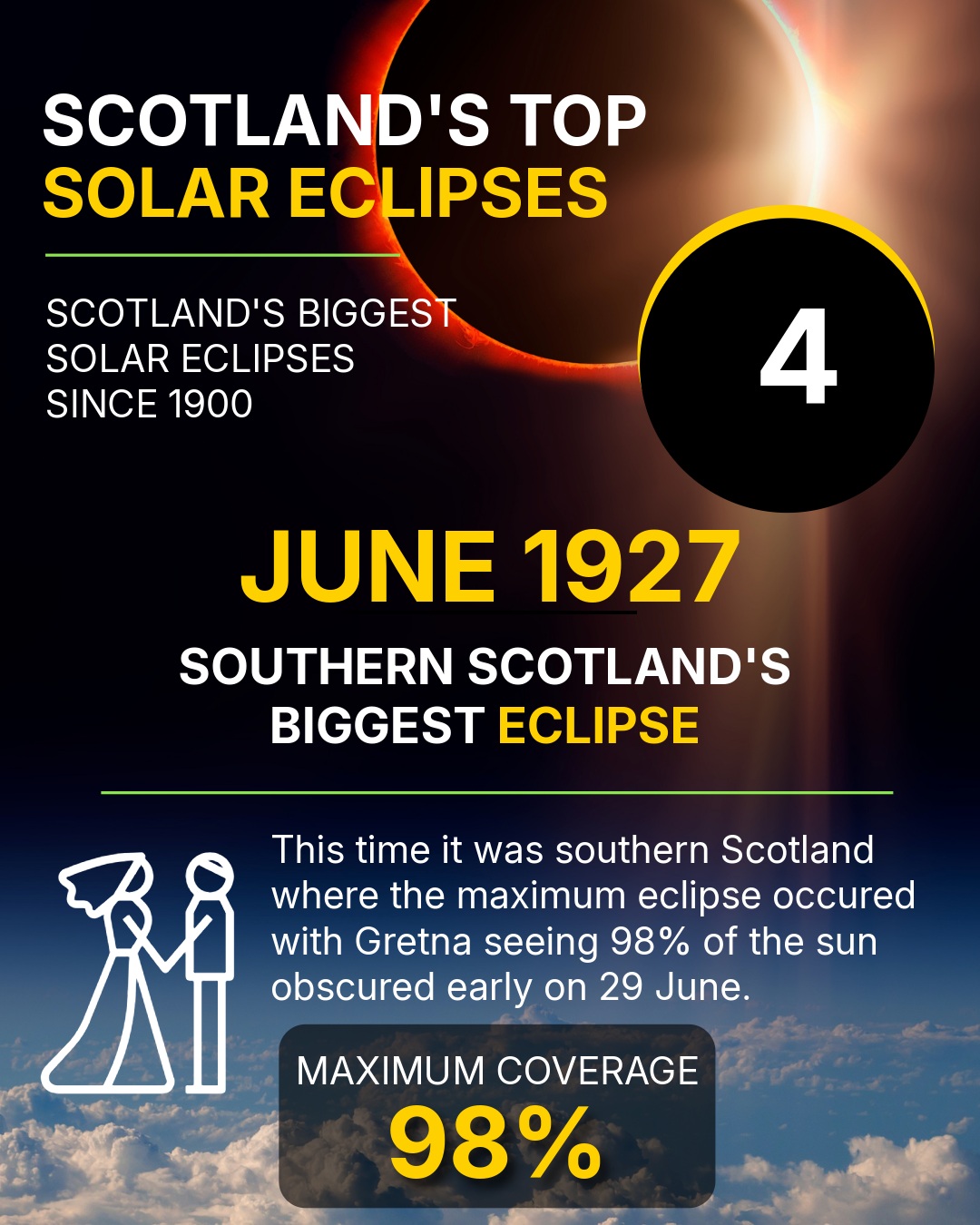
Number Four – 1927
 STV News
Although this eclipse only comes in at number four overall, it takes the crown for southern Scotland.
The catch? You had to be an early riser.
Around 6.30 in the morning, Gretna was plunged into near darkness as 98% of the sun disappeared behind the moon.
Edinburgh was Scotland’s most eclipsed city, reaching 97%, while Glasgow and Ayr weren’t far behind on 96%.
Ironically, this time it was the Western Isles that missed out the most – although “missed out” is relative when we still experienced a massive 91% eclipse here.
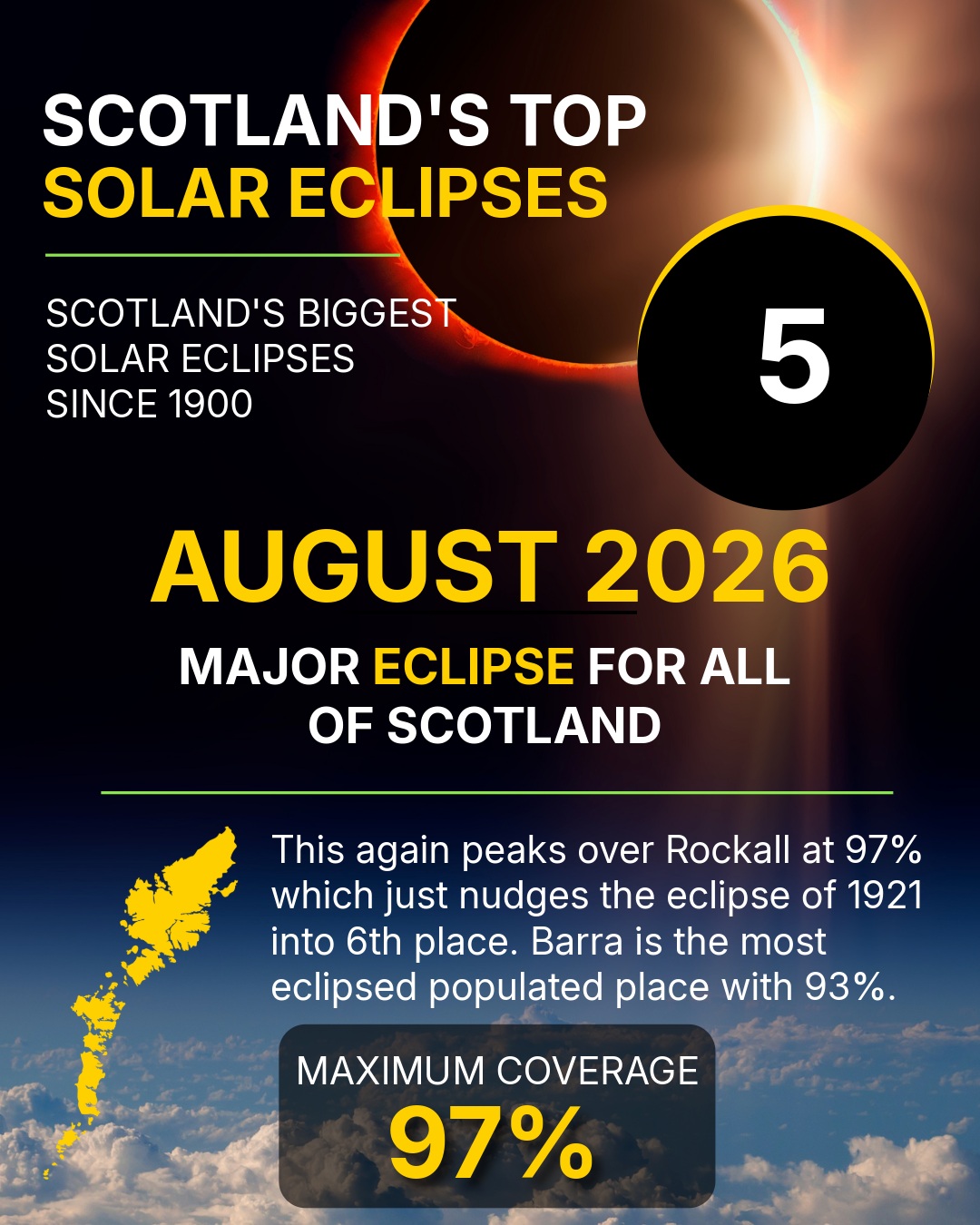
Number Five – 2026
 STV News
Now this is where things get a little controversial.
If we’re only counting the Scottish mainland and populated islands, the eclipse of April 1921 would probably take fifth place, with around 95% of the Sun covered across parts of the Northern Isles.
But I’ve included Scottish territory such as Rockall in the rankings above, so it’s only fair to do the same for 2026.
That pushes this year’s eclipse up to 97% over Rockall, with Barra seeing 93%.
Poor 1921 slips into sixth place… and once again it seems the gannets on Rockall get the very best seat in the house!
So that means the eclipse we’ll experience in just a few days time will be Scotland’s fifth biggest solar eclipse since 1900 – and for most of us, the second biggest eclipse we’ve ever seen from Scotland, beaten only by the spectacular eclipse of 2015.
Follow us on our social platforms for all the latest updates and information on the coming eclipse.
Follow STV News on WhatsApp
Scan the QR code on your mobile device for all the latest news from around the country