Diesel prices have reached a record high in the UK, pushing up costs for millions of motorists.
But even if you don’t drive a diesel vehicle, experts are warning the impact could soon be felt more widely, from supermarket shelves to online deliveries.
Experts say the price of fuel has been impacted by the war in Iran and supply chain issues, showing no sign of slowing down.
Why are diesel prices at a record high?
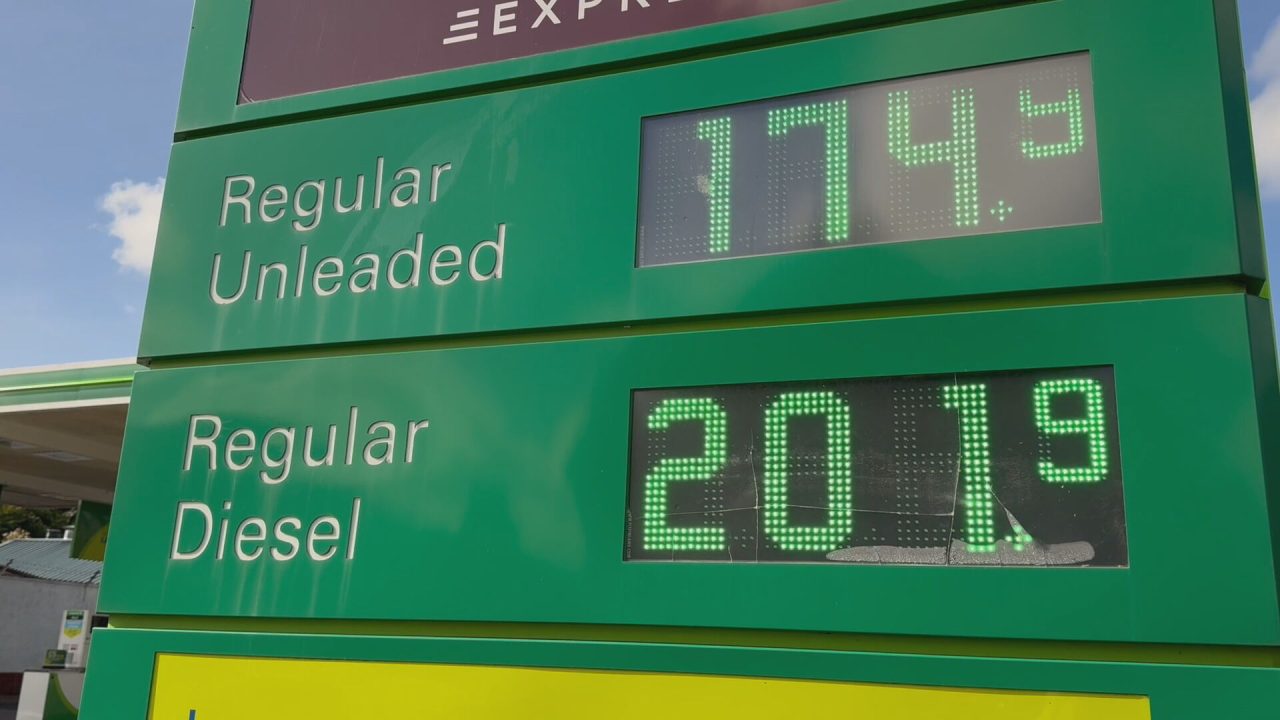
The average price of diesel has climbed to 199.18p a litre, according to figures from the RAC.
That is higher than the previous record set in June 2022 in the aftermath of Russia’s invasion of Ukraine.
The latest increases have been driven by disruption to global fuel supplies. Russian diesel exports have fallen after attacks on oil refineries, while the ongoing conflict in the Middle East has added further pressure to international energy markets.
The result is higher wholesale fuel costs, which are now feeding through to drivers at the pumps.
At some forecourts in Scotland – including one that STV News visited in Clydebank, West Dunbartonshire – the price of regular diesel was above £2 a litre on Monday.
Simon Williams, head of policy at the RAC, said: “We’ve got to remember, the diesel record has been surpassed when we have a 5p duty discount in place.
“It was brought in during the early days of the war in Ukraine and has stayed in place ever since – 3p is due to go back on January 1 and another 2p on March 1.
“We are urging the chancellor (John Healey) not to cancel that (at the Budget), to keep it as it is, but perhaps he should go further.
“If you cut duty more, you could also reduce VAT because the Treasury has benefited substantially from the higher prices at the pumps.
“There is an awful lot of extra money that has come in that could be given back to consumers through a VAT cut.”
How much more are drivers paying?
Diesel has risen by 56.8p a litre since the start of the US-Iran conflict on February 28 this year.
According to the RAC, filling up a typical family car now costs almost £110, around £31 more than it did seven months ago.
Petrol prices have also increased, although less sharply.
The average price of unleaded petrol is currently 174.13p a litre, up 41.3p since late February.
I don’t drive a diesel – why should I care?
While diesel-powered cars are becoming less common, most heavy goods vehicles, delivery lorries and many vans still rely on diesel.
As a result, the cost of moving goods around the country is increasing.
Businesses often absorb some of those costs initially, but sustained rises can eventually be passed on to consumers through higher prices.
Could food and shopping costs go up?
Potentially, yes.
Many of the products bought in supermarkets, shops and online have travelled by diesel-powered vehicles at some stage of the supply chain.
The AA warns that rising diesel costs can increase transport expenses for businesses, which in turn can lead to higher prices for consumers.
Fuel costs are only one factor affecting prices, alongside wages, energy bills and raw material costs, but they can contribute to inflation if they remain elevated for a prolonged period.
How many diesel vehicles are still on the road?
Despite the shift towards electric vehicles, diesel remains a major part of the UK’s transport system.
A total of 15.1 million diesel-fuelled vehicles were licensed to be on UK roads at the end of June this year, down from 15.7 million 12 months earlier, according to the latest figures from the Department for Transport.
There were 9.8 million diesel cars, down year-on-year from 10.4 million.
Some 20.4 million petrol vehicles were licensed to be on roads this June, including 18.8 million cars.
Edmund King, president of the AA, said: “Record diesel prices could be disastrous for the economy and for diesel drivers.
“Diesel helps run the business backbone of Britain. Most delivery trucks use diesel, and most goods transported on the roads to our ports or shops are fuelled by diesel.
“When we hit high diesel prices, most hauliers pass on their extra costs to their customers, and hence the hikes hit the price of goods on our shelves, which in turn fuels inflation.”
Will prices come back down?
Motoring organisations say that it will largely depend on what happens in global oil markets.
The RAC says a sustained fall in oil prices would eventually feed through into lower wholesale fuel costs and lower prices at the pumps.
However, experts caution that short-term drops in oil prices do not always translate into an immediate reduction in prices for motorists.
Could the UK/Scottish Governments step in?
The issue is likely to feature in the Chancellor’s Budget on October 28, when motorists will be watching closely for any measures aimed at easing pressure on fuel bills.
A spokesperson for the UK Government said: “Since the outset of the war in Iran, this government continues to protect the British people and businesses from this crisis.
“This means drivers benefit from the extension of the 5p fuel duty cut, with diesel 11p per litre cheaper until the end of the year than it would have been compared to plans inherited from the previous government.”
Motoring groups are urging ministers to extend the current 5p fuel duty cut, which is due to expire at the end of the year.
Some have also called for further reductions to fuel duty or VAT to help offset rising costs.
Meanwhile, the Scottish Government said the current situation showed that Scotland needs full control over its energy resources.
Energy minister Stephen Gethins said: “The impact of the ongoing conflict in the Middle East on households and businesses remains significant, which is why we need the UK Government to provide immediate assistance to tackle rising bills.
“Control over energy policy sits with Westminster, so if the Prime Minister will not act, he should hand the powers to a Scottish Government that will.
“Scotland is an energy-rich country, and households and businesses should not have to worry about fuel costs. We need full control over Scotland’s energy resources to allow us to bring down bills, and that comes with the fresh start of independence.”
Follow STV News on WhatsApp
Scan the QR code on your mobile device for all the latest news from around the country