

For more than a decade, Peter Murrell sat at the heart of Scottish politics.
As chief executive of the SNP, led by his wife, Nicola Sturgeon, he oversaw finances, strategy and organisation during one of the party’s most successful periods.
Yet over a 12-year period, he embezzled more than £400,000 from the party, spending money donated by supporters on luxury goods, gifts and personal purchases.
On Tuesday, Murrell will appear in court again, where he will be sentenced.
The facts of the case are now largely established; what remains much harder to answer is why Peter Murrell embezzled such a large sum of money from the party he had devoted the majority of his adult working life to.
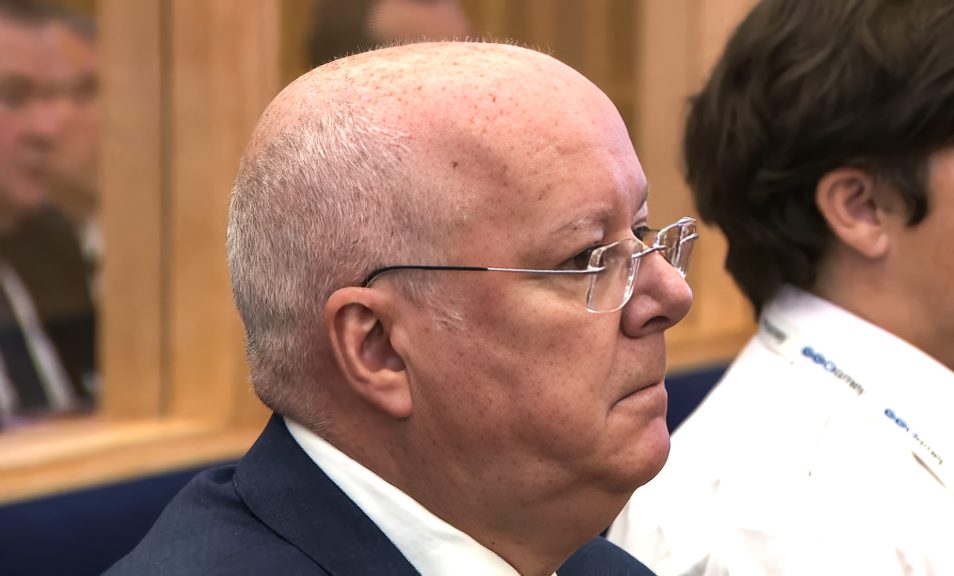 STV News
Even those closest to Murrell appear unable to explain it. Sturgeon herself has said she cannot understand why it happened, noting that both she and her husband were well paid and that the demands of public life left little opportunity for extravagant socialising.
But according to financial crime expert Dr Nicola Harding, founder of the Financial Crime Lab, focusing solely on the amount of money risks missing the bigger story.
“I think a lot of the headlines have been around the amount of money,” she says. “But the length of time really is the story here… The duration of 12 years is the scandal.”
Why didn’t anyone challenge him?
 COPFS
COPFSMurrell’s position within the SNP was unusual. He was not simply a senior employee but one of the most powerful figures within the party’s internal structure.
Dr Harding says authority itself can become a protective shield.
“We often believe there is scrutiny that perhaps isn’t always there when somebody is in a position of authority,” she told STV News.
“It’s actually quite hard to challenge people when they are in a position of authority, when they do have political sway.”
Employees or colleagues may have doubts, she says, but questioning someone with significant influence can carry risks.
“When we do have people who are public figures, who are popular, charismatic, it’s really hard to be able to say, ‘Hang on, is this normal? Shouldn’t we challenge this?’ It’s really hard to do that when someone is a very well-liked person who’s in a position of power.”
The Psychology of Fraud
 COPFS
COPFSCOPFS
Although only Murrell can truly explain his motives, Dr Harding says financial crime experts often see common psychological themes.
“When I’ve looked at other people who’ve committed fraud, embezzlement, these types of things, there’s usually something deeply lacking in themselves as an individual,” she said.
“It can be their own self-esteem, their own self-perception.
“Fraudsters often want to appear to be someone that they’re not because essentially, for whatever reason, they’re not happy with who they are…. There’s usually deep psychological reasons why people do go on to commit financial crime.
“He will have created a story to himself of how he’s in the right or maybe he was only borrowing it. You know, maybe there’ll be these justifications psychologically of why what he has done was justified and was okay and why it wasn’t hurting anyone. But the key thing is that every time this is not detected, it acts as a level of permission for him to go on to do more.”
 STV News
According to Dr Harding, financial criminals are often motivated by far more than money.
Dr Harding is careful not to diagnose Murrell or make claims about his personal psychology. However, she says the behaviour described by prosecutors fits broader patterns seen in long-running fraud cases.
The purchases attributed to Murrell ranged from relatively modest items to luxury goods and expensive vehicles.
Importantly, Dr Harding says, fraud rarely begins on such a scale.
“It will have started with small everyday items that it’ll have got away with, then moving up to this £80,000 car onto the motorhome. The longer that it runs undetected, the bolder and the larger it gets. It’s a pattern and not a coincidence.”
‘Fraud Triangle’
 COPFS
COPFSCriminologists often explain such crime through what is known as the fraud triangle: pressure, opportunity and rationalisation.
Dr Harding believes all three factors are present in the Murrell case.
“There needs to be pressure, opportunity and rationalisation. The pressure to be somebody. The opportunity because he was the only sign-off. And then there will have been that rationalisation.”
For Dr Harding, the purchases themselves may provide clues. Prosecutors said many of the items were used openly or given as gifts rather than hidden away.
That matters because, she argues, the spending appears linked to identity rather than to simple wealth accumulation.
“Generally, offenders want to be somebody… They want to be seen as important,” Dr Harding told STV News.
Police Scotland described the spending as funding “a lifestyle that he craved but could not afford”, a characterisation Dr Harding believes is consistent with what investigators often see.
“He wanted to be seen as affluent. He wanted to be seen as charismatic. He wanted to really feel like he owned his position in society.”
Why not stop?
 COPFS
COPFSThe most difficult question is why someone would continue once they realised the risks involved.
Dr Harding believes the answer may be that stopping becomes harder than continuing.
“I think it becomes really hard once someone’s gone down that path to then backtrack,” she said.
“When you know how easy it is to do and when nobody’s catching you, you don’t see the harm.”
The longer the conduct continues, the more difficult the confession becomes.
“The only way out is holding your hands up, admitting the guilt and dealing with the consequences,” Dr Harding said.
For someone whose life revolved around politics, public service and the independence movement, that would have meant risking everything.
“Everything you’ve just said there speaks to pressure.”
“It speaks to having to be able to stand up and be the type of guy that people think you are.”
Murrell’s guilty plea answers many of the legal questions surrounding the case. It establishes what happened and how it was concealed.
But the question of why may remain unresolved.
Dr Harding suspects that even Murrell himself may struggle to provide a complete answer.
“I wouldn’t want to make any assertions about what might have been going on for him but generally, financial crime is conducted by people who have had often childhood trauma and other things that have happened to them and financial crime is trying to fill that hole really,” she said.
“I doubt that we will find this out [why] in sentencing, to be honest, because I think it will take some time, even for him to really understand why he went and did it. Even if he was asked tomorrow and he was freely wanting to talk about it, I’m not entirely sure he would be able to make sense of it himself.”
Follow STV News on WhatsApp
Scan the QR code on your mobile device for all the latest news from around the country