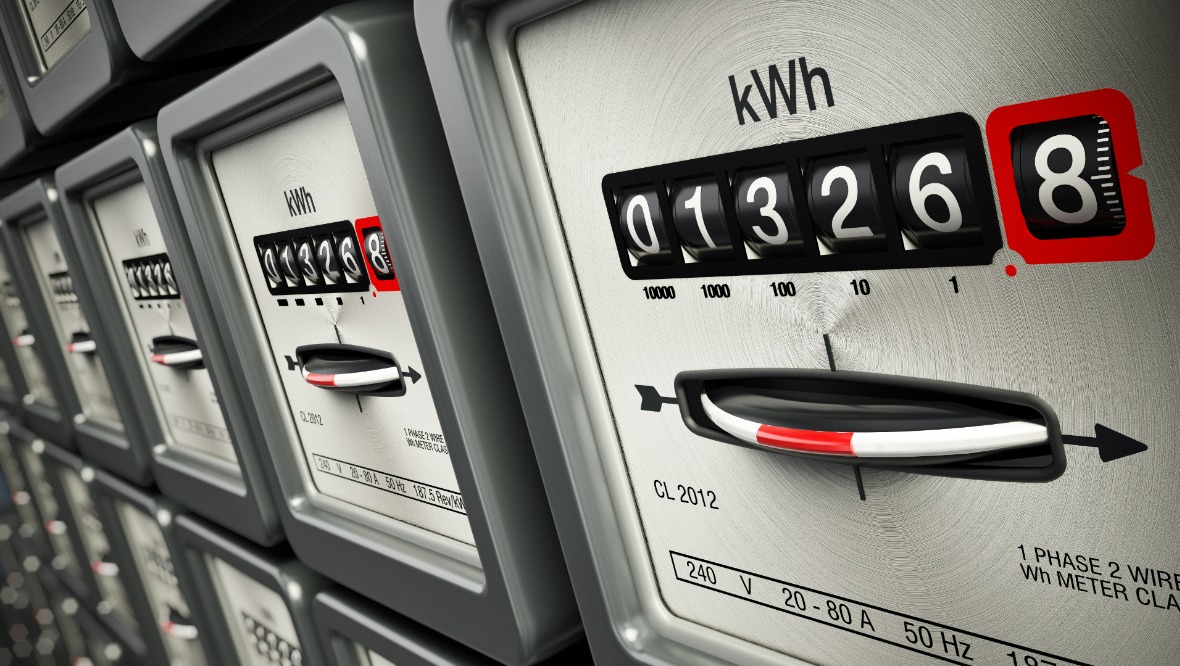
All Radio Teleswitch Service (RTS) electricity meters will be switched off on Tuesday, but more than 30,000 remain in Scotland.
It was announced last year that the technology that supports old electricity meters would be gradually phased out of use.
The UK Government then forced the national energy regulator, Ofgem, to take a “targeted” approach.
It meant that not all RTS meters were switched off on June 30, 2025, as previously feared. However, one year on, they will all be switched off on Tuesday.
Around 33,000 RTS meters remain in Scotland and 100,000 across the UK, according to Ofgem.
All individual meters have already been switched off as part of the phase-out process, and affected customers were each contacted multiple times ahead of their meters being phased out.
Ofgem says suppliers have resolved issues swiftly and minimal impacts have been reported, with the majority of the 800,000 RTS meters having been replaced nationwide.
However, latest figures show suppliers have been unable to contact around 70,000 affected consumers, with vulnerable households most at risk, including older people.
Previous research by Scottish environmentalist charity, Changeworks, found 58% of Scots were unaware of the RTS switch-off.
Households that have not yet had their meter replaced could experience problems with heating, hot water and electricity tariffs.
The impact is expected to be felt most in rural and off-gas areas, particularly in the Highlands, where electric heating is more common.
Introduced in the 1980s, RTS meters use outdated longwave radio signals to switch between peak and off-peak rates.
Scots facing ‘prolonged issues’ with smart meters, says charity
Changeworks says a number of Scots homeowners have faced issues since the phased switch-off.
Christine, a homeowner in her 70s based in Edinburgh, experienced prolonged issues after her smart meter failed to communicate with her supplier, leaving her unable to use prepayment and charges building up in her account.
With limited IT skills, she found it difficult to manage alternative ways of paying and to communicate with her supplier.
After support from the charity, the issue was resolved following escalation. She said: “After my smart meter was installed, it wasn’t working properly with my supplier, which made it hard to stay on top of my payments.
“It took quite a while to get sorted, and the build-up of charges was really worrying. Having someone to support me and keep things moving made a real difference. I’m relieved it’s now resolved and I can manage my energy in the way that works for me.”
In the Highlands, more homes rely on electric and storage heating, fewer properties are connected to the gas grid and households are already facing higher and more volatile energy costs.
There are also ongoing challenges in switching RTS meters in rural areas, including delays, technical issues and concerns about tariffs following replacement.
Households on tariffs such as Total Heat Total Control and Comfort Plus are particularly at risk.
Alexander, whose name has been changed for anonymity, a Highland resident in his 70s, agreed to have his old Total Heat Total Control meter replaced with a smart meter.
Changeworks said he then experienced prolonged issues, as his heaters were charging for much longer than before, which would have increased his energy bills.
He told the charity: “After my smart meter was installed, I noticed my storage heaters were charging longer than before and the bills weren’t right, as they didn’t show me what this was costing me.
“I was worried what this could run up a big bill – I was lucky this happened over the summer, it would have been worse if it had been winter. The energy supplier gave us a bit of a run-around, but the Changeworks advisor helped me make sense of what the energy supplier was saying and choose a suitable tariff and heating programme.
“They showed me how to use the new meter and make sense of the new bills. It was a relief to get this all sorted, so I didn’t have to worry about it.”
Ewan Fraser, principal advisor of Changeworks’ Affordable Warmth Services, said: “While most households will have switched over without problems, some people have experienced difficulties during or after the transition.
“We are particularly concerned about vulnerable households who may not have responded to letters from their supplier, may be less digitally confident, or may not realise they are affected.
“If you’re unsure what to do, advice is available to help you understand your options and get the right support in place.”
Changeworks is urging anyone who uses electric or storage heating and is unsure about their meter type to contact their supplier immediately.
Jessica Skilbeck, director of retail pricing and systems for Ofgem, said: “Delivering the RTS switch-off and with minimal disruption to consumers is testament to the huge collective effort working under the banner of the RTS Taskforce.
“As a result, many more customers can now benefit from having a smart meter including access to a wider range of tariffs which could save them money. But, most importantly, they are no longer exposed to the risk of their heating system relying on outdated technology which could have failed at any time.
“While, so far, industry has not seen widespread disruption from RTS meters losing functionality post-switch off, they are prepared to respond quickly to support any affected customers if issues arise. We advise anyone who still has an RTS meter to contact their supplier immediately if they notice any changes to their heating and hot water – and urge them to avoid this risk altogether by arranging an appointment for their meter to be upgraded.”
Ned Hammond, deputy director of policy (customers) at Energy UK, said: “The tightly planned, collaborative approach taken by industry, Ofgem and government, with support from consumer groups and other partners, has delivered a smooth RTS phase out with minimal disruption for customers.
“Suppliers have responded quickly and effectively to the small number of customers needing support and stand ready to continue providing this where needed following switch-off.
“We are optimistic the majority of customers will be unaffected by the end of the RTS service and, through the switch to smart meters, will now be able to access a wider range of tariffs.”
Follow STV News on WhatsApp
Scan the QR code on your mobile device for all the latest news from around the country