
 Adobe Stock
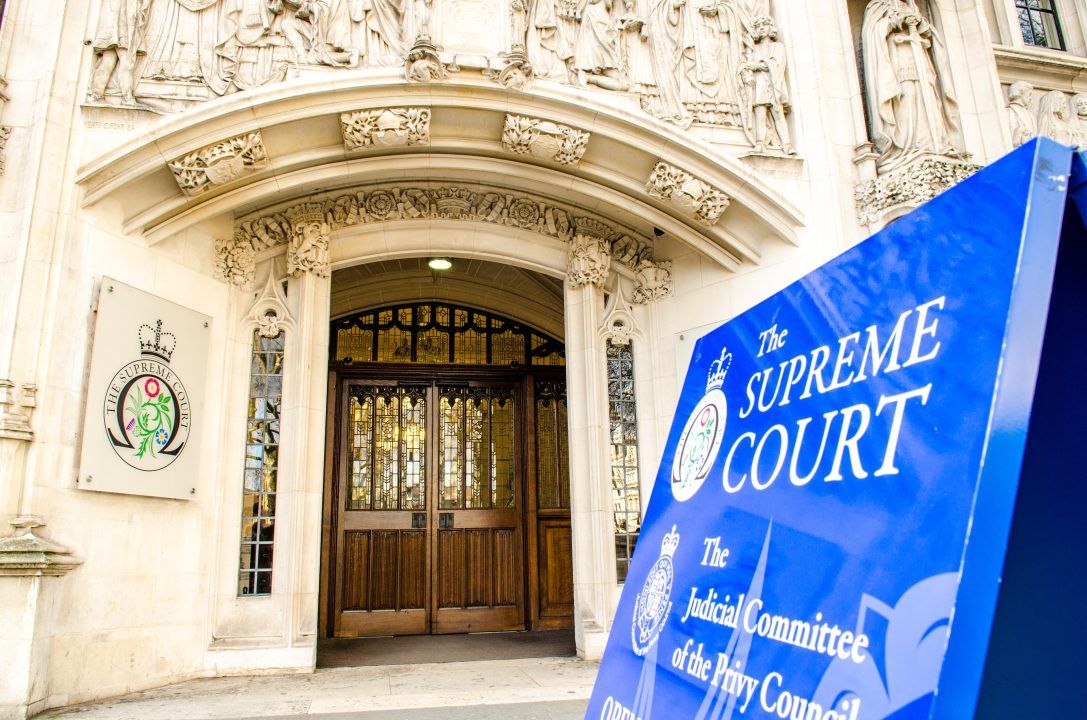
A ruling by the UK Supreme Court could change the way sexual offences are dealt with in Scotland’s criminal courts.
The country’s highest court said that restrictions on evidence or questioning which can be led during a trial, such as excluding evidence about their credibility or previous sexual behaviour, could be “incompatible” with the right to a fair trial.
The judgment comes after the Faculty of Advocates and the Law Society of Scotland raised concerns in relation to the cases of two men convicted of rape in Scotland in October and December 2022.
They argued that the rules around admissible evidence, particularly those allowing only material deemed “relevant” to the charge, had been applied too restrictively and had prevented the defence from presenting contextual material that could have helped the jury understand the events.
The Supreme Court found that the approach used in Scotland since 2013 could deprive the accused of the right to put forward relevant evidence and is in breach of the right to a fair trial guaranteed by Article 6 of the European Convention.
In the ruling, the Supreme Court said that, in order to present a full defence to the charge against them, the accused needs to be able to call evidence to establish their defence and challenge evidence by the prosecution.
It states that the common law concepts of relevant and collateral evidence, so that evidence concerning the complainer’s credibility or previous or subsequent sexual behaviour is excluded from trials for sexual offences, is “liable to result in violations of defendants’ rights to a fair trial under Article 6 of the Convention”.
It adds: “It may be inevitable that a fair trial for sexual offences will require the complainer to be asked some intrusive questions about her private life.”
The ruling states that the defence should be able to try and undermine the victim’s testimony and to rely on evidence of their behaviour, sexual or non-sexual, before or after the events in question.
However, it adds that the interests of victims are “important and must be given proper weight” and intrusion into privacy must be “no more than necessary to ensure that the defendant receives a fair trial”.
Scottish courts have been told that they must “modify” their current approach to act in a way that is compatible with Section 6 of the Human Rights Act 1998.
The appeals raised on behalf of the two men were dismissed as there was found to be no infringement of their right to a fair trial.
Patricia Thom, president of the Law Society of Scotland, described the ruling as a “profoundly important judgment and one that goes to the very core of the right to a fair trial”.
She added: “It will clearly require a change in how Scottish courts handle certain types of evidence in sexual offence cases.
“Like many jurisdictions around the world, Scotland has worked hard to ensure that complainers are protected from unjustified intrusive questioning, while also upholding the accused’s right to present a full and proper defence. That balance was carefully set out in legislation passed by the UK and Scottish Parliaments and approved by both our highest courts and the European Court of Human Rights.”
Ms Thom said that “many in the legal profession” have become concerned that in practice the approach has resulted in accused people being denied the right to present potentially relevant evidence at their trial.
“The Supreme Court has found the concerns we expressed are justified.
“It is now clear that Scottish courts will need to revise their approach in these cases and return to the system agreed by the UK and Scottish Parliaments, giving trial judges greater discretion to decide what questions may or may not be asked.”
‘Justice should be focused on facts’
Ellie Wilson submitted a complaint over the cross-examination of advocate Lorenzo Alonzi, who was defending her rapist, Daniel McFarlane, during a trial at the High Court in Glasgow in 2022.
The 26-year-old was raped by McFarlane between 2017 and 2018 while they were both students at Glasgow University.
He received two convictions for rape and one for attempting to defeat the ends of justice and was sentenced to five years in prison.
The Faculty of Advocates committee ruled that Mr Alonzi engaged in unsatisfactory conduct during the cross-examination phase, jury speech and during the plea mitigation in 2024.
Ms Wilson complained that Mr Alonzi cross-examination was inappropriate when he attempted to “elicit evidence she was not of good character” and “evidence relating to past sexual behaviour” which did not form part of the charges.
The Faculty found that Mr Alonzi repeatedly commented on Ms Wilson’s sexual history and asked whether she had a personality disorder without an evidential basis for doing so to infer she was “not a credible or reliable witness”.
Following the Supreme Court ruling, Ms Wilson said she believes justice should be focused on facts, rather than “personal attacks”.
She said: “Today’s ruling reinforces the importance of Scotland’s ‘rape shield’ laws, which prevent a victim from being subjected to irrelevant and unnecessary questioning about their character and sexual history, and affirms that these provisions, as stated in the legislation, aren’t incompatible with the rights of an accused person.
“It’s important to note that similar legal provisions apply to an accused person too, such as preventing evidence being led on previous convictions unless it’s deemed relevant. This ensures trials are focused on the facts at hand, rather than personal attacks.
“The ruling today did note that some judges have been interpreting the legislation in too narrow a way – I respect the verdict of the court and hope that now there can be greater clarity for those involved in making these decisions.
“I’m unconvinced this will make a significant difference in the vast majority of rape cases, as ultimately any evidence about a complainer’s sexual history or character must still meet the tests of being proportionate and relevant.
“I’d also emphasise that today’s ruling struck down the appeals of two convicted sex offenders. These cases had reached the UK Supreme Court, which is a rare outcome in itself, but despite this, they were rejected as the offenders were ruled to have a fair trial. This should hopefully bring some solace to survivors who may have been concerned about what this judgment means for them in practice.
“I believe fundamentally that justice should always be focused on facts, not on personal attacks, and we know that far too often defence lawyers cross the line of what is legal – as happened in my own case. I hope that today brings clarity for all, and reaffirms the importance of ensuring trials are not a space to needlessly retraumatise vulnerable victims.”
Follow STV News on WhatsApp
Scan the QR code on your mobile device for all the latest news from around the country