 Supplied
One of Scotland’s smallest distilleries is working with scientists to assess whether aluminium could be used to bottle Scotch whisky instead of glass.
Stirling Distillery, in partnership with researchers from Heriot-Watt University and the Institute of Chemical Sciences, is investigating how whisky behaves when stored in aluminium containers rather than traditional glass bottles.
It comes as the industry looks to cut its environmental footprint.
The project was initiated by the distillery’s co-founder, Kathryn Holm, who said the aim was to improve sustainability ahead of the distillery’s first mature whisky release, planned for 2027.
 McDaid PR via Supplied
Why aluminium?
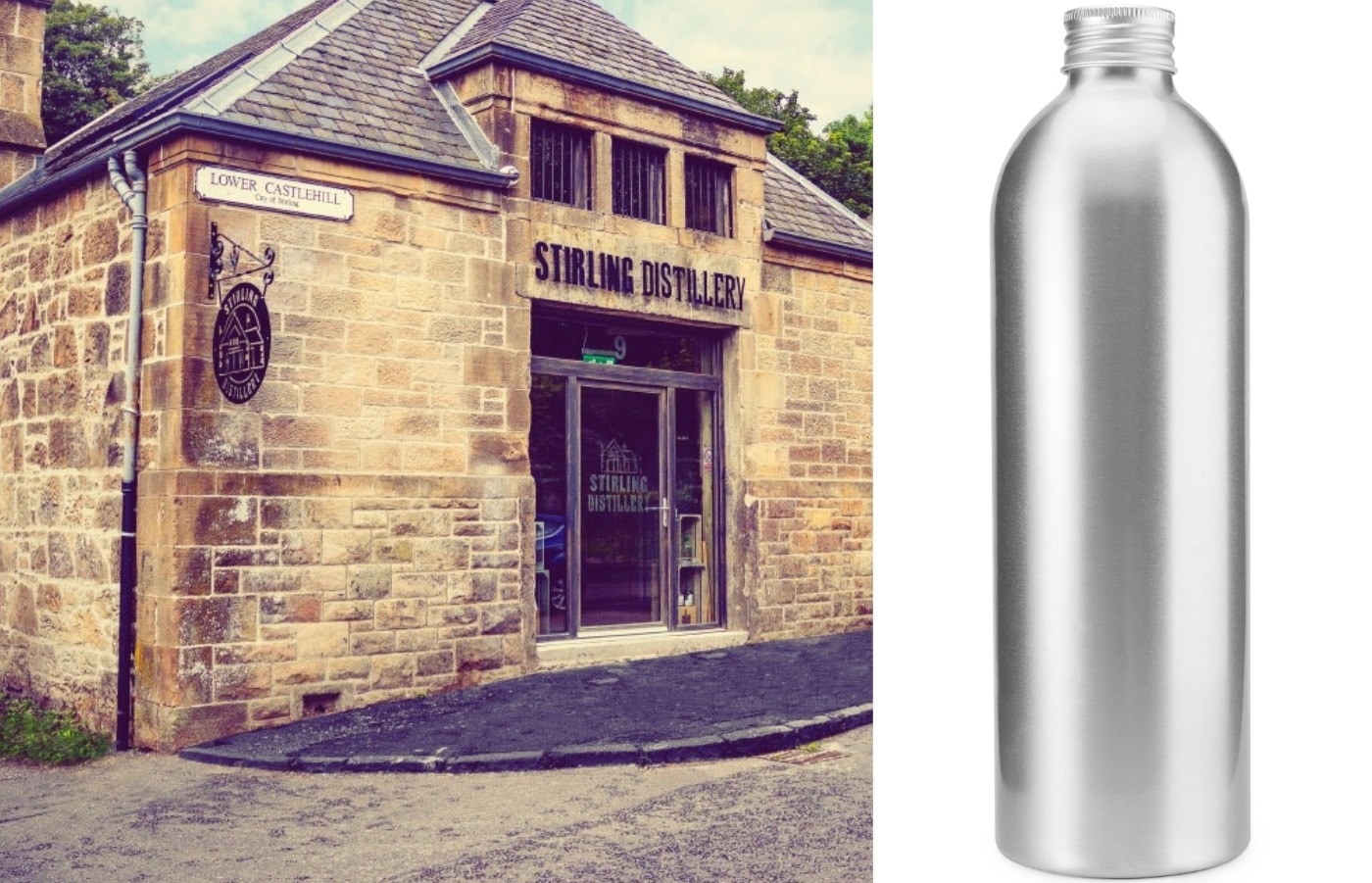
Aluminium is already common in the food and drink industry, used to package soft drinks, baked beans and takeaway meals.
It is now slowly edging its way into the alcohol market, with ready-to-drink cocktails and a handful of spirit brands already offering aluminium bottles.
Glass has long been part of whisky’s premium image, but it is heavy to transport and uses a lot of energy to make, Kathryn said.
A standard whisky bottle can weigh as much as the spirit inside it. Aluminium, on the other hand, is lighter and widely recycled, making it an “attractive alternative”.
She said younger consumers – many of whom drink less alcohol – could be drawn to whisky with stronger environmental credentials.
“We want to make our distillery as sustainable as possible ahead of our first mature whisky being released in 2027″, she said. “The whisky industry is looking at lots of ways to minimise its footprint.
“Glass has long been central to whisky’s image; it’s weighty, and evokes the craftsmanship of the spirit. But it is also heavy to transport and relies on high recycling rates to reduce its environmental impact.
“Aluminium is lighter and widely recycled, so I asked the experts to investigate whether it’s a viable alternative.”
 iStock
Health risks
To see if aluminium could work, researchers at Heriot-Watt University’s International Centre for Brewing and Distilling (ICBD) tested whisky stored in aluminium bottles over several months.
They looked for chemical changes and whether any metal from the bottles got into the whisky.
Laboratory tests found tiny amounts of aluminium had leached into the whisky, raising concerns about possible health risks.
Dr Dave Ellis, who led the study alongside student Charlotte York, explained that certain natural acids in matured whisky can react.
“If whisky touches aluminium directly, the levels are higher than what’s considered safe for drinking water,” he explained.
The study also found that some flavour compounds that develop as whisky matures were reduced when in contact with aluminium.
This effect was much smaller in the new whisky, which hasn’t fully developed its flavour yet.
There is also some evidence that contact with aluminium could alter the whisky’s chemical makeup, potentially affecting its taste and mouthfeel.
“The key question is whether there is an aluminium bottle on the market with a lining strong enough to hold high-strength whisky,” said Dr Dave Ellis. “At this stage, we don’t know the answer.”
Professor Annie Hill, head of the university’s whisky centre, said the research shows why careful packaging is essential.
“The next step is to find a liner that can safely hold alcohol for long periods without breaking down,” she said.
‘No noticeable difference in flavour’
Despite the chemical changes observed, sensory testing suggested no noticeable difference in flavour.
A tasting panel led by ICBD student Andrew Marr was unable to distinguish between whisky stored in aluminium and whisky stored in glass.
The team now plans to test bottles with improved linings and carry out longer-term studies.
Professor Hill said this was encouraging. “The laboratory detected chemical changes, but these did not translate into detectable differences in aroma.
“That’s positive, if an effective liner can be developed.”
Kathryn said the results would be shared with the wider whisky industry, which is under increasing pressure to meet Scotland’s net zero targets while maintaining strict quality and safety standards.
It is not the first distillery to look for ways to cut its environmental footprint in the industry.
Researchers at Heriot-Watt University, Edinburgh, ran tests on barley grown with green fertilisers in the hope that it would meet the requirements to distil whiskies, while Arbikie Distillery partnered with academics to use whisky by-products and fungi to create compostable packaging tipped as an eco-friendly alternative to plastic.
“We’re not suggesting glass disappears overnight,” she said.
“But offering consumers a lower-carbon option for a premium product is worth exploring. As a small distillery, we can help start that conversation.”
Follow STV News on WhatsApp
Scan the QR code on your mobile device for all the latest news from around the country