 PA Media
A huge gilded statue of the Roman Emperor Antoninus Pius once stood in the Scottish Borders, research has suggested.
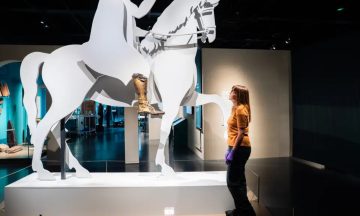
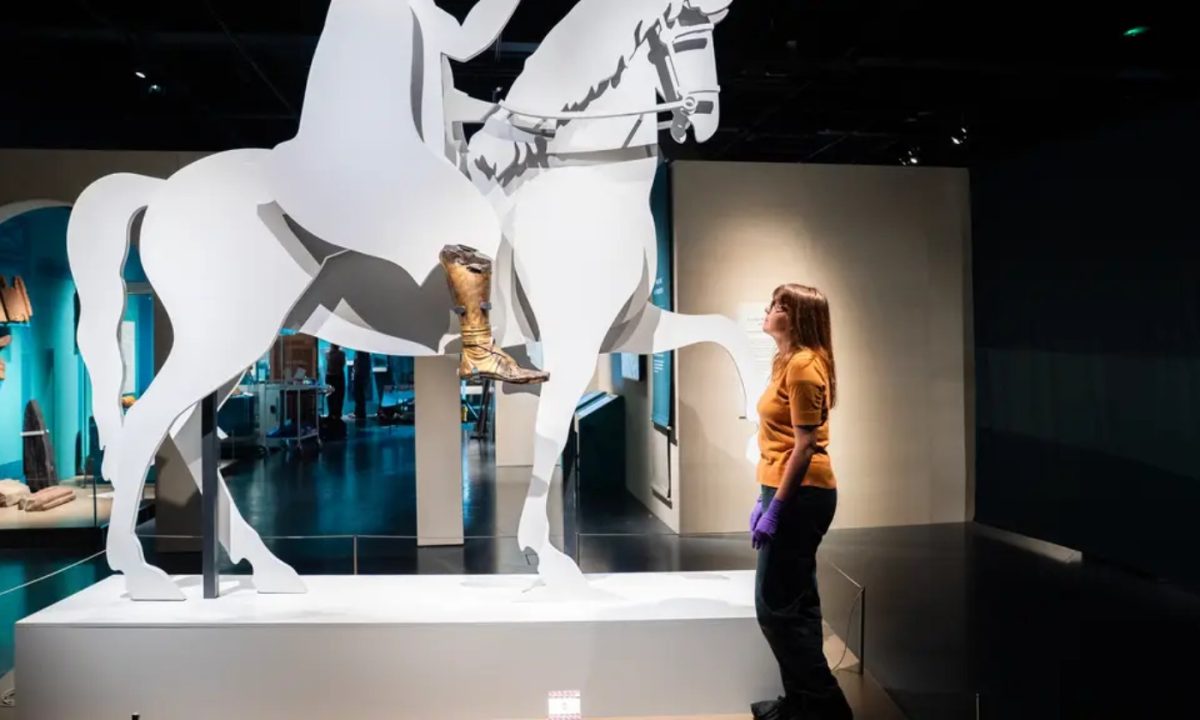
A surviving gilded bronze leg has been incorporated into a replica of the statue which will be on show in a major exhibition opening at the National Museum of Scotland in Edinburgh this weekend.
The lower leg with its foot in a boot, dating to the 140s AD, was discovered in a bog in Milsington near Hawick in 1820.
For more than two centuries it was assumed that it had been looted and brought to Scotland from further south, perhaps from the major Roman town of York, Eboracum.
A wider study of statue fragments from the Roman frontier has found that bronze imperial statues were put up in frontier forts, making it possible that this statue was located in Scotland.
Experts said the way the leg was removed suggest it was deliberately dismantled by the Romans as they withdrew from southern Scotland in the 160s or 180s AD, rather than hacked apart in an act of revenge by local people.
The top of the leg is exactly as it was cast, with no cut marks, suggesting it was removed carefully.
It is not known where the other pieces of the statue are and whether there may be some pieces of it still in the bog, or whether other parts were later melted down or reused.
Once curators had established it was likely the statue was put up in Scotland they explored the question of who it represented.
They concluded it was likely to have been of Antoninus Pius on horseback, as he was the one emperor said to have paid particular heed to his Scottish victories.
The statue leg is part of the National Museums Scotland collection.
Dr Fraser Hunter, principal curator of Prehistoric and Roman Archaeology at National Museums Scotland (NMS), said he hopes the replica of the statue will give people a sense of the original grandeur of the monument.
He said: “These things are really not that common, particularly on the frontier. This would have been a big, impressive monument.”
He added: “This really turns on its head our understanding of Rome’s second attempt at conquering Scotland. This was a big deal for the emperor, something which was worth celebrating.
“It offers us a tantalising glimpse into the kind of grand monuments which once stood in southern Scotland and shows the importance Pius placed on his victories in Scotland. But it begs the question… where is the rest of the statue?”
The exhibition, Roman Scotland: Life on the Edge of Empire, opens on Saturday and runs until April 18 next year.
It will explore the experience of life on a frontier, from the soldiers who tried to conquer the land to the communities living around each military base.
The exhibition will also look at the experiences of local people whose way of life was threatened by the Roman invasion.
NMS said it was made possible with the support of the Roman Scotland Exhibition Supporters Circle.
Follow STV News on WhatsApp
Scan the QR code on your mobile device for all the latest news from around the country