 iStock
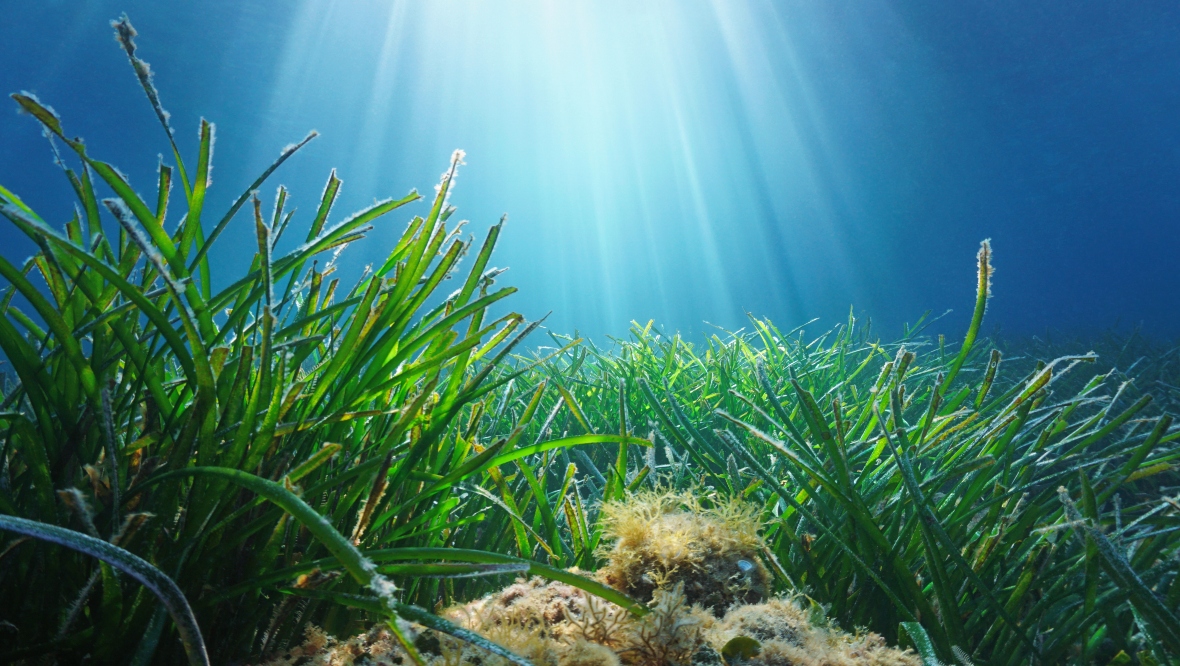
A new study has revealed the “geological complexity” of the North Sea seabed, with experts saying the findings could help protect undersea cables from damage caused by fishing and anchor strikes.
The study used data from as far back as the 1950s to map the materials that make up the North Sea’s “shallow seabed”, where subsea cables are laid.
These vital cables are used to transport data between countries, and also to connect windfarms and other offshore energy developments to the UK mainland grid.
The research, which was carried out by the British Geological Society (BGS), found the materials that make up the top two metres of seabed vary greatly, and can go from “fine sediments” to bedrock over short distances.
It also found most areas of seabed contain multiple layers of different soil types, often with sand overlaying clay, gravel, peat or bedrock.
The team said the findings challenge the current guidance around the laying of subsea cables, which typically assumes they are being laid in single soil types.
Catriona Macdonald, marine geoscientist at the BGS, said the material the seabed is made from significantly affects the approach to laying subsea cables.
“Engineers specify a target burial depth for a cable and that’s the optimum depth they’d like to achieve,” she explained.
“The types of seabed materials we map can make it difficult to achieve that target depth or, in the case of very soft sediments, can result in the cable being buried deeper than intended.
“There’s a sweet spot it needs to be buried at and when it’s not buried deeply enough it requires remedial protection methods.”
Duncan Stevens, another marine geoscientist at BGS, said there are “a few things” that dictate how deeply a cable should be buried.
“Fishing activity is generally only likely to affect the top few centimetres of the seabed,” he explained.
“However, depending on the nature of the sediments below the seabed, large ship anchors dropped in an emergency could penetrate from a few tens of centimetres to a couple of metres.
“That’s one reason why understanding the shallow geology is so important.”
He explained that burying cables deeper may provide greater protection – but that there can be trade-offs.
“The surrounding sediment can act as an insulator, making it harder for heat to escape and potentially causing the cable to run hotter. How significant that effect is depends on the sediment type,” he said.
The study is based on more than 12,000 data points taken from across the North Sea seabed, many which were originally obtained as part of oil and gas pipeline installations.
Mr Stephens said: “At BGS, we’re making the most of decades of geological and geotechnical information collected across the UK North Sea.
“By unlocking and repurposing these legacy datasets for modern offshore challenges, we’ve been able to reveal patterns of shallow subsurface variability at a regional scale and provide evidence that supports better informed offshore planning and development.”
Ms Macdonald said: “Our work shows that layered seabed conditions are widespread and therefore represent a crucial consideration for decision-makers.
“Improving how we represent and contextualise this variability is key to making better early-stage decisions about cable routing, particularly for more complex projects.”
The team stressed their work will not replace the detailed investigations that are carried out whenever subsea cables are being laid but that it could help engineers prepare for potential challenges when planning cable routes.
The BGS carried out the research in collaboration with the universities of Durham and Dundee.
Professor Will Coombs, from Durham University’s department of engineering, said he hopes the work will help “advance” cable-burying risk assessments.
“Research by the BGS has been essential in defining the seabed conditions that must be considered when assessing the anchor-strike risk to subsea cables,” he said.
“From a numerical modelling perspective, this project represents the culmination of 12 years of advancing the material point method for large-deformation soil/structure interaction.”
He added: “We hope the project’s findings will advance current cable-burial risk assessments by allowing realistic variations in seabed conditions to be captured within the anchor penetration prediction part of the framework.”
Professor Michael Brown, chair of geotechnical engineering at the University of Dundee, said: “From a physical modelling perspective, this project has enabled world-first research, including tracking models underground using wireless technologies.
“This allows us to better understand how anchors respond to geological complexity and real cable installation environments.
“This has enabled us to create important datasets and evidence to inform the next generation of computer-based simulation techniques.
“Working with BGS has helped us frame our investigation to cover the real-world geological complexity of the North Sea.”
The open-access report is part of an Engineering and Physical Sciences Research Council (EPSRC, UKRI)-funded project called Offshore Cable Burial: How Deep Is Deep Enough?
Follow STV News on WhatsApp
Scan the QR code on your mobile device for all the latest news from around the country