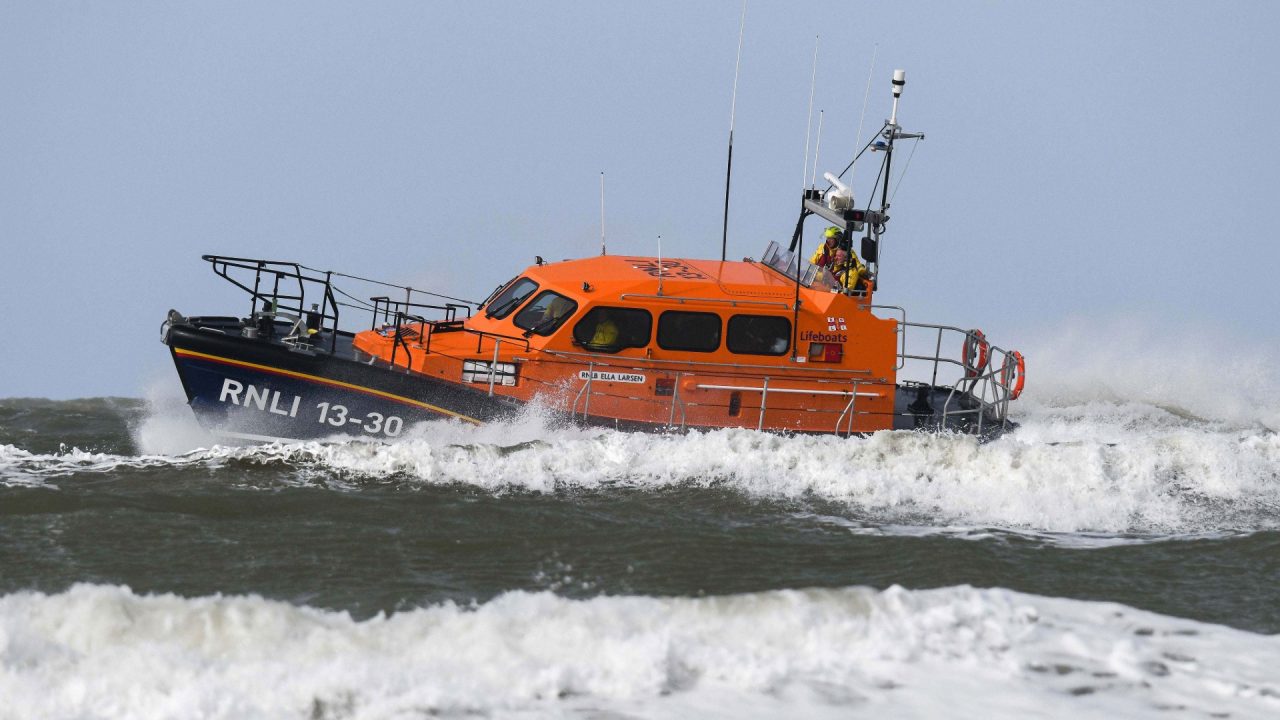
 RNLI/Stephen Duncombe
The Royal National Lifeboat Institution has announced it is overhauling its lifeboat fleet with new vessels at seven stations by the end of the decade.
Last year, the RNLI responded to more than 9,000 incidents along the coastline of the UK, with pressure on services continuing to increase.
Around 98% of lifeboat call-outs since 2017 have been within ten nautical miles of the coast, prompting plans for a new response vessel.
The RNLI has announced that some stations will take command of the new coastal lifeboat.
Entering service in 2028, it will provide improved capability near the shore and be optimised for ranges of ten to 25 nautical miles.
It is a modern lifeboat with advanced technology and casualty-recovery capabilities to support our lifeboat crew.
Three Scottish stations will get a coastal lifeboat: Dunbar, Broughty Ferry in 2028, and Portpatrick in 2029.
In addition, severn-class vessels will be upgraded to a shannon-class lifeboat at Buckie in 2027, Mallaig in 2029 and Stromness and Campbeltown in 2030.
This follows the successful replacement of Fraserburgh and Portree lifeboats earlier this year.
Peter Sparkes, RNLI chief executive, said: “The RNLI has constantly evolved and improved our service over 202 years.
“We make evidence-based decisions and strive to ensure that we have the right lifeboats in the right places, at the right time to save as many lives as possible around the coast of the UK and Ireland and, crucially, to enable us to bring our selfless, dedicated people home safely.
“We are responding to the changing nature of lifesaving at sea by adapting our service to ensure it is fit for our nation’s future needs.
“What will never change is our charity’s purpose, to save lives at sea and our mission, to save everyone.”
Follow STV News on WhatsApp
Scan the QR code on your mobile device for all the latest news from around the country