 Scottish Government via Supplied
Patients across Scotland will be able to take part in clinical trials from their own homes under a new approach to medical research due to begin in 2027.
The initiative will use remote technology to widen access to research into new treatments, with trials carried out in GP surgeries, community pharmacies and homes rather than requiring participants to travel to specialist centres.
The initial focus will be on research into weight management, obesity and cardiovascular disease.
The University of Glasgow, the University of Dundee and NHS Greater Glasgow and Clyde will carry out the trials, with NHS Tayside coordinating the initiative and identifying potentially eligible patients.
‘Life-changing’
Adam Nicolson from Stirling is in remission as a result of a clinical trial that he says has been “life-changing”.
The 57-year-old underwent CAR-T cell therapy at the Queen Elizabeth University Hospital in Glasgow after his myeloma stopped responding to conventional treatments.
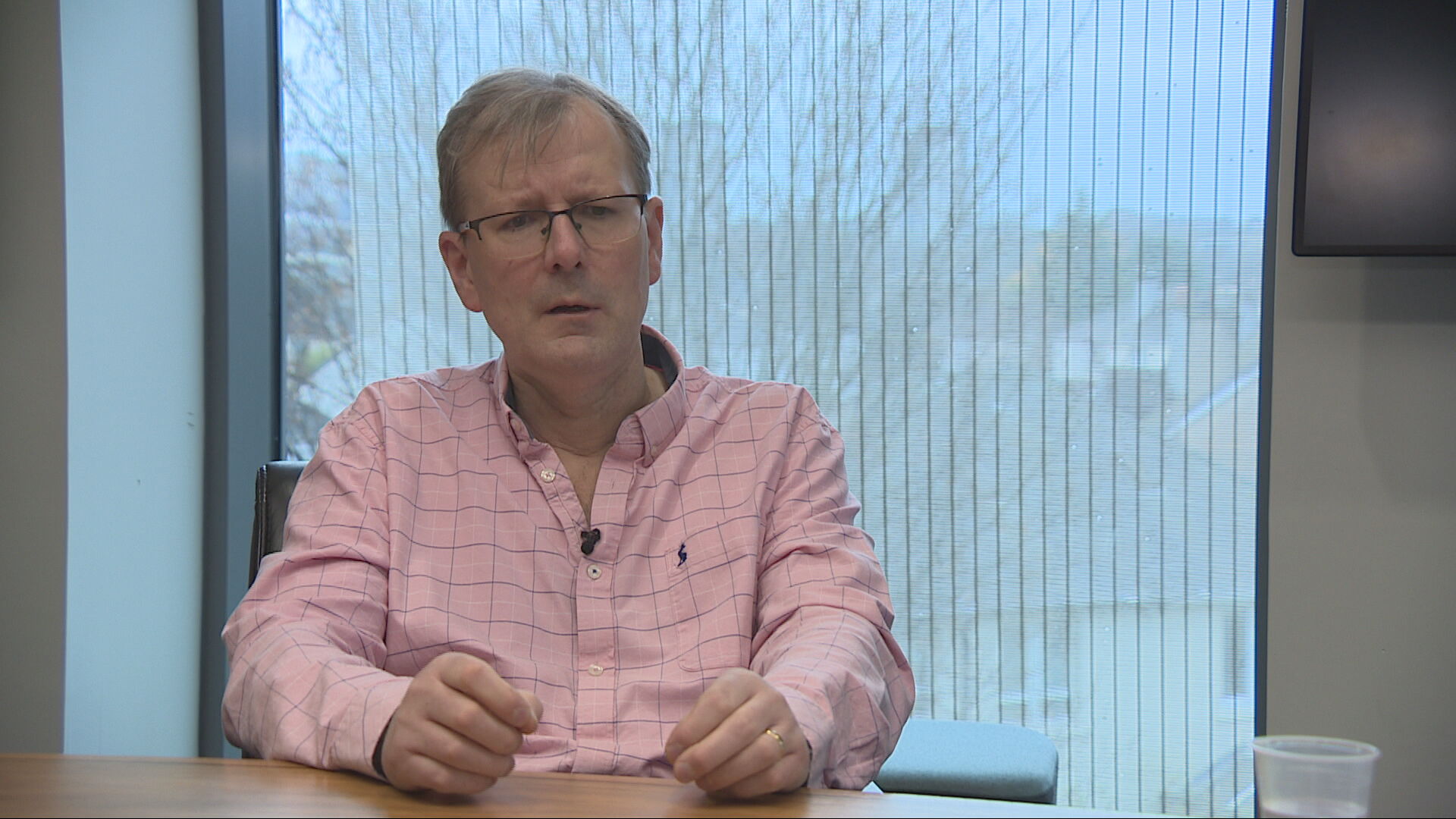 STV News
“The clinical trial basically gave us hope that things might get better”, he told STV News. “I never expected that it would work so well, to be actually able to say to people I’m cancer-free. I have been so fortunate and so lucky.
“In the summer of 2023, we didn’t have hope, and that was a really hard time for us, but the clinical trial gave us hope that things might get better.
“I’ve got to see two of my daughters graduate. I shouldn’t have. It meant a lot to them that it was there.
“I think being in this clinical trial has been life-changing; it really has.”
Health secretary Angela Constance said the “game-changing” approach could boost participation in medical research.
“Scotland has a strong international reputation for clinical research, but opportunities to take part can still be limited by where people live”, she said.
“This approach is game-changing; taking trials to patients will help to remove some of the barriers that exist and improve access. This is a fantastic example of how our plans for NHS reform will improve services for people across the country.
“We already use technology in other NHS services, from video consultations to wearable sensors that monitor patients safely at home. Using it to support clinical trials will benefit both patients and the NHS.”
Professor Dame Anna Dominiczak, the Scottish Government’s chief health scientist, added: “This approach demonstrates a new model for clinical research, using national data, digital infrastructure and strong collaboration across NHS, academia, and industry.
“This not only supports more inclusive clinical research by reaching historically underserved communities, but it also accelerates our ability to deliver true precision population health on a national level.”
Tom Keith-Roach, president of AstraZeneca UK, said: “This is an important opportunity for Scotland to build on its leading role in the UK’s commercial clinical trial recovery and help shape the next generation of trial delivery.
“AstraZeneca is proud to partner in this initiative, bringing research closer to patients to widen participation, improve access for underserved communities and help accelerate the development of potentially life-saving treatments.”
Follow STV News on WhatsApp
Scan the QR code on your mobile device for all the latest news from around the country