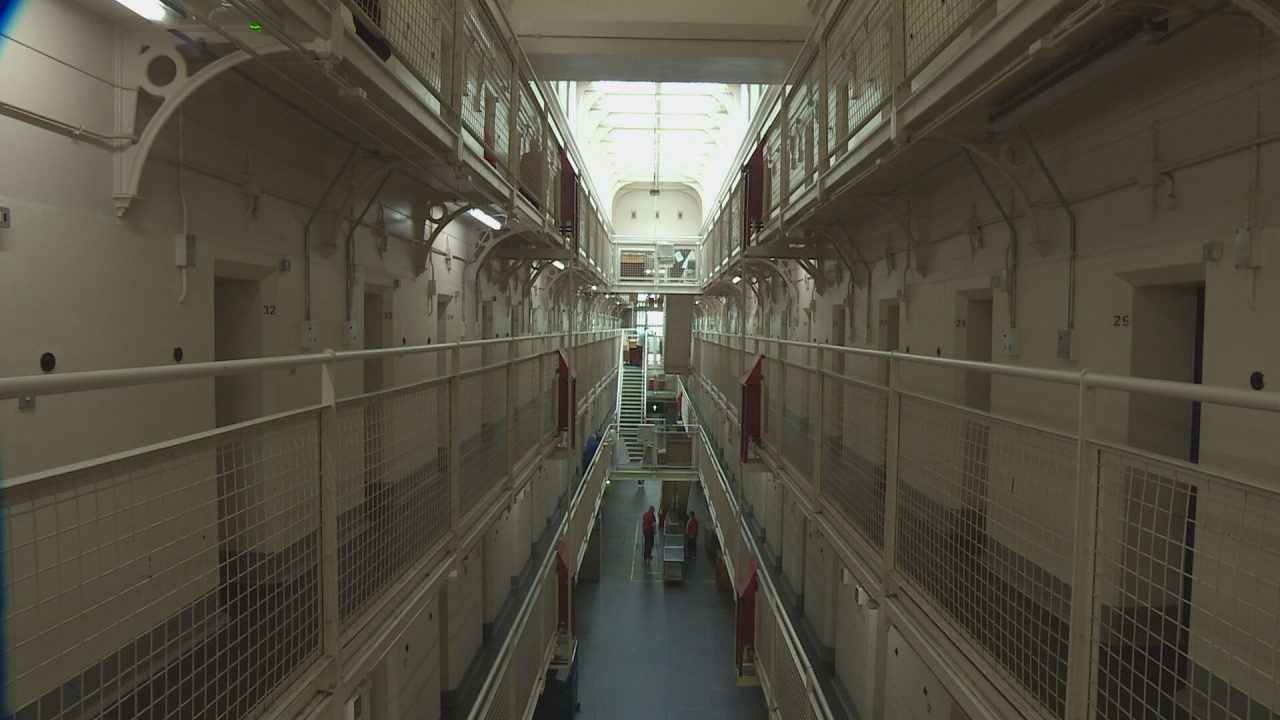
The Scottish Government is to consult on further reducing the release point for certain short-term prisoners to ease overcrowding.
Some short-term prisoners in Scotland could be released after serving 30% of their sentence – rather than 40% – under new government plans.
Justice secretary Angela Constance announced on Tuesday that she will request the change, saying the measure is intended to ease pressure on Scotland’s prisons, where the population remains at critical levels.
If approved by Parliament, the change would come into force in May.
Four groups of emergency early releases have so far taken place, with 415 prisoners released. There are a further three release dates planned until April, which should result in a further 100-200 prisoners being freed.
The Scottish prison population reached a record high of 8,431 in November, and as of Tuesday, it was 8,301 despite the early release scheme.
The proposal would apply only to short-term prisoners serving sentences of less than four years and would exclude those convicted of domestic abuse or sexual offences, as well as long-term prisoners serving more than four years.
Prisoners convicted of domestic abuse or sexual offences would continue to be released automatically after serving 50% of their sentence.
Following a short consultation with key stakeholders, the Scottish Government is expected to lay the necessary regulations before Parliament next week.
Speaking in Parliament, Constance said the prison population had been driven higher by an increase in convictions for serious crime and longer custodial sentences, which she said had risen by 31% over the past decade.
She said: “Despite the significant steps we have taken, the prison population remains stubbornly high, driven by more convictions for serious crime, and longer average custodial sentences which have increased by 31% over the past decade.
“Further action is necessary to ensure the continued safe running of Scotland’s prisons for those who live and work there. This is not a decision I have taken lightly, and protecting victims and public safety remains an absolute priority.
“That is why these changes, if agreed by Parliament, would not apply to those serving sentences for domestic abuse or sexual offences.”
The announcement follows a series of measures introduced by the Scottish Government to manage prison overcrowding.
Since November 2024, the automatic release point for short-term prisoners has already been reduced from 50% to 40%.
The government has also created 400 additional prison spaces, increased community justice funding to £159m a year, and implemented emergency early-release measures.
Electronically monitored bail has also been rolled out nationwide, giving courts more options to manage individuals in the community.
Constance said the measure was designed to address immediate pressures but stressed the need for longer-term reform.
She said: “Despite the significant steps we have taken, the prison population remains stubbornly high, driven by more convictions for serious crime, and longer average custodial sentences which have increased by 31% over the past decade.
“Further action is necessary to ensure the continued safe running of Scotland’s prisons for those who live and work there. This is not a decision I have taken lightly, and protecting victims and public safety remains an absolute priority. That is why these changes, if agreed by Parliament, would not apply to those serving sentences for domestic abuse or sexual offences.
“While this measure addresses immediate pressures, we must also look to the long term by continuing work in areas such as increasing the use of bail supervision; the roll out of electronically monitored bail across the country; and optimising the use of Home Detention Curfew.
“The independent Sentencing and Penal Policy Commission will also publish its recommendations shortly, and we will consider them in detail. Scotland, like the rest of the UK, is an outlier in its high prison population and this needs to be addressed.”
Scottish Conservative MSP Liam Kerr was critical of the statement, he said: “The Government’s knee-jerk, unevidenced panic schemes have failed, and the cabinet secretary has come here today talking at length about her inputs, but, in just two paragraphs, we learn the only outputs will be hardened criminals after just 30% of their sentence.
“Has the cabinet secretary changed the previous failure of government to keep any formal records of risks, objectives and rationale on prisoners released early?
“And, in previous similar statements, the cabinet secretary focused on protections for victims. In this one, she does no such thing. Doesn’t that clearly show where this government’s priorities lie?”
Scottish Labour was also critical of the statement, with Labour MSP Pauline McNeill pointing to the change of release date for short-term prisoners in 2024.
Since November 2024, the Scottish Government has taken various measures to reduce the prison population, including modifying the release point for short-term prisoners from 50% to 40% and implementing emergency early release measures.
McNeill said: “The prison system has been in a permanent state of crisis for some time and is not rhetoric to say so. Every few months we come to the chamber to hear a statement about more offenders being let out early on one scheme or another.
“It was just over a year ago when the Parliament agreed to change the release date for short-term prisoners from 50% to 40%, and today we have been asked to move that further to 30% with only a short time to consult on it.
“Where does this end for victims, who will be alarmed that some offenders will only now 30% of their sentence?”
Follow STV News on WhatsApp
Scan the QR code on your mobile device for all the latest news from around the country