 Adobe Stock
A Scottish Government agency failed to follow correct legal procedures in considering whether a new forestry development could compromise a habitat for a vulnerable butterfly species.
Judge Lady Poole concluded on Tuesday that Scottish Forestry acted unlawfully in how it considered whether work could begin at the proposed Todrig scheme near Hawick in the Scottish Borders.
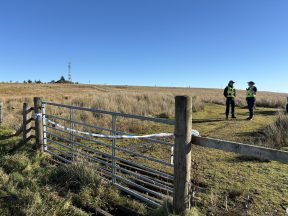
The Court of Session heard how the Todrig site covers approximately 579 hectares and Scottish Forestry planned on allowing developers to plant 243.7 hectares of that space with Sitka spruce trees – a non-native tree first introduced to the UK in 1831.
Scottish Forestry staff concluded that an exercise called an Environmental Impact Assessment did not need to take place before work on developing the site could began.
This prompted campaigners from pressure group Restore Nature to launch proceedings against the agency at the Court of Session in Edinburgh.
The environmentalists worried about the potential impact the proposed plantation would have on the current moorland at the site.
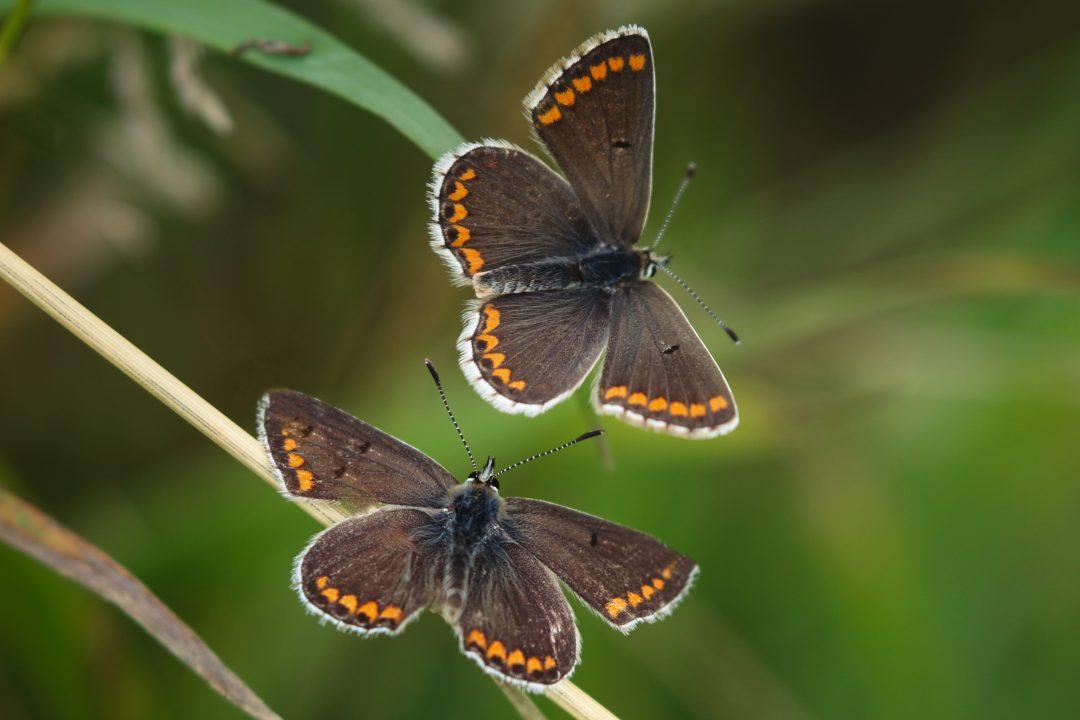
They were also concerned that the decision did not consider the possibility that habitats for the northern brown argus butterfly could be compromised.
This was because there was evidence that land at Todrig could support the lives of the butterflies.
The Court of Session heard that the species are on the Scottish biodiversity list. An organisation called Butterfly Conservation also consider the insect to be vulnerable and in need of protection.
Lawyers for Restore Nature said the decisions not to have an Environmental Impact Assessment showed that Scottish Forestry did not properly consider the habitats for the butterflies.
They argued that deciding that showed that Scottish Forestry did not follow the correct legal procedures to entitle it to conclude an Environmental Impact Assessment wasn’t needed.
In a written judgement published on Tuesday, Lady Poole upheld the arguments.
She wrote: “Given that the situation of the northern brown argus butterfly had been drawn to the respondent’s attention, and was on its own biodiversity list, the situation differs from intermediate sensitivity areas.
“The reasons, to be proper and adequate in explaining why the Todrig project was not likely to have a significant environmental effect, ought directly to have addressed the northern brown argus butterfly.
“The informed reader is not given sufficient information in the screening decision to see that proper consideration has been given to the possible environmental effects of the development, or properly understand the reasons for the decision.
“Accordingly, the screening decision is unlawful because the respondent did not have before it sufficient information properly to address the questions and criteria it was required.”
Targets for woodland expansion repeatedly missed
Plans for the 579-hectare Todrig woodland scheme at Todrig Farm were lodged last year by Gresham House, one of the largest private owners of Scotland’s forests.
The planned forest would link to another proposed 700-hectare predominantly Sitka forest at Whitslaid. It means the area will see some 11 square kilometres of conifer plantations across the moorland habitat.
Since annual targets for woodland expansion were set, the Scottish Government has missed the goal every year apart from 2018, when it was met for the first time.
Campaigners raised funds for their legal challenge by setting up a page on a crowdfunding website.
Its page stated that Todrig lies within the Ettrick Forest. A statement said: “A place of lochans, moorlands, grasslands, and wetlands, teeming with wildlife.
“Once a royal hunting ground with oak and hazel woods, this ancient landscape still holds rare beauty and biodiversity, but is at risk of being smothered by Sitka spruce.”
In 2021, Gresham House Forest Growth and Sustainability Fund LP acquired Todrig farm for £12.2 million.
The campaigners say that Investors in this fund include the National Trust, “whose stated mission is to protect nature” and the Scottish National Investment Bank, who they say pledged £50 million of “taxpayers’ money” to the scheme.
A statement on their website read: “Their plan is to have a 1,000-acre plantation at Todrig, with the planted area being 85% commercial conifers, mainly of ecologically disastrous Sitka spruce.
“Next door to Todrig is Whitslaid, with a proposal for another 1,700 acres of mostly life-sapping Sitka spruce.
“Together, these schemes would form an industrial, monoculture forest of 11 square kilometres, wiping out fragile moorlands and the wildlife that depends on them.”
Lawyers for Scottish Forestry argued that the organisation acted lawfully.
However, Lady Poole disagreed and wrote that the campaigners could have some of their legal costs met.
She added: “The petitioner is entitled to expenses, subject to a cap of £30,000 already set by the court in the protective expenses order.”
Follow STV News on WhatsApp
Scan the QR code on your mobile device for all the latest news from around the country