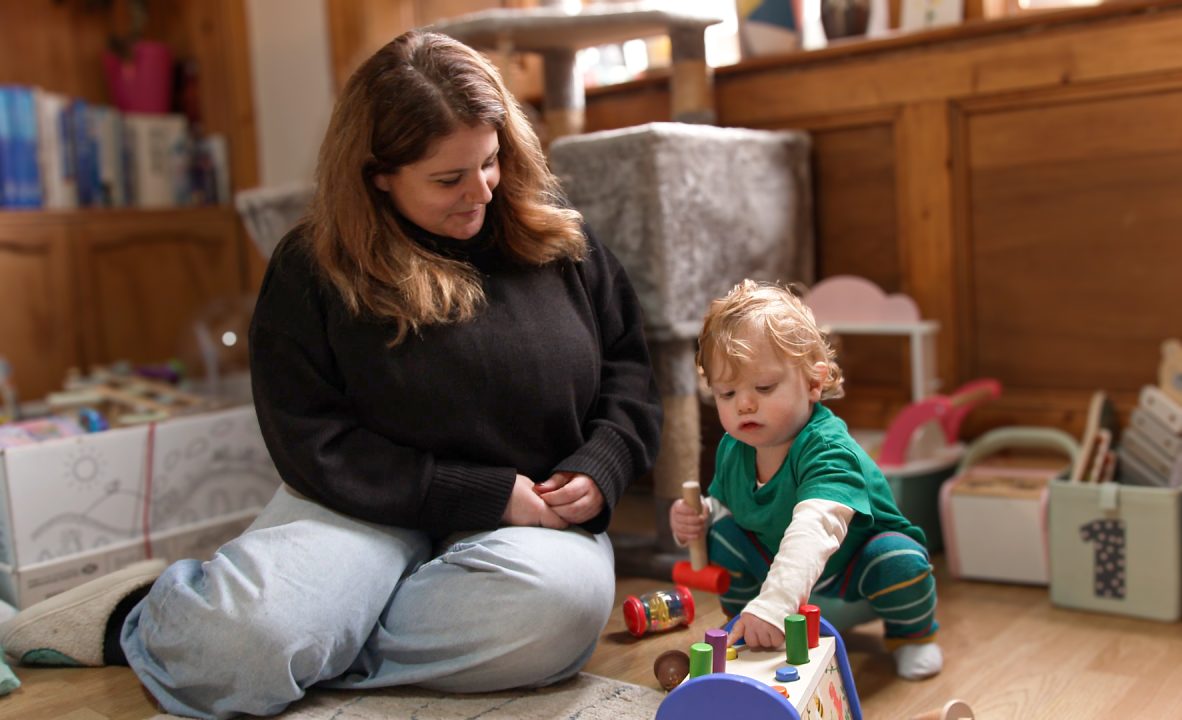
Robyn Jancovich-Brown would love nothing more than to give her son Milo a sibling.
She gave birth at the end of 2024 – aged 38 – and Milo quickly became the heart of their family.
Robyn and her partner always envisaged having two children. But they have since come to the “devastating” conclusion that they can’t afford to grow their family.
Her story resonates with many parents across the country, with the number of babies being born in Scotland hitting a record low last year.
Fewer than 46,000 births were registered in Scotland last year and women are also having children later. Most babies were born to those aged between 30 and 34.
Behind the statistics are families like Robyn’s, and the choices she says are being taken out of parents’ hands.
‘A little love bubble’
“I’ve always wanted to have kids and I’ve known that since I was really young,” Robyn told STV News. “Having a family has always been a really top priority for me.
“It was amazing bringing Milo home. I felt like we were in a little love bubble for ages, it was a really incredible time when we brought him home.”
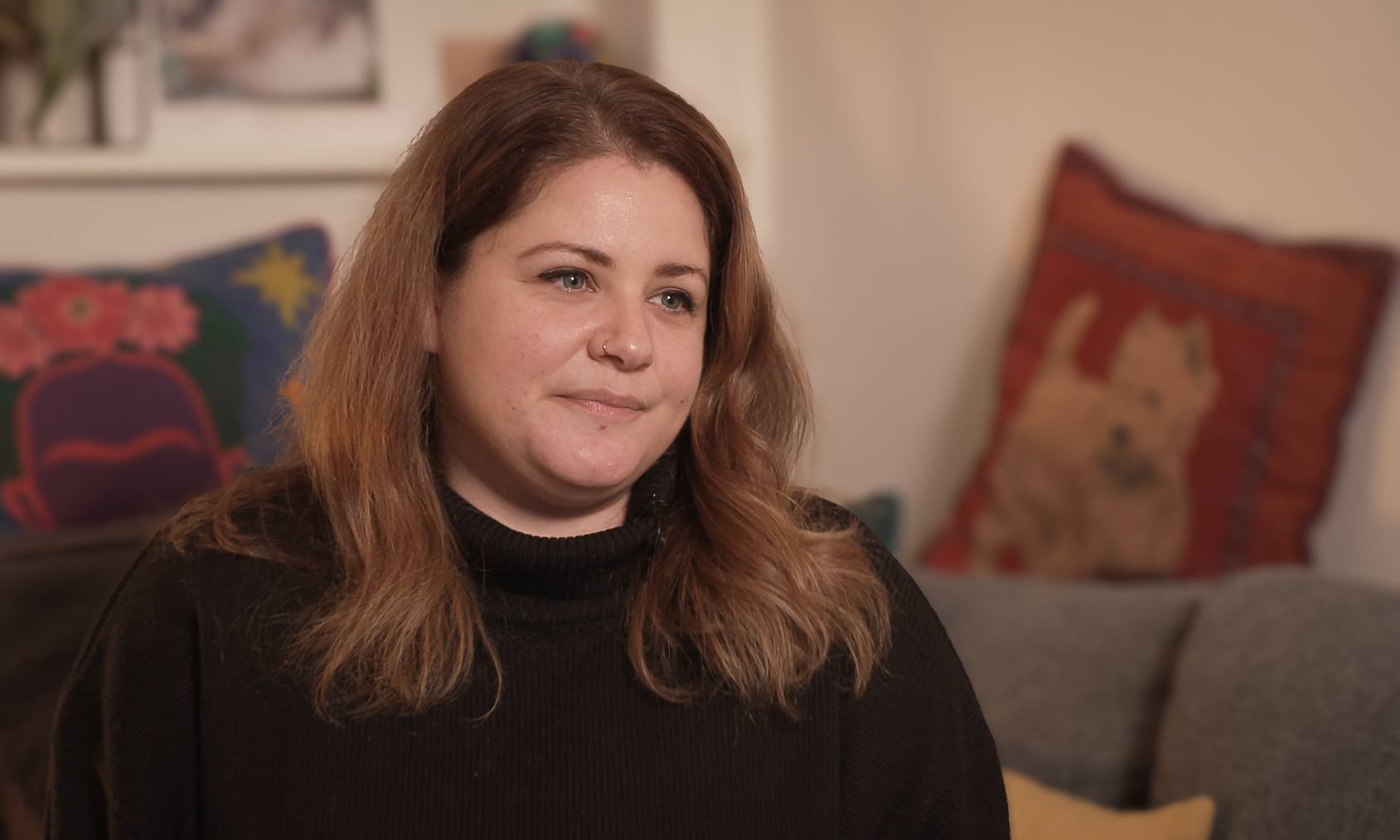 STV News
Robyn always imagined having two children, but says the cost of childcare has left her and her partner feeling they have no choice but to stop at one.
She added: “Milo’s fantastic and he’s a blessing and we’re really, really happy with our family. But it would have been nice to be able to give him a sibling.
“I think both my partner and I have come to the realisation that we probably can’t afford to have any more children which is devastating.”
Despite both parents working full-time, Robyn says nursery costs are wiping out their disposable income.
“It’s so tough juggling the cost with life and work,” she said. “We decided we wanted Milo to be in nursery three days a week so that he had a nice balance of home life and also mingling with other children and getting that kind of development.
“But even just being in three days a week still costs us around a grand a month. And living in Edinburgh as well, which is not a cheap city, that basically wipes out all of our disposable income.”
“I have a number of friends who have said that they probably are only going to have one child because of the financial costs, but also the emotional and health costs that come with having children as well.
“The strain it can put on your relationship. But I think that’s compounded by everything else that’s going on, how difficult it is to find childcare in the first place, the cost of childcare, the lack of support that’s out there for parents.”
Births falling and families shrinking
The National Records of Scotland says Scotland’s birth rate has been declining for decades.
Esther Roughsedge, head of demographic statistics, told STV News that historic records show a long-term drop.
“We’ve got figures going back to when records began in 1855,” she said. You can see a general downward trend in birth rates. At the peak in Scotland, there were about 130,000 babies a year being born, whereas the latest figures show 46,000 babies born in Scotland.”
Ms Roughsedge also said families are also having fewer children overall and having them later.
She added: “In the mid 70s, the average age of a mother having a first child in Scotland was 24. Now it’s 30, so that’s quite a big difference over time.”
There were 16,500 more deaths than births last year, and the last time births outstripped deaths was in 2014.
Ms Roughsedge said Scotland’s ageing population will affect public services.
“The whole age structure of our population is changing because all those babies that we had in the 1960s, they’re now getting older,” said Ms Roughsedge.
“We’re getting far more older people, and fewer children and young people. That affects services like nurseries and schools, and then universities, and then the workforce and then health and social care, because it’s not just the number of people that matters, it’s also the age structure that matters for a lot of services that are being planned.”
‘No magic treatment’
Fertility specialist Dr Sarah Martins Da Silva told Scotland Tonight that demand for IVF treatment remains high and that later family planning can bring challenges.
She said: “There’s a lot of demand. We’re a busy unit. We treat about 400 or so couples a year with fresh IVF and probably another three to 350 frozen embryo transfers a year.
“So looking at those numbers, I think one of the issues is that we’ve got this very, very low birth rate and it’s the lowest it’s ever been.
“It’s a really complicated statistic to pull apart and understand. But part of that is couples who want children and are struggling to get pregnant.
“They perhaps don’t have access to IVF or fertility treatment, or potentially they have left having a family until later in life – and the biological clock we can’t argue with.”
Ms Da Silva said fertility declines sooner than many people expect.
“It never fails to surprise me that people don’t really appreciate how finite our fertility is,” she said. “You know, we women really need to appreciate that from our late 20s, our fertility is starting to fall.
“By the time we get to our mid-30s, our fertility is falling fast. And by the time you’re past 40 years, your fertility really is very much lower.”
Ms Da Silva warned there are limits to what medicine can do.
“I think we see it across the piece really. There might be a whole load of different kind of reasons, social reasons, economic reasons and so on for that.
“But the difficulty for me is that faced with a couple in front of me where they’ve got a low chance of IVF treatment working or fertility working, that can be a really difficult conversation.
“And as I say, there isn’t a magic treatment and there’s no way to really unwind and replace that loss of fertility with age.”
Childcare pressure ‘urgent’
In Scotland, all three and four-year-olds are entitled to 1,140 hours of funded childcare a year – around 30 hours a week during term time.
But for children aged two and under, most parents pay on average more than £120 a week for 25 hours of childcare.
Campaign group Pregnant then Screwed says the cost and availability of childcare is pushing parents out of work and discouraging families from having more children.
Carole Erskine, the charity’s Scotland lead, said rural areas can be particularly badly affected.
“We hold events, we had an event in Outer Hebrides, we speak to parents in the central belt,” she explained. “We have travelled a lot across Scotland and spoken to different parents and it is a really key theme in the more rural areas of Scotland. Very often there is no childcare until a child turns three.
“So for those parents, and let’s be honest here, in the vast majority of cases it is the mums, they don’t go back to work.
“They want to work and they need that income, but they’re stuck in the situation of there’s no childcare. So I think once they’ve had one child, they want another child in very many cases, but it’s just not practical for them. They cannot be out of work. They cannot lose those earnings.”
She said some parents are devastated they can’t afford the family they hoped for.
“I’ve spoken to mums who have been in tears because they thought they would have two, three children and they’ve got one and they know that they can’t afford to have any more.
“I think we’re in a position now where it’s a real wake-up call. Women are having children later. They may be dealing with the difficulties around that, but actually they don’t want just one child, but ultimately that’s all they can afford.”
Figures shared with Scotland Tonight show more than half of parents surveyed in the last year viewed childcare costs as a barrier to having more children, while three in five felt families in Scotland were being left behind compared to elsewhere in the UK.
The Scottish Government said it is the only part of the UK offering universal hours for children over three regardless of parents’ working status, saving families £6,000 per child each year.
‘Systemic change’
Childcare reform can’t come soon enough for Robyn
“The cost of childcare, I think, really needs addressing quite urgently,” she told Scotland Tonight. “The availability of childcare needs to be addressed urgently. There were two-year waiting lists for nurseries when we were looking for Milo, which seems mad.
“That means that people are signing up before they’re even pregnant, which is bizarre to me. I think there’s a real systemic change that has to happen in the way that we treat parents.
“I think society currently treats parents like they should operate as if they don’t have children and that is just unrealistic.”
And while she says she feels lucky to have Milo, she admits it’s painful to think their family may not grow.
“I really always imagined having two children – Milo’s fantastic and he’s a blessing and, we’re really, really happy with our family.
“But it would have been nice to be able to give him a sibling.”
Follow STV News on WhatsApp
Scan the QR code on your mobile device for all the latest news from around the country