
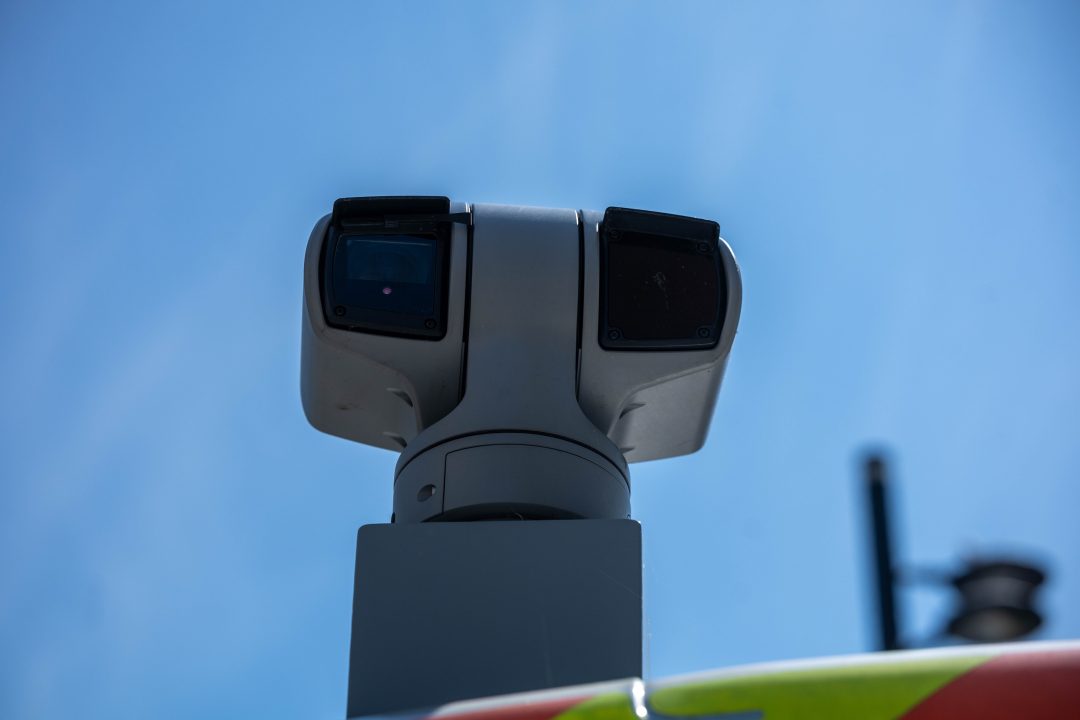
Police Scotland is being urged to adopt live facial recognition technology to crack down on violent crime and football disorder.
In his latest annual report, His Majesty’s Chief Inspector of Constabulary in Scotland Craig Naylor has called on both the Scottish Government and policing to “be ambitious” in rolling out the tools.
He said when used responsibly, drones and facial recognition technologies could “reduce the threats posed to the public from high-risk sex offenders, organised crime groups, violent offenders and others whose activities cause significant harm to communities”.
He advised “the challenge” for public sector leaders was “not whether to adopt these technologies, but how quickly they can do so safely, ethically and effectively”.
Mr Naylor said: “Police and law enforcement partners must seek to exploit, with appropriate safeguards in place, advancements in operational technology such as remotely piloted aircraft systems (drones) and facial recognition.
“The public sector should be ambitious in harnessing innovation to improve services while preserving public trust and accountability by explaining the case for use of these new capabilities.”
He stressed that football disorder, such as that seen when Rangers played Celtic in the Scottish Cup quarter-final in March, where rival fans clashed after a pitch invasion, “cannot continue to be tolerated”.
Mr Naylor branded the incident “deeply concerning” and cited severe failures in planning and matchday safety.
Warning of the “increasing threat of violence and disorder”, he said football clubs themselves, their governing bodies, local authorities and supporter groups must all “share responsibility with policing” in tackling the problem.
He suggested an enhanced risk assessment process be put in place, along with mandatory multi-agency planning exercises for high-risk matches, stronger stewarding arrangements, improved segregation of rival supporters and “consistent use of evidence-led sanctions against those involved in violence or disorder”.
Mr Naylor said: “Elements such as restricting the number of fans allowed to attend matches, banning orders with more rigour, requirements to use modern technologies such as facial recognition to prevent the attendance of banned individuals should all be explored and enacted to ensure that this behaviour is stopped.”
The technology is already being used by police forces south of the border, including London’s Metropolitan Police, and officers here are now considering whether to follow in their footsteps by implementing a similar system.
Facial recognition technology is also being used by some retailers in Scotland to identify individuals who have been barred from their premises.
Last year, Police Scotland and the Scottish Police Authority engaged in a ‘national conversation’ where they sought the views of both the public and stakeholders on the future use of such technology by policing in Scotland.
On the other side of the debate, privacy campaigners are warning that facial recognition software poses a threat to civil liberties and risks creating a surveillance state.
They claim the software is more likely to misidentify women and ethnic minorities due to bias in its training data, raising fears about discriminatory over-policing.
Jack Coulson, head of advocacy at Big Brother Watch said: “Police Scotland should absolutely not follow the dangerous lead of their English counterparts, who have been experimenting on the public with this invasive, discriminatory software for years.
“Live facial recognition treats every passer-by like a walking ID, turning the streets into police line-ups and the public into constant suspects. The technology also has known racial biases.
“The SNP conference passed a resolution opposing live facial recognition, and almost half of Scots say they would feel uncomfortable with its use. The people decide what their civil liberties mean in practice. The Chief Inspector has no democratic right to proclaim this technology is a when, not an if.
“The Inspector urged Police Scotland to ‘be ambitious’. If ambition is infringing Scots’ rights and building an Orwellian state surveillance infrastructure, we should be very worried.
“The Scottish government must adopt policies that restrict live facial recognition use to exceptional circumstances rather than routine policing – where it treats us all as suspects.”
Assistant chief constable Tim Mairs, Police Scotland, said: “We have a duty to use new technologies to safeguard our communities. New technologies can offer transformative opportunities for modern policing through supporting investigations and identification
“We want people to recognise both the value of new technologies and be confident that Police Scotland has the right governance and the right measures in place, and that consideration and implementation of new technologies reflects our commitment to human rights, ethical oversight, and transparency.
“Our consideration of LFR, working with the Scottish Police Authority and the Scottish Biometrics Commissioner, continues. We are considering next steps following on from responses to our consultation on the Biometrics Strategy, published earlier this month, which highlighted both public support for and the need for assurance, governance and scrutiny around our potential use of new technologies.”
A Scottish Government spokesperson said: “Any deployment of new technology would be an operational matter for the Chief Constable under the scrutiny of the Scottish Police Authority, provided it complies with data protection laws, the European Convention on Human Rights and the Scottish Biometrics Commissioner’s statutory Code of Practice.
“We have committed to introducing legislation to strengthen football banning orders (FBOs) to ensure football is safe and enjoyable for fans and players. This will give courts more powers to impose FBOs for behaviours including the misuse of pyrotechnics, throwing missiles and pitch invasions.”
Follow STV News on WhatsApp
Scan the QR code on your mobile device for all the latest news from around the country