 PA Media
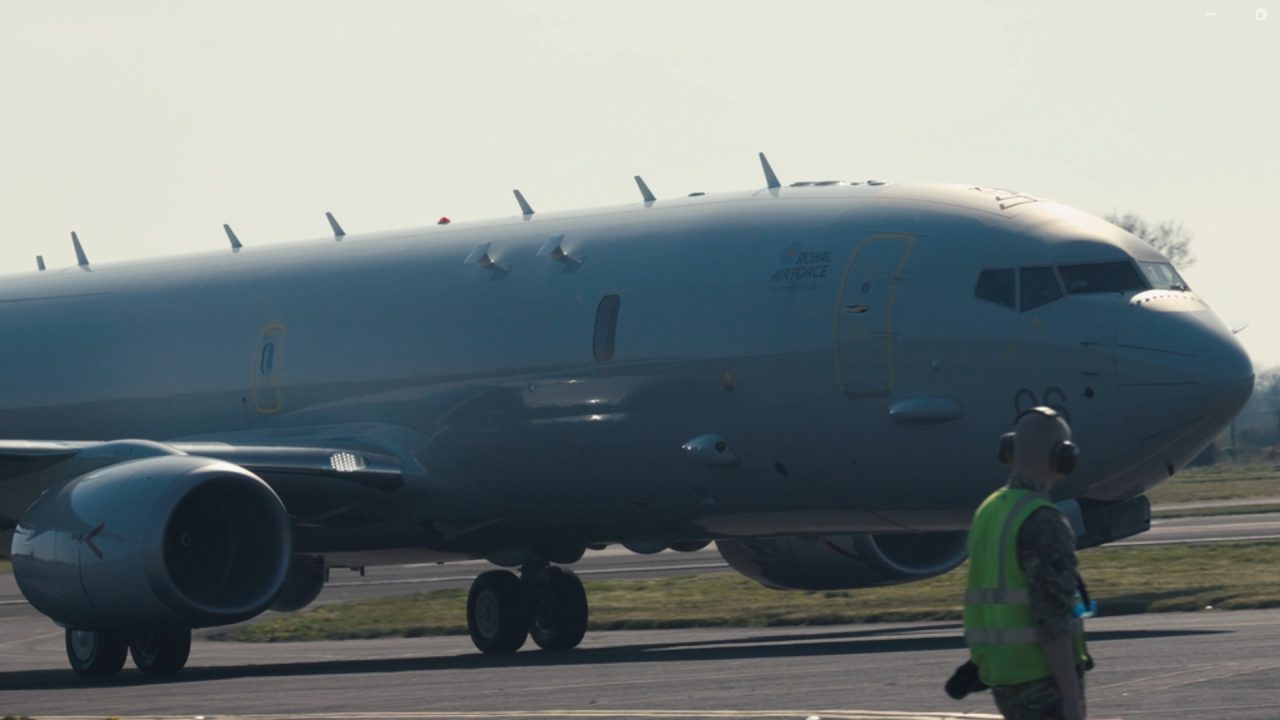
The Coastguard and RNLI’s search and rescue capabilities in Northern Ireland have received a boost with the support of one of the RAF’s latest maritime patrol planes.
The Poseidon is described as one of the RAF’s primary intelligence, surveillance, target acquisition and reconnaissance (Istar) assets, and has the capability to operate with a greater reach than traditional Coastguard vessels, making it an important part of the UK’s search and rescue provision.
On-board systems can allow it to pinpoint the location of people in distress at sea and send that information to either the Coastguard or other vessels in the vicinity.
Exercise Emerald Rescue, with the Coastguard and RNLI in Northern Ireland last week, was the first time this aircraft, based in Lossiemouth in Scotland, has operated from the Joint Helicopter Command Flying Station Aldergrove and been in involved in a joint search and rescue training exercise.
The Press Association joined the exercise on Friday for the flight from Aldergrove in Co Antrim to the region’s north coast.
Working in close co-ordination with the Coastguard and RNLI, the plane scoured the expansive waters for a dummy casualty.
Wing Commander Rob McCartney, the commanding officer of the Lossiemouth-based 201 Squadron, described the task of spotting the speck of orange as “notoriously difficult” as crew scoured the water.
After locating the “casualty”, the lifeboat could be seen speeding to the location and pulling the dummy from the water before returning inshore to Portrush.
Wing Cdr McCartney hailed the opportunity to practise with the aircraft in the area.
“Search and rescue is controlled by and commanded by the Coastguard, there are a lot of agencies who work for them, and we are one of those people,” he explained.
“We don’t lead it, we’re one of the people who go out and do business for them. It’s a reasonably new aircraft, and we’ve got this emerging search and rescue capability which we have practised out here for the first time.
“We’ve had a great week in Northern Ireland working with the Coastguard and the RNLI, and we’re much better as a result at hopefully finding people in the water and other search and rescue scenarios.”
He said lifeboats and helicopters are very good in scenarios which are close to land.
“We are really useful out there in the north Atlantic, hundreds of miles away, so while the Coastguard is mobilising their army of volunteers and search and rescue professionals, we can get there quickly, find the emergency and keep an eye on them, so we are ahead of them in a long-range search and rescue situation,” he said.
He said they also work with the Irish Air Corps in a relationship which he described as “close, and getting much closer”.
“The Irish Air Corps came and visited us at Lossiemouth two years ago so we know them, and we can’t underestimate the power of relationships, knowing each other and trusting each other. That’s what alliances and partnerships have always been about,” he said.
“We hope to run a few more exercises with them in the coming years.
“We’re on the island of Ireland, we both have a treaty obligation to react to search and rescue incidents wherever that may be.
“I know there is politics out there, but that doesn’t affect what we do here. We’re professionals, we’ve got a close relationship, we’re getting closer.”
Gordon McCreadie, divisional commander of His Majesty’s Coastguard for Northern Ireland and the west of Scotland, described such “live play” exercises as “invaluable” in the “incredibly difficult task of spotting people at sea”.
“The reality is you can tabletop exercises but some of the real-life learning that comes out of physical on-scene searching will help us hone and improve our skills going forward,” he said.
“The ability to work with partners like RNLI and RAF is invaluable to us.”
Looking ahead to the summer months, Mr McCreadie said nice weather increases challenges for the Coastguard in terms of demand.
“We naturally work with the public to try to improve safety and knowledge around the water, but we are coming up to our peak period and any asset that can help us save life at sea, improve our search effectiveness is always welcome,” he said.
“HM Coastguard already has fantastic aeronautical resources available, but the RAF can offer enhanced eyes, additional technical capabilities and increase our search effectiveness in order to save people’s lives at that critical moment, so the more people we have searching, the greater capability and the more technical asset the better.”
Follow STV News on WhatsApp
Scan the QR code on your mobile device for all the latest news from around the country